
The Indian skyline is changing. If you’ve spent any time near an airport lately, you’ve likely noticed that the intervals between take-offs are shrinking. India is currently the third-largest domestic aviation market in the world, and according to industry analysts, it is on its way to becoming the largest within the next decade. For a student standing at the crossroads of their career, this raises a pivotal question: What is the actual scope of aeronautical engineering in India?
As we look toward 2030, the field of aeronautical engineering is no longer just about fixing old engines or designing traditional wings. It is becoming a high-tech playground involving artificial intelligence, sustainable fuels, and autonomous flight. This guide provides a deep dive into the expanding horizons of this field, ensuring you have every piece of information needed to launch your career.
Read Before: Future Trends in Aeronautics: Insights for SOACET Students
Understanding the Current Landscape
To understand the scope of aeronautical engineering in India, we must first look at the numbers. Indian carriers like Air India and Indigo have recently placed some of the largest aircraft orders in the history of global aviation, totalling over 1,000 new planes. Every single one of these aircraft will require a dedicated team of aeronautical engineers for design, maintenance, testing, and safety oversight.
But the scope isn’t just limited to commercial airlines. The Indian government’s “Atmanirbhar Bharat” (Self-Reliant India) initiative has shifted the focus toward indigenous manufacturing. From the Tejas Light Combat Aircraft (LCA) to the development of regional transport aircraft, the demand for homegrown engineering talent is skyrocketing.
The Core Pillars of the Scope of Aeronautical Engineering in India
When we talk about “scope,” we are referring to the diverse sectors where an engineer can apply their skills. In India, this scope is divided into four major pillars:
1. Aircraft Manufacturing and Design
Historically, India imported most of its aircraft. However, the tide is turning. Companies like Hindustan Aeronautics Limited (HAL) are expanding their production lines. Furthermore, private giants like Tata Advanced Systems and Mahindra Aerospace are now manufacturing components for global leaders like Boeing and Airbus. As an aeronautical engineer, you could be at the forefront of designing more aerodynamic fuselages or more fuel-efficient propulsion systems.
2. Maintenance, Repair, and Overhaul (MRO)
This is perhaps the fastest-growing sub-sector within the scope of aeronautical engineering in India. Previously, Indian airlines sent their planes to Dubai or Singapore for major repairs. Today, the Indian government is incentivising the creation of MRO hubs within the country. This sector alone is expected to create tens of thousands of jobs for engineers who specialise in keeping aircraft airworthy and safe.
3. Defence and Space Research
The Indian Air Force and the Indian Navy are constantly modernising their fleets. Beyond traditional aircraft, the scope extends to missiles, high-altitude surveillance drones, and even the integration of aeronautical principles in space launch vehicles. Organisations like DRDO (Defence Research and Development Organisation) and ISRO (Indian Space Research Organisation) are the dream destinations for engineers who want to work on cutting-edge strategic technology.
Note: Book a FREE counselling session through SOACET to understand the AME admission process clearly.
4. The Civil Aviation Boom
With the UDAN (Ude Desh ka Aam Nagrik) scheme, the government is reviving unserved and underserved airports. More airports mean more regional connectivity, more airlines, and a massive requirement for ground engineers, safety auditors, and technical officers.
Future Trends 2030: The Next Frontier
By the year 2030, the job description of an aeronautical engineer will look very different. The scope of aeronautical engineering in India is being reshaped by three major technological shifts:
A. Green Aviation and Sustainability
The global aviation industry has committed to net-zero carbon emissions by 2050. India is a key player in this transition. Engineers in 2030 will be focused on:
- Sustainable Aviation Fuel (SAF): Developing engines that can run on biofuels.
- Electric Propulsion: Designing short-haul electric planes for regional travel.
- Hydrogen Fuel Cells: Exploring zero-emission flight technologies.
B. The Drone Revolution (UAVs)
From delivering medicines in remote Himalayan villages to agricultural spraying and defence surveillance, drones are the new frontier. India aims to become a global drone hub by 2030. This opens up a massive parallel career path for aeronautical engineers to design, program, and maintain Unmanned Aerial Vehicles.
C. Digital Twins and AI in Design
The way we build planes is changing. Engineers now use “Digital Twins”, virtual replicas of physical aircraft, to predict when a part might fail before it actually does. Artificial intelligence is being used to optimise flight paths and reduce fuel consumption. If you have a knack for coding alongside mechanics, your scope in this industry is limitless.
Detailed Career Roles for Aeronautical Engineers
If you pursue this path at a top institution like SOACET, you aren’t just limited to one job title. The scope of aeronautical engineering in India offers a variety of specialised roles:
- Thermal Design Engineer: Specialising in how heat moves through engines and airframes.
- Structural Engineer: Ensuring the aircraft can withstand the stresses of high-speed flight and turbulence.
- Flight Test Engineer: One of the most exciting roles, where you participate in the actual testing of new aircraft prototypes.
- Systems Engineer: Overseeing the complex integration of mechanical, electrical, and software systems.
- Quality Control Manager: Ensuring that every nut, bolt, and wire meets international safety standards.
- Aviation Safety Auditor: Working with regulatory bodies like the DGCA to ensure airlines follow strict safety protocols.
Salary Structure in India (2026-2030 Outlook)
One of the most attractive aspects of the scope of aeronautical engineering in India is the financial reward. Because the skill set is so specialised, salaries tend to be higher than in many other engineering branches.
- Freshers/Junior Engineers: Starting salaries usually range from ₹5 LPA to ₹9 LPA, depending on the college and the hiring organisation.
- Mid-Level Professionals (5-8 Years): With a few years of experience, especially in specialised areas like propulsion or MRO, salaries jump to ₹12 LPA – ₹20 LPA.
- Senior Levels/Specialists: Senior design engineers or lead researchers at organisations like Boeing India or HAL can command salaries upwards of ₹30 LPA – ₹50 LPA.
Note: Salaries in the defence sector follow government pay scales but include significant perks, housing, and lifelong security.
Required Skills for Success in 2030
To truly capitalise on the scope of aeronautical engineering in India, you need more than just a degree. The 2030 engineer needs a “Hybrid Skillset”:
- Hard Skills: Proficiency in CAD/CAM software (CATIA, SolidWorks), understanding of Computational Fluid Dynamics (CFD), and knowledge of composite materials.
- Soft Skills: Analytical thinking, problem-solving under pressure (critical for MRO), and excellent communication skills for multi-disciplinary teamwork.
- Digital Literacy: A basic understanding of Python or C++ and data analytics will be a massive advantage as the industry becomes more digitised.
Top Recruiters in the Indian Market
The following organisations are the primary drivers of the scope of aeronautical engineering in India:
- Public Sector: HAL, ISRO, DRDO, Air India Engineering Services Limited (AIESL).
- Private Giants: Tata Advanced Systems, Mahindra Aerospace, L&T Defence.
- Airlines: Indigo, Air India, SpiceJet, Akasa Air.
- Global MNCs with Indian Hubs: Boeing, Airbus, GE Aviation, Rolls-Royce.
Why SOACET is the Best Choice for Your Aviation Career
When exploring the scope of aeronautical engineering in India, your choice of college is your first “flight path.” The School of Aeronautics (SOACET) has been a pioneer in this field for over 28 years.
1. Hands-on Training
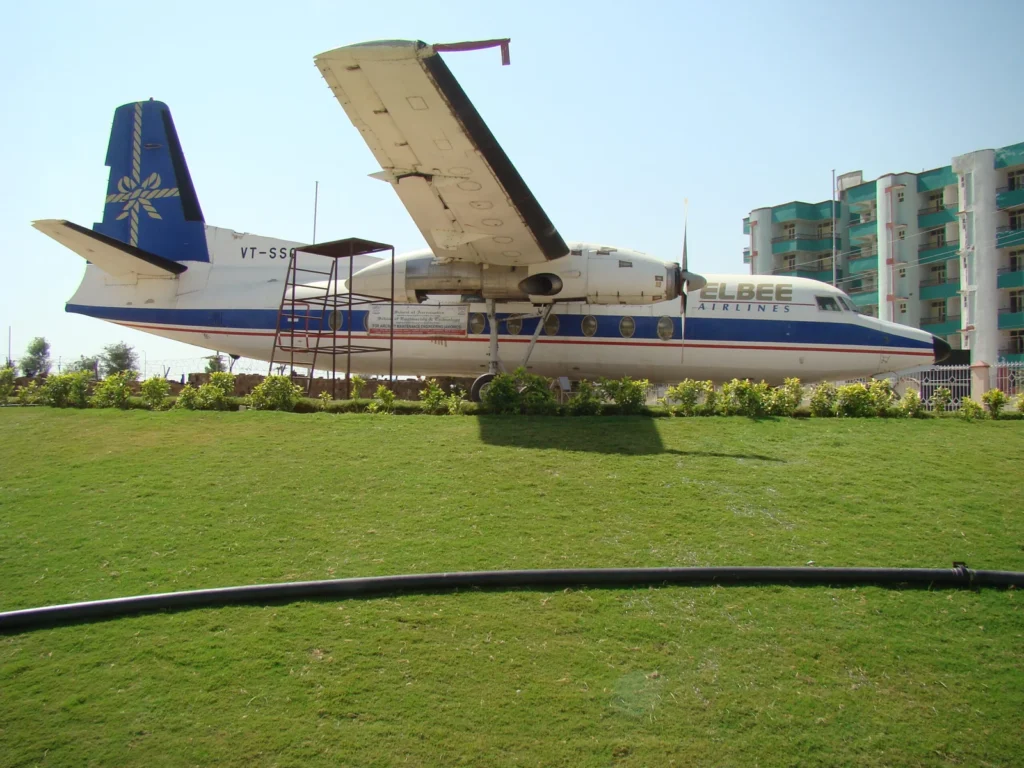
We believe that you can’t learn to fly by just reading a book. Our campus is equipped with real aircraft, jet engines, and specialised workshops that mirror the environments of top MROs and manufacturing plants.
2. Industry-Aligned Curriculum
Our syllabus is constantly updated to include the 2030 trends we discussed, such as drone technology and sustainable aviation, ensuring our students are “job-ready” from day one.
3. Unbeatable Placement Support
With a vast network of alumni working in every major airline and defence organisation in India, SOACET provides a bridge between education and a high-paying career.
4. Dedicated Lab facilities (SOACET)
School of Aeronautics (SOA), Neemrana: Known for its integrated B.Tech and AME programs, it features a massive campus with dedicated lab facilities and a high placement record.
Frequently Asked Questions (FAQs)
Q1. Does aeronautical engineering have a scope for girls in India?
Absolutely! The aviation industry is one of the most progressive sectors. From high-ranking officers in the IAF to lead designers at HAL, women are excelling in every area of aeronautical engineering.
Q2. Is it better to do Aeronautical or Aerospace engineering?
Aeronautical is more focused on aircraft within the atmosphere, which has a larger immediate job market in India (Airlines and MRO). Aerospace includes spacecraft, which is great if you specifically want to work at ISRO.
Q3. Can I work in the IT sector after this degree?
Yes. Many aeronautical engineers work for tech companies like TCS, Infosys, and HCL, which provide software solutions and simulations for global aviation giants.
Q4. What is the minimum percentage required for admission?
Generally, you need at least 50% to 60% in your 10+2 (PCM). However, clearing entrance exams like the SOACET Entrance Test is equally important.
Conclusion: The Sky is Not the Limit
The scope of aeronautical engineering in India is wider and deeper than it has ever been. We are living through a historic period where India is transforming from a consumer of aviation technology to a creator of it. Whether you want to build the drones of tomorrow, maintain the massive fleets of our national carriers, or design the next generation of fighter jets, the opportunity is waiting for you.
Success in this field requires passion, precision, and the right mentorship. Don’t just watch the future happen, be the one who designs it.
Take the first step toward your dream today. Explore Admissions at SOACET