Aeronautical Engineering Eligibility Criteria 2026
Your complete guide to AME Admission 2026 eligibility, fees, syllabus, top colleges, and career scope in India’s fastest-growing aviation industry.
- ABOUT THE PROGRAM
What is Aircraft Maintenance Engineering?
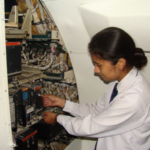
Aircraft Maintenance Engineering (AME) is a specialized technical course approved by the Directorate General of Civil Aviation (DGCA), Government of India. The main role of an AME is to ensure that an aircraft is safe and airworthy before every flight.
Unlike traditional engineering courses like B.Tech, AME is a license-based program. After completing the course and clearing DGCA modules, students receive a license that allows them to certify aircraft for flying.
AME professionals are one of the most critical roles in aviation — no flight departs without their sign-off.
- Aircraft Inspection
- Mechanical Repair
- Electrical Systems
- Safety Certification
Program Highlights
- REQUIREMENTS
Eligibility Criteria
Before applying for AME admission 2026, ensure you meet the following criteria set by DGCA.
- How to Join
Admission Process 2026
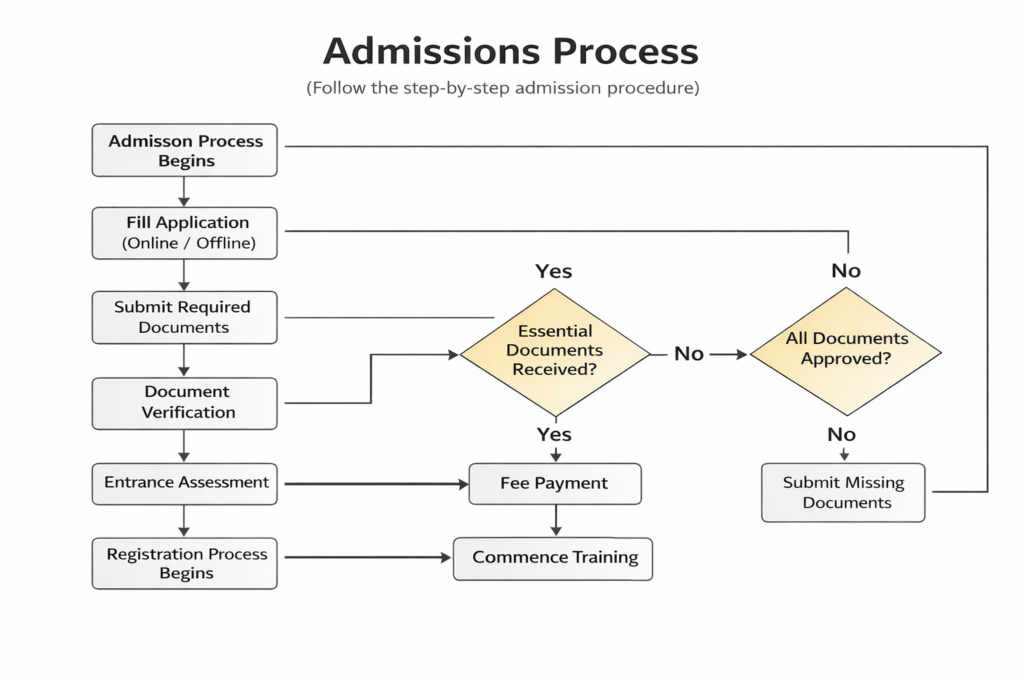
The admission process is simple and student-friendly. Follow these steps to secure your seat.
Application Form
Fill out the AME admission form online or offline via the institute's official website.
Entrance Exam / Direct Admission
Some institutes conduct entrance exams; others offer direct admission based on academic merit.
Counselling & Seat Allocation
Shortlisted candidates are called for counselling. Choose your specialization and confirm your seat preference.
Document Verification
Submit academic certificates, identity proof, medical fitness documents and photographs.
Admission Confirmation
Pay the admission fees and receive your confirmation letter. Seats are limited — apply early!
- INVESTMENT
Course Fee Structure
Fees vary based on the type of institution. Scholarships and education loans are available for eligible students.
* Additional costs include hostel fees, DGCA exam fees & study materials. Education loans available.
- CURRICULUM
AME Syllabus DGCA Modules
The AME course is divided into DGCA modules that students must pass to obtain a license.
Specialized Modules
Frequently Asked Questions
A: There is no single national last date for AME Admission 2026 each DGCA-approved institute sets its own admission deadlines. Most institutes begin accepting applications in January–March 2026 for a June–July intake. A second batch (where available) typically has an October–November application window. Contact each institute directly for their specific 2026 deadline. The safest approach: complete your applications by March 2026 for the main June batch.
A: No. JEE Main or Advanced is not required for AME Admission 2026. AME programs are professional license training regulated by DGCA, not university engineering programs requiring JEE. Selection for AME Admission 2026 is based on Class 12 PCM marks and/or an institute-level entrance test covering Physics and Mathematics. This makes AME accessible to students who do not qualify through JEE, yet still enables an outstanding aviation career.
A: Visit the official DGCA website at dgca.gov.in → Aviation Training Organisations → Approved Basic AME Training Organisation List. This is the only authoritative verification source. Confirm the institute name is listed, the approval is current (not expired), and the approval covers your desired category (B1.1 / B2). If uncertain, call DGCA's regional office directly. Never rely solely on an institute's own claims of DGCA approval.
A: DGCA's minimum requirement is 50% aggregate in Physics and Mathematics at Class 12. Most quality DGCA-approved institutes set their practical minimum at 50–55% PCM (Physics, Chemistry, Mathematics) aggregate. SC/ST/OBC students typically receive 5% relaxation. Scoring 60%+ in PCM at Class 12 gives you comfortable access to all quality AME programs for 2026.
A: Yes, absolutely. AME Admission 2026 does not require a JEE qualification of any kind. If you meet the Class 12 PCM eligibility criteria (50%+ in Physics and Mathematics), you can directly apply to DGCA-approved AME institutes without any JEE score. Many outstanding AME engineers never appeared for JEE at all. Your Class 12 marks and institute entrance test performance are all that matter for AME Admission 2026.
A: Total AME course fees for 2026 vary by institution: Government-affiliated and lower-cost institutes: ₹3.5 lakh to ₹6 lakh all-in (3 years including accommodation and DGCA exam fees). Mid-tier private DGCA-approved institutes: ₹5.5 lakh to ₹9 lakh all-in. Premium private institutes: ₹8 lakh to ₹14 lakh all-in. Education loans from SBI, PNB, and Canara Bank cover DGCA-approved AME training, including accommodation and exam fees, witha moratorium during the training period.
A: Starting salary for a newly licensed AME (B1.1) with an Indian airline or MRO in 2026 is typically ₹4–7 LPA. With 2–3 years of experience and type endorsements, this rises to ₹7–12 LPA domestically. Indian AMEs working in the Middle East with 3+ years of experience earn USD 4,000–8,000 per month tax-free, making AME one of the highest-earning short-duration professional qualifications in Indian aviation. Senior AMEs with 10+ years and multiple type endorsements regularly earn ₹22–38 LPA in India.
A: Yes, and it is an extremely powerful combination. B.Tech Aeronautical Engineering graduates are fully eligible for DGCA AME training. Importantly, engineering graduates receive Module exam exemptions for subjects already covered in their B.Tech curriculum, meaning they require fewer DGCA Module exams to achieve their AME license. The B.Tech + AME license combination is one of the most sought-after profiles in India's MRO sector and airline engineering departments.
A: The complete timeline from AME Admission 2026 to receiving your DGCA AME license is typically 3–4 years: 2–3 years of approved training (classroom theory + practical labs); plus minimum 1 year of supervised OJT on operational aircraft; plus time to pass all required DGCA Module exams (which can be attempted during training, reducing post-training wait time). Students who begin Module exam preparation from their first week of training and pass modules progressively can reduce post-training waiting time significantly.
Conclusion: AME Admission 2026 Is Your Gateway to India's Most Secure Aviation Career
AME Admission 2026 is more than an academic enrollment it is the first professional decision of a career that will touch the lives of millions of passengers who fly on aircraft you maintain and certify. That is not a small responsibility. And it is not a small career.
India’s aviation sector is ordering aircraft at historic rates, building new airports across Tier 2 and Tier 3 cities, expanding MRO capacity domestically, and creating a wave of AME demand that will last for the next 20 years. The licensed AMEs who enter the profession in 2026 will be the senior engineers, quality managers, and base maintenance directors of 2036 and beyond.
Use this guide as your reference. Verify every institute at dgca.gov.in before applying. Organise your documents now. Research your shortlist thoroughly. Visit campuses. And make your AME Admission 2026 decision with complete information and genuine confidence.