360° Campus Tour Explore SOACET 360 Degree Campus View
NEW Upcoming Notice: SOA CET 2027 Registration Has Been Started Click Here to Apply Now|NEW Check All Upcoming Notices Click Here

Aircraft Maintenance Engineering Program

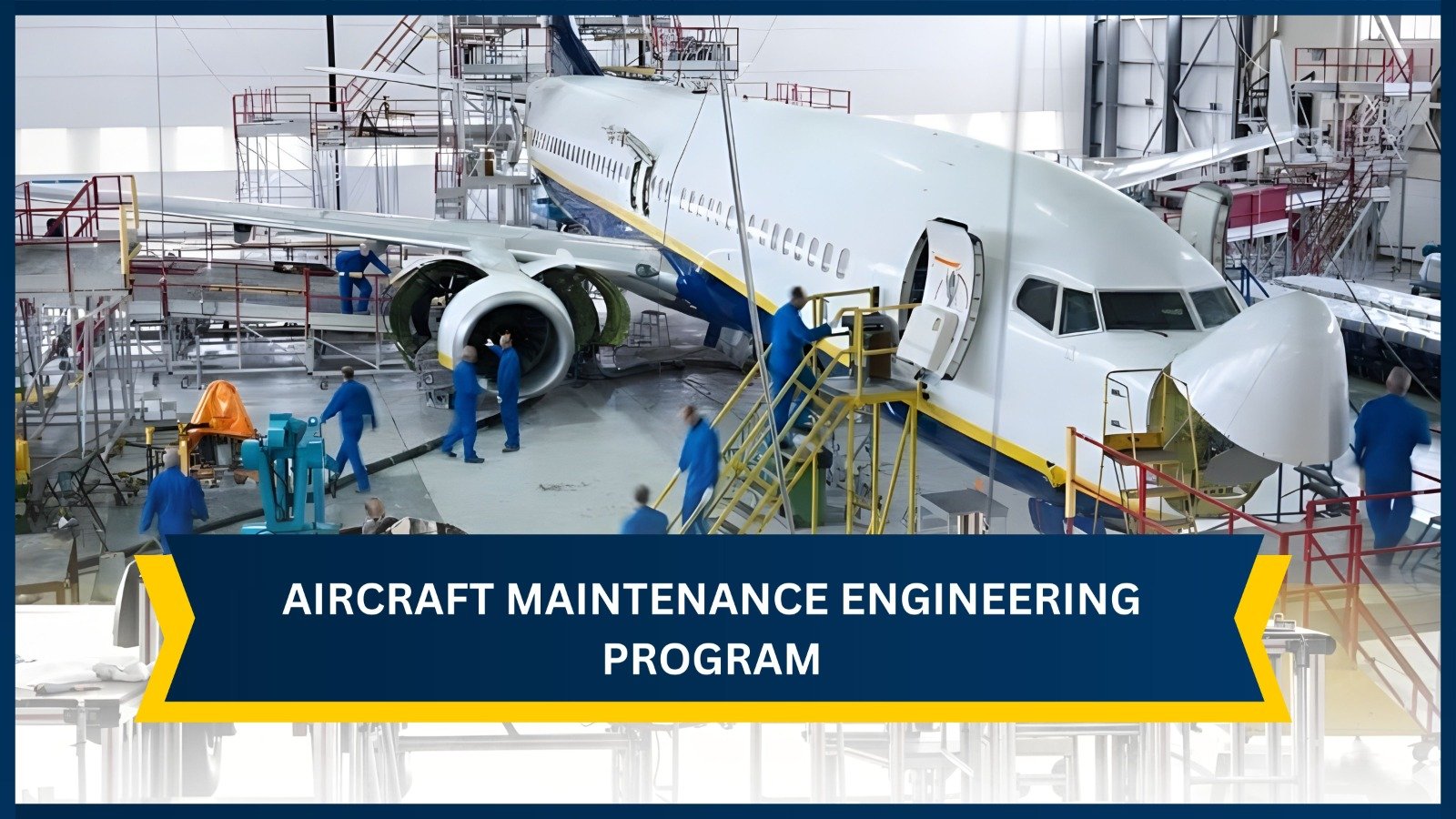
Aircraft Maintenance Engineering AME training program aircraft hangar

SOACET (School Of Aeronautical Common Entrance Test) is a national-level entrance examination for admission into aviation programs at School of Aeronautics (SOA), including this Aircraft Maintenance Engineering program. Candidates from across India appear for SOACET to secure admission, and complete their AME training at SOA’s campus facilities.

Why Choose Aircraft Maintenance Engineering as Your Career?

Every aircraft that soars through the sky relies on the expertise of Aircraft Maintenance Engineers (AMEs) to ensure safe, efficient, and reliable operations. In the rapidly expanding aviation industry, AMEs are the unsung heroes who inspect, repair, maintain, and certify aircraft for flight. This critical role combines technical expertise, regulatory knowledge, and hands-on skills to keep passengers and crew safe while maintaining the multi-million dollar assets that are modern aircraft.


The Aircraft Maintenance Engineering Program at the School of Aeronautics Common Entrance Test (SOACET) prepares aspiring aviation professionals for rewarding careers in this essential field. With India’s aviation sector experiencing exponential growth, certified AMEs are in high demand across airlines, MRO (Maintenance, Repair, and Overhaul) facilities, aircraft manufacturers, and aviation regulatory bodies.


Whether you dream of working on commercial airliners, military aircraft, helicopters, or business jets, SOACET’s comprehensive Aircraft Maintenance Engineering Program provides the knowledge, skills, and certifications needed to launch your successful aviation career.

Understanding Aircraft Maintenance Engineering

Aircraft Maintenance Engineering is a specialized technical program that trains students to become licensed Aircraft Maintenance Engineers. Unlike traditional engineering degrees, AME training focuses specifically on aircraft systems, maintenance procedures, regulatory requirements, and hands-on practical skills essential for maintaining airworthiness.


The Role of Aircraft Maintenance Engineers

AMEs perform critical functions in aviation safety and operations:

  • Pre-Flight Inspections: Conducting thorough checks of aircraft systems before every flight to ensure all components function properly and meet safety standards.
  • Scheduled Maintenance: Performing routine maintenance tasks at specified intervals based on flight hours, calendar time, or cycles. This includes oil changes, component replacements, and system inspections.
  • Troubleshooting and Repairs: Diagnosing mechanical, electrical, and electronic problems, then executing appropriate repairs using approved procedures and genuine parts.
  • Component Overhauls: Disassembling, inspecting, repairing, and reassembling major aircraft components like engines, landing gear, and hydraulic systems.
  • Certification and Documentation: Signing off completed maintenance work in aircraft logbooks, ensuring all work complies with regulatory requirements and maintaining detailed records.
  • Compliance Management: Ensuring aircraft meet airworthiness directives, service bulletins, and regulatory requirements from authorities like DGCA (Directorate General of Civil Aviation).


AME License Categories

The DGCA issues AME licenses in different categories:

  • Category A: Line maintenance certifying staff for base maintenance 
  • Category B: Mechanical and electrical disciplines for specific aircraft types 
  • Category C: Comprehensive certification for base maintenance including management responsibilities 
  • Category D: Avionics systems specialist

SOACET’s program prepares students for Category B licenses in mechanical and avionics streams, with pathways to advance to higher categories through experience and additional training.

Multiple Admission Pathways at School Of Aeronautics (SOA)​

Understanding that students come from diverse educational backgrounds, SOACET offers flexible admission options for the Aircraft Maintenance Engineering Program.

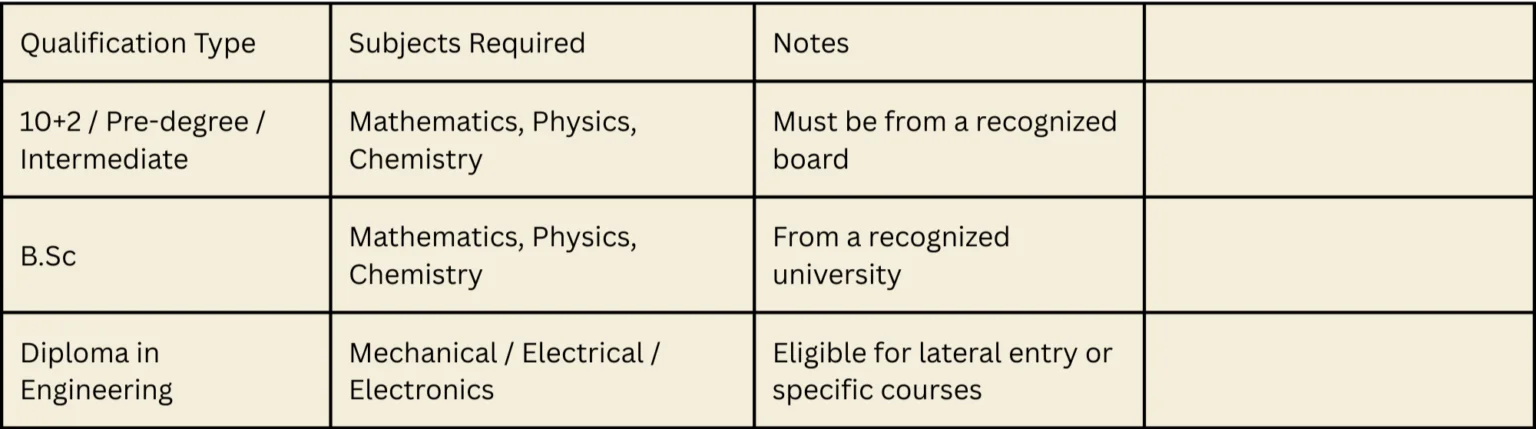
Direct Entry After 10+2/Pre-Degree/Intermediate

Eligibility Requirements:

  • Educational Qualification: 10+2, Pre-degree, or Intermediate examination from a recognized board
  • Compulsory Subjects: Mathematics, Physics and Chemistry
  • Minimum Percentage: Typically 50% aggregate in PCM (Physics, Chemistry, Mathematics)
  • Age Requirements: Minimum 16 years of age
  • Medical Fitness: Must pass DGCA-specified medical examination (Class II Medical)
  • Recognition: Must be from a recognized educational board


This pathway is ideal for students who have completed their higher secondary education and want to pursue a specialized career in aircraft maintenance directly without spending four years on a traditional engineering degree.

Entry Through B.Sc. Degree

Eligibility Requirements:

  • Educational Qualification: Bachelor of Science (B.Sc.) from a recognized university
  • Compulsory Subjects: Mathematics, Physics and Chemistry
  • Minimum Percentage: 50% aggregate in B.Sc.
  • Recognition: Degree must be from a UGC-recognized university

B.Sc. graduates bring strong theoretical foundations in sciences, which enhances their understanding of aircraft systems physics, chemistry of materials and fuels, and mathematical principles underlying aerodynamics and mechanics.

Lateral Entry Through Engineering Diploma

Eligibility Requirements:

  • Educational Qualification: Diploma in Engineering from a recognized institution
  • Eligible Specializations: Mechanical Engineering Electrical Engineering Electronics Engineering Other relevant technical diplomas
  • Duration: Three-year diploma program
  • Benefits: May receive exemptions for certain theoretical papers based on diploma subjects
  • Recognition: Must be from AICTE-approved or state technical board-recognized institution

Diploma holders in mechanical, electrical, or electronics engineering possess valuable technical knowledge and practical skills that complement aircraft maintenance training.

Why Multiple Pathways Matter

  • Accessibility: Students from different educational backgrounds can enter the aviation maintenance field.
  • Flexibility: Choose the pathway that aligns with your current qualifications.
  • Recognition of Prior Learning: Your previous education is valued and may lead to exemptions.
  • Diverse Perspectives: Students from varied backgrounds bring different strengths to the program.
  • Career Acceleration: Start your aviation career without requiring a four-year engineering degree.

DGCA-Approved Curriculum: Comprehensive Training for Aviation Excellence

  • SOA’s Aircraft Maintenance Engineering Program follows the syllabus prescribed by the Directorate General of Civil Aviation (DGCA), ensuring training meets national and international aviation standards.

  • Program Structure

    The AME program typically spans 2.5 to 3 years, divided into:

    • Theoretical Training: Classroom instruction covering aircraft systems, regulations, and principles
    • Practical Training: Hands-on experience with actual aircraft, engines, and components
    • On-the-Job Training (OJT): Real-world experience at airlines or MRO facilities

AME Mechanical Stream Modules

ModuleSubjects / Topics Covered
Module 1: MathematicsArithmetic, Algebra, Geometry, Trigonometry, Statistics & Calculus Fundamentals
Module 2: PhysicsMatter & Mechanics, Thermodynamics, Sound, Wave Motion, Electricity & Magnetism
Module 3: Electrical FundamentalsDC & AC Theory, Circuits & Networks, Batteries & Power Generation
Module 4: Electronic FundamentalsSemiconductors, Logic Circuits, Microprocessors & Instruments
Module 5: Digital Techniques / Instrument SystemsData Conversion, Logic Gates, Microcomputers & Electronic Display Systems
Module 6: Materials & HardwareAircraft Materials, Corrosion Prevention, Fasteners, Bearings & Assembly
Module 7: Maintenance PracticesSafety Procedures, Workshop Tools, NDT Inspection & Maintenance Documentation
Module 8: Basic AerodynamicsPrinciples of Flight, Wing Design, Stability & Control
Module 9: Human FactorsAviation Psychology, Safety Culture, Error Management & Teamwork
Module 10: Aviation LegislationDGCA Regulations, Airworthiness Directives & Certification Standards
Module 11: Turbine Aeroplane Structures & SystemsHydraulics, Pneumatics, Landing Gear, Flight Controls & Fuel Systems
Module 12: Helicopter Structures & SystemsRotor Theory, Transmission Drives & Helicopter Specific Systems
Module 13: Aircraft Structures & SystemsAirframe Structures, Pressurization & Ice/Rain Protection
Module 14: PropulsionGas Turbine Engines, Piston Engines & Engine Monitoring
Module 15: Gas Turbine EngineEngine Construction, Testing, Maintenance & Systems
Module 16: Piston EnginePiston Principles, Fuel/Ignition Systems & Monitoring
Module 17: PropellerPropeller Aerodynamics, Pitch Control & Balancing

World-Class Infrastructure and Training Facilities

SOA provides a comprehensive infrastructure to support high-quality aircraft maintenance training:

  • Complete Aircraft: Full-scale aircraft for hands-on training
  • Aircraft Sections: Fuselage, wing, and tail sections for structural training
  • Landing Gear Systems: Nose and main landing gear assemblies
  • Flight Control Surfaces: Ailerons, elevators, rudders, flaps, and spoilers
  • Cockpit Simulators: For understanding aircraft systems and controls
  • Gas Turbine Engines: Turbojet, turbofan, and turboprop engines in cutaway and operational condition
  • Piston Engines: Various piston engine models for training
  • Engine Test Cells: For running and testing engines
  • Engine Components: Compressors, combustion chambers, turbines, and accessories

Sheet Metal Workshop:

  • Bending, forming, and shaping equipment
  • Riveting tools and machines
  • Cutting and drilling equipment

Composite Workshop:

  • Composite layup tools
  • Curing ovens and vacuum bagging equipment
  • Composite repair materials

Electrical/Avionics Workshop:

  • Avionics test benches
  • Communication and navigation equipment
  • Wiring harnesses and connectors
  • Electronic testing instruments

Hydraulic/Pneumatic Workshop:

  • Hydraulic test rigs
  • Pneumatic systems and components
  • Pressure testing equipment

Non-Destructive Testing (NDT) Lab:

  • Ultrasonic testing equipment
  • Eddy current testers
  • Magnetic particle inspection equipment
  • Dye penetrant testing facilities
  • DGCA syllabus reference books
  • Aircraft maintenance manuals
  • Manufacturer’s technical publications
  • Aviation magazines and journals
  • Digital learning resources and e-books

Career Opportunities:

Aircraft Maintenance Engineers enjoy diverse career opportunities across the aviation ecosystem with excellent job security and growth potential.

Airlines – Scheduled and Charter Carriers

  • Pre-flight and post-flight inspections
  • Transit checks and troubleshooting
  • Minor repairs and component replacements
  • Salary Range: ₹3.5 to ₹6 lakhs per annum (starting)
  • Heavy maintenance checks (A, B, C, D checks)
  • Major component overhauls
  • Modification installations
  • Salary Range: ₹5 to ₹10 lakhs per annum (experienced)
  • Air India, IndiGo, SpiceJet, Vistara, Go First
  • International carriers operating in India

MRO (Maintenance, Repair, and Overhaul) Organizations

  • Engine overhaul and repair
  • Landing gear overhaul
  • Hydraulic and pneumatic component repair
  • Salary Range: ₹4 to ₹8 lakhs per annum
  • Inspection and compliance verification
  • Audit and certification processes
  • Documentation review
  • Salary Range: ₹5 to ₹9 lakhs per annum
  • Air India Engineering Services Limited (AIESL)
  • Bird Group
  • GMR Aero Technic
  • Taj-SIA

Aircraft Manufacturers

  • Engine overhaul and repair
  • Landing gear overhaul
  • Hydraulic and pneumatic component repair
  • Salary Range: ₹4 to ₹8 lakhs per annum
  • Pre-delivery inspection and testing
  • Flight test participation
  • Systems verification
  • Salary Range: ₹6 to ₹12 lakhs per annum
  • Hindustan Aeronautics Limited (HAL)
  • Mahindra Aerospace
  • Tata Advanced Systems

General Aviation and Business Jets

  • Maintenance of business jets and helicopters
  • Charter operator maintenance
  • VIP aircraft care
  • Salary Range: ₹4.5 to ₹9 lakhs per annum

Defense and Government Organizations

  • Indian Air Force technical branches
  • Indian Navy aviation maintenance
  • Coast Guard aircraft maintenance
  • Salary Range: As per defense pay scales (₹5 to ₹12 lakhs per annum)
  • DGCA Inspector positions
  • Airports Authority of India
  • Aviation training organizations

International Opportunities

  • Emirates, Etihad, Qatar Airways, Saudi Airlines
  • Salary Range: $40,000 to $70,000 per annum
  • Singapore Airlines, Cathay Pacific, Malaysia Airlines
  • Salary Range: $35,000 to $65,000 per annum
  • Lufthansa, Air France-KLM, Delta, United Airlines
  • Salary Range: $50,000 to $90,000 per annum

Career Progression Path

Career Growth & Experience Hierarchy

Aircraft Maintenance Engineering (AME) Career Path

0–2 Yrs

Junior AME

Working under supervision, gaining hands-on practical maintenance experience.

2–5 Yrs

Licensed AME

Independent certification authority with active CAR-66 license privileges.

5–10 Yrs

Senior AME

Specialist in specific aircraft types (Airbus, Boeing, etc.) with advanced endorsements.

10–15 Yrs

Lead Engineer / Manager

Shift In-charge, Base Maintenance Lead, Quality & Safety Manager.

15+ Yrs

Chief Engineer / Executive

Engineering Manager, Continuing Airworthiness Manager (CAMO), Director of Maintenance.

Salary Expectations and Benefits

Starting Salaries

Fresh AME license holders can expect:

  • Domestic Airlines: ₹3.5 to ₹6 lakhs per annum
  • MRO Facilities: ₹4 to ₹7 lakhs per annum
  • General Aviation: ₹3 to ₹5 lakhs per annum
  • International Positions: $35,000 to $50,000 per annum

With experience and additional type ratings:

  • Senior AME: ₹8 to ₹15 lakhs per annum
  • Specialist Roles: ₹10 to ₹18 lakhs per annum
  • Quality/Planning Roles: ₹12 to ₹20 lakhs per annum
  • International: $55,000 to $80,000 per annum

Leadership and management positions:

  • Engineering Managers: ₹18 to ₹35 lakhs per annum
  • Chief Engineers: ₹25 to ₹50 lakhs per annum
  • Directors of Maintenance: ₹40 lakhs and above
  • International Senior Positions: $85,000 to $130,000+ per annum
  • Performance Bonuses: Annual bonuses based on individual and company performance
  • Overtime Pay: Additional compensation for extra hours worked
  • Free/Discounted Air Travel: Staff travel benefits on airlines
  • Housing Allowances: Especially for international positions
  • Medical Insurance: Comprehensive health coverage
  • Retirement Benefits: Provident fund and pension schemes

Skills and Qualities for Success

Technical CompetenciesProfessional Attributes
Mechanical Aptitude Understanding how mechanical systems work and ability to troubleshoot problems systematically. Safety Consciousness Unwavering commitment to safety procedures and regulations.
Electrical/Electronic Knowledge Proficiency with electrical circuits, avionics systems, and electronic troubleshooting. Problem-Solving Ability Analytical thinking to diagnose complex problems and implement effective solutions.
Attention to Detail Aircraft maintenance demands extreme precision where small oversights can have serious consequences. Physical Fitness Job requires climbing, lifting, working in various positions, and challenging conditions.
Manual Dexterity Good hand-eye coordination and ability to work with tools in confined spaces. Communication Skills Clear documentation, effective teamwork, and ability to explain technical issues.
Reading & Interpretation Ability to understand technical manuals, wiring diagrams, and engineering drawings. Continuous Learning Aviation technology evolves constantly; staying updated with new systems is essential.
Work Ethics Punctuality, reliability, and professional integrity are crucial in aviation maintenance.

DGCA Licensing Process

Path to AME License

StepDescription
Step 1 Complete DGCA-Approved Training by successfully finishing both theoretical and practical training at SOA, a DGCA-approved AME training organization.
Step 2 Pass DGCA Module Examinations by clearing written exams for all required modules. Each module can be attempted separately with multiple attempts allowed.
Step 3 Complete On-the-Job Training (OJT) by finishing the required number of OJT hours (varies by category) under supervision at an approved maintenance organization.
Step 4 Obtain Medical Fitness by securing a Class II Medical Certificate from a DGCA-approved medical examiner.
Step 5 Apply for AME License by submitting the application to DGCA along with all certificates, training records, and required documents.
Step 6 Receive AME License after DGCA verification and approval. Upon successful review, DGCA issues the Aircraft Maintenance Engineer License.

Type Ratings and Endorsements

After obtaining your basic license, you can add type ratings for specific aircraft like:

  • Boeing 737, 777, 787
  • Airbus A320, A330, A350
  • ATR 72
  • Embraer E-jets
  • Various helicopter types

Type ratings significantly enhance employability and earning potential.

Industry Trends and Future Outlook

Aviation Industry Growth in India

  • India is projected to become the world’s third-largest aviation market by 2030
  • Domestic passenger traffic growing at 8-10% annually
  • Over 1,000 new aircraft orders by Indian carriers in next decade
  • Singapore Airlines, Cathay Pacific, Malaysia Airlines
  • Salary Range: $35,000 to $65,000 per annum
  • Lufthansa, Air France-KLM, Delta, United Airlines
  • Salary Range: $50,000 to $90,000 per annum

Technological Advancements

  • Predictive maintenance using AI and machine learning
  • Augmented reality for maintenance procedures
  • Digital twins for aircraft monitoring
  • Blockchain for maintenance records
  • Electric and hybrid-electric aircraft
  • Advanced composite materials
  • More-electric aircraft (reducing hydraulic and pneumatic systems)
  • Sustainable aviation technologies


Career Implications: AMEs need to continuously upgrade skills to work on next-generation aircraft with advanced systems.

Why Choose SOA for Aircraft Maintenance Engineering?

DGCA Approval and Recognition
  • SOA is a DGCA-approved Aircraft Maintenance Engineering training organization
  • Curriculum strictly follows DGCA syllabus and standards
  • Regular audits and inspections ensure quality compliance
  • Students eligible to appear for DGCA module examinations
  • Accept students from 10+2/Intermediate with PCM
  • B.Sc. graduates with PCM welcome
  • Diploma holders in Mechanical/Electrical/Electronics eligible
  • Flexible pathways accommodate diverse backgrounds
  • Actual aircraft and engines for hands-on training
  • Well-equipped workshops for all maintenance disciplines
  • Modern tools and ground support equipment
  • NDT laboratory with latest testing equipment
  • Instructors with industry experience and DGCA approval
  • Former airline and MRO engineers as trainers
  • Regular guest lectures by industry professionals
  • Mentorship and career guidance
  • Tie-ups with airlines for OJT placements
  • MRO facility collaborations
  • Regular industrial visits and exposure
  • Guest sessions by industry experts
  • Dedicated placement cell for career assistance
  • Campus recruitment drives by airlines and MROs
  • Resume building and interview preparation
  • Alumni network for guidance and opportunities
  • Competitive fee structure
  • Scholarship opportunities for deserving students
  • Flexible payment options
  • Value for money with comprehensive training

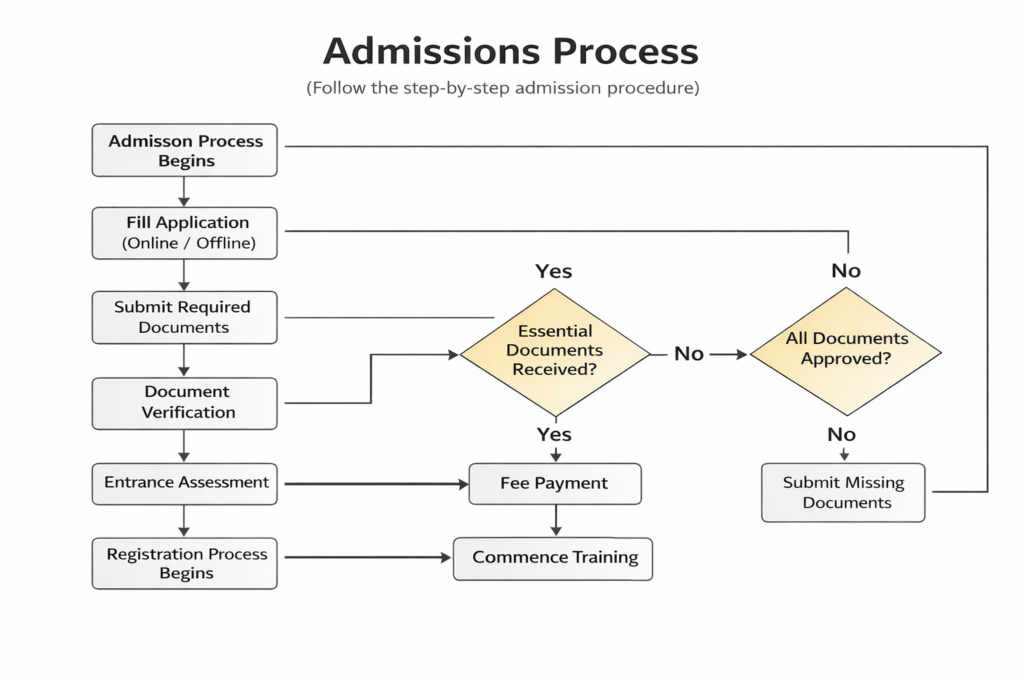
Admission Process

AME admission process flowchart step by step guide

Application Procedure

Entrance Assessment

Some institutions conduct aptitude tests or interviews to assess:

  • English language proficiency
  • Basic mathematics and physics knowledge
  • Communication skills
  • Motivation for aviation career

Submit Application

  • Online application through SOA website
  • Fill personal and educational details
  • Upload required documents

Document Verification

  • Submit original certificates for verification
  • 10th and 12th mark sheets/B.Sc. degree/Diploma certificates
  • Transfer certificate
  • Character certificate
  • Medical fitness certificate
  • Passport size photographs

Document Verification

  • Submit original certificates for verification
  • 10th and 12th mark sheets/B.Sc. degree/Diploma certificates
  • Transfer certificate
  • Character certificate
  • Medical fitness certificate
  • Passport size photographs

Fee Payment

Complete admission by paying required fees as per schedule

Medical Examination

Undergo DGCA Class II Medical examination from approved medical examiner

Commence Training

Join orientation program and begin your AME journey

Required Documents

Important Information

Take Flight Toward Your Aviation Career

The Aircraft Maintenance Engineering Program at SOA offers you the opportunity to enter one of the most exciting, challenging, and rewarding careers in aviation. With flexible admission options accommodating students from 10+2, B.Sc., and Diploma backgrounds, comprehensive DGCA-approved training, modern facilities, and strong industry connections, SOA prepares you for success in the dynamic aviation industry.

India’s aviation sector is booming, creating unprecedented demand for skilled AMEs. Airlines are expanding fleets, MRO facilities are growing, and new opportunities emerge constantly. The combination of job security, excellent salaries, career growth potential, and the satisfaction of contributing to aviation safety makes Aircraft Maintenance Engineering an outstanding career choice.

Whether you envision yourself maintaining commercial airliners at major airports, specializing in business jet maintenance, working with military aircraft, or pursuing international opportunities with global airlines, your journey begins with quality training.

Ready to Launch Your AME Career?

Visit https://soacet.org/our-courses/aircraft-maintenance-engineering-program/ to:

  • Explore detailed program information
  • Download admission brochures
  • Check current batch schedules
  • Submit your online application
  • Contact admission counselors
  • Schedule a campus visit
  • Learn about scholarship opportunities


Join SOA’s Aircraft Maintenance Engineering Program and transform your passion for aviation into a rewarding professional career. The sky truly is the limit!

Frequently Asked Questions

Q1. What is the difference between AME and Aeronautical Engineering?

AME is a specialized certification focused on aircraft maintenance, inspection, and certification, leading to a DGCA license. Aeronautical Engineering is a B.Tech degree focused on aircraft design, manufacturing, and aerospace systems. AMEs maintain and certify aircraft, while aeronautical engineers design and develop them.

No. A DGCA license is mandatory to independently certify and sign off aircraft maintenance work in India. Without it, you can only work under the supervision of a licensed AME the license is what legally qualifies you to release an aircraft as airworthy.

The AME training program itself takes 2.5 to 3 years, covering theoretical modules, practical training, and On-the-Job Training (OJT). After completing training and clearing all DGCA module exams, additional OJT hours and medical clearance are required before the DGCA issues your license the full journey typically takes 3 to 4 years from enrollment to licensing.

The minimum age for admission is 16 years. There is no strict upper age limit for enrollment, though candidates must meet the DGCA Class II Medical fitness requirement regardless of age.

Yes. The aviation MRO sector actively recruits women AMEs, and airlines and MRO organizations increasingly emphasize diversity in technical roles. Women AMEs work across line maintenance, base maintenance, quality assurance, and avionics streams, with the same licensing pathway and career progression as their male counterparts.

After completing training, clearing DGCA module exams, and finishing required OJT hours, you apply to DGCA for your AME license. Once licensed, you can join airlines, MRO organizations, aircraft manufacturers, or defense aviation as a certifying engineer, with career progression from Junior AME to Senior AME, Lead Engineer, and eventually Engineering Manager or Chief Engineer roles.

AME stands for Aircraft Maintenance Engineering (also referred to as Aircraft Maintenance Engineer for the licensed professional). It is the DGCA-regulated discipline focused on inspecting, repairing, certifying, and maintaining aircraft airworthiness distinct from aeronautical engineering, which focuses on aircraft design and manufacturing.