Confused about your career after 12th?
Get FREE one-on-one counselling from aviation experts and explore the best opportunities in the aviation industry.

Aeronautical engineering is the branch of engineering that deals with the design, development, testing, and production of aircraft and related flight systems. It combines principles from mechanical engineering, aerodynamics, propulsion, materials science, and avionics to build machines that fly safely and efficiently within Earth’s atmosphere.
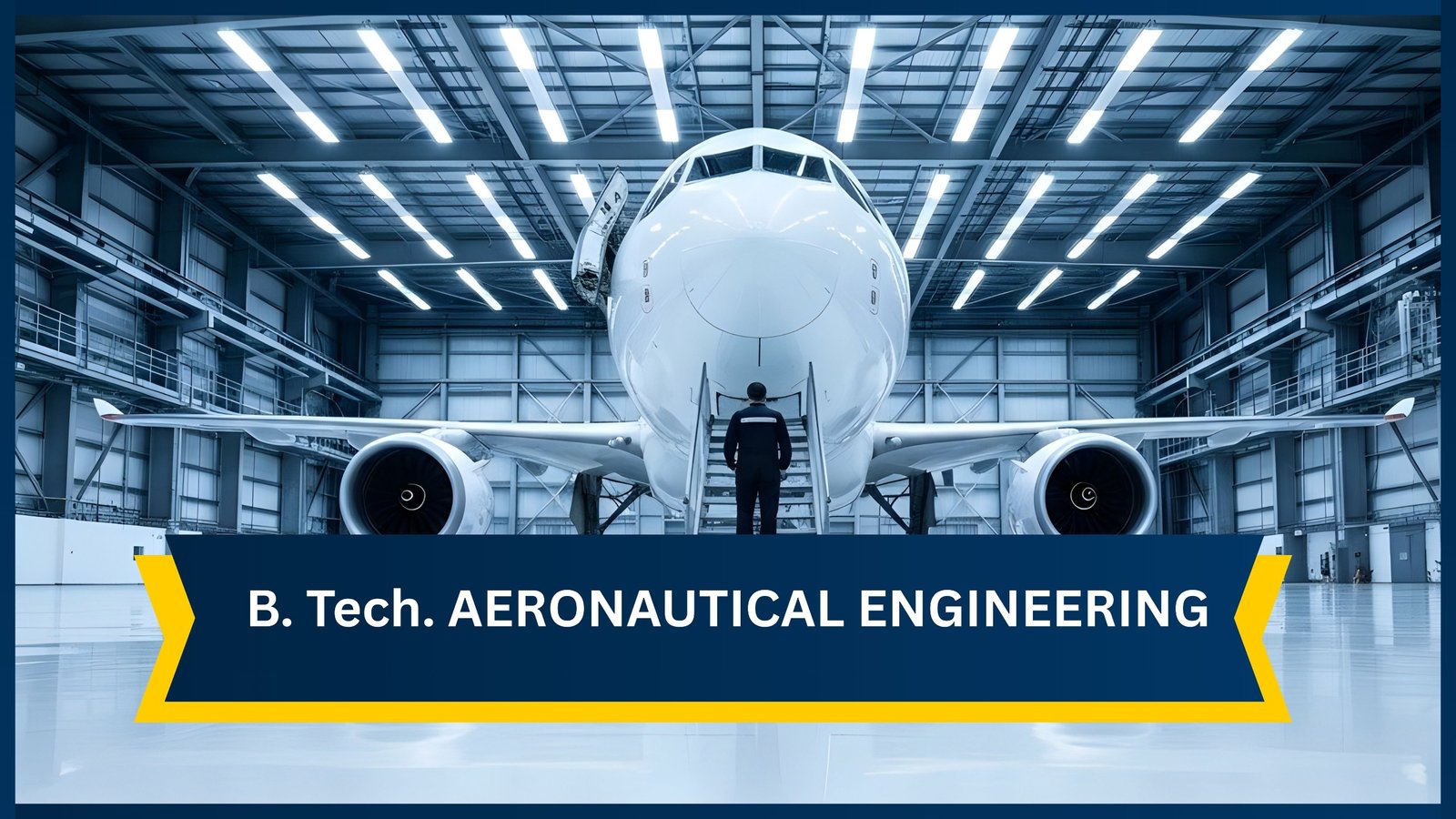
The dream of designing aircraft, spacecraft, and cutting-edge aviation technology begins with the right education. B.Tech. Aeronautical Engineering stands as one of the most exciting and challenging undergraduate programs for students passionate about flight, aerospace systems, and technological innovation.
Aeronautical engineering focuses on the design, development, testing, and production of aircraft and related systems. This specialized branch of engineering combines principles from mechanical engineering, materials science, avionics, propulsion, and aerodynamics to create the flying machines that connect our world.
In this comprehensive guide, we’ll explore everything you need to know about pursuing B.Tech. Aeronautical Engineering – from admission requirements to career opportunities, helping you make an informed decision about your future in aerospace technology.
Aeronautical engineering focuses specifically on vehicles that operate within Earth’s atmosphere commercial and military aircraft, helicopters, and drones. Engineers in this field work across the full lifecycle of an aircraft: designing structures that balance strength and weight, analysing how air flows around a wing or fuselage, developing propulsion systems, and integrating the electronic and control systems that keep an aircraft stable in flight.
The field is often confused with aerospace engineering, which is broader and also includes spacecraft and satellites operating beyond the atmosphere (astronautical engineering). Aeronautical engineering is, in effect, the atmospheric-flight branch of the wider aerospace discipline.
A career in aeronautical engineering typically begins with a four-year B.Tech. degree, covering subjects like aerodynamics, aircraft structures, propulsion, and flight mechanics, before students specialise in design, manufacturing, research, or maintenance-adjacent roles across the aviation and defence industries.
The curriculum covers several critical domains:
To join B.Tech. Aeronautical Engineering, candidates need 10+2 with Physics and Mathematics as compulsory subjects (Chemistry or Computer Science as the third), with a minimum of 50–60% aggregate marks depending on the institute. Diploma holders and B.Sc. (PCM) graduates can also enter directly into the second year through lateral entry, skipping the first year entirely.
Admission is typically through entrance examinations such as JEE Main, state-level engineering tests, or institute-specific exams like SOACET.
See full eligibility criteria, diploma-wise entry rules & required percentages →
The four-year program is structured to provide a gradual progression from fundamental concepts to advanced applications.
The initial year focuses on establishing a strong foundation in basic sciences and engineering principles:
Students delve into core aeronautical engineering subjects:
The curriculum becomes more specialized:
The final year emphasizes advanced concepts and practical application:
B.Tech. Aeronautical Engineering graduates enjoy diverse and rewarding career paths across multiple sectors.
Aircraft Manufacturing Companies: Organizations like Boeing, Airbus, Bombardier, and domestic manufacturers like Hindustan Aeronautics Limited (HAL) actively recruit aeronautical engineers for design, testing, and production roles.
Defense Organizations: The defense sector offers excellent opportunities with organizations such as DRDO (Defence Research and Development Organisation), Indian Air Force, Indian Navy, and other defense establishments working on military aircraft, missiles, and unmanned aerial vehicles (UAVs).
Space Research Organizations: ISRO (Indian Space Research Organisation), NASA, and private space companies like SpaceX and Blue Origin hire aeronautical engineers for spacecraft design, satellite systems, and launch vehicle development.
Commercial Airlines: Major airlines employ aeronautical engineers for aircraft maintenance, quality assurance, and fleet management. Airlines like Air India, IndiGo, Emirates, and Singapore Airlines offer excellent career prospects.
Maintenance, Repair, and Overhaul (MRO) Facilities: MRO organizations require skilled engineers to maintain aircraft airworthiness, conduct inspections, and manage repair operations.
Academic Institutions: Universities and technical institutes offer positions for those interested in teaching and research in aeronautical engineering.
Private Research Organizations: Companies investing in aviation innovation, electric aircraft, autonomous flying systems, and next-generation aerospace technologies actively seek talented engineers.
Government Research Labs: National laboratories conduct cutting-edge research in aerospace technologies, offering exciting opportunities for innovation.
Drone Technology: The rapidly growing drone industry requires aeronautical engineers for UAV design, flight control systems, and payload integration.
Urban Air Mobility: Companies developing flying taxis and electric vertical takeoff and landing (eVTOL) aircraft represent the future of urban transportation.
Space Tourism: Private companies venturing into space tourism offer opportunities to work on reusable launch vehicles and spacecraft designed for civilian space travel.

Aeronautical engineering offers strong earning potential that grows significantly with experience. Fresh graduates typically start between ₹3.5–8 Lakhs per annum, with premier organizations like HAL, ISRO, and DRDO offering ₹6–10 LPA. With 5–10 years of experience, salaries rise to ₹10–25 Lakhs per annum, and senior professionals in leadership roles can earn ₹25–50 Lakhs and above, with international positions offering significantly higher packages.
See the full aeronautical engineering salary breakdown by role & experience →
India offers several strong options for aeronautical engineering, from premier institutes like IIT Bombay, Kanpur, Kharagpur, and Madras, to specialized institutions like IIST Thiruvananthapuram and the Institute of Aeronautical Engineering, Hyderabad. Beyond the IITs, colleges like SRM, Manipal, Amity, and SOA (School of Aeronautics) also offer well-regarded programs with strong industry connections.
See the complete list of top aeronautical engineering colleges in India, city-wise →
The School of Aeronautics Comment Entrance Test (SOACET) offers several benefits for aspiring aeronautical engineers:
With options for direct admission after 10+2 and lateral entry for diploma and B.Sc. graduates, SOACET provides multiple pathways to pursue your aeronautical engineering dreams.
The program is designed to meet industry requirements, ensuring graduates are job-ready with practical skills and theoretical knowledge.
Access to well-equipped laboratories, wind tunnels, aircraft maintenance facilities, and computer-aided design centers enhances hands-on learning.
Learn from faculty members with industry experience and academic expertise who provide mentorship and guidance throughout your academic journey.
Collaborations with aerospace companies, airlines, and research organizations facilitate internships, industrial visits, and placement opportunities.
Engage in cutting-edge research projects, participate in national and international competitions, and contribute to aerospace innovation.
Strengthen Core Subjects: Focus on mathematics and physics, as these form the foundation of aeronautical engineering.
Develop Problem-Solving Skills: Practice numerical problems, participate in science competitions, and engage with challenging concepts.
Explore the Field: Read about aviation history, famous aircraft, aerospace innovations, and current industry trends to build passion and knowledge.
Understand Exam Pattern: Familiarize yourself with the entrance examination format, syllabus, and marking scheme.
Consistent Practice: Solve previous years’ question papers, take mock tests, and identify areas needing improvement.
Time Management: Develop strategies to answer questions efficiently within the time limit.
Conceptual Clarity: Focus on understanding concepts rather than rote learning, as application-based questions require deep comprehension.
Participate in Workshops: Attend workshops, seminars, and guest lectures by industry professionals.
Join Student Organizations: Become part of aeronautical engineering clubs, SAE Aero Design teams, or rocketry clubs.
Pursue Internships: Seek summer internships at aerospace companies, research labs, or airlines to gain practical experience.
Build a Portfolio: Work on projects, participate in competitions, and document your achievements to strengthen your professional profile.
B.Tech. Aeronautical Engineering represents an exciting gateway to a career where you can contribute to the advancement of aviation and space technology. Whether you aspire to design next-generation aircraft, develop space exploration systems, or work on cutting-edge drone technology, this degree provides the knowledge and skills necessary to turn your dreams into reality.
With flexible admission criteria including direct entry after 10+2 and lateral entry options for diploma and B.Sc. graduates, institutions like SOACET make quality aeronautical engineering education accessible to motivated students from diverse backgrounds.
The aerospace industry continues to grow, driven by increasing air travel demand, defense modernization, space exploration initiatives, and emerging technologies like urban air mobility and sustainable aviation. This growth translates into abundant career opportunities with competitive salaries and the chance to work on projects that push the boundaries of human achievement.
If you have a passion for flight, an aptitude for mathematics and physics, and the determination to excel in a challenging field, B.Tech. Aeronautical Engineering could be your perfect career choice. Start your journey today by preparing for entrance examinations, researching colleges that align with your goals, and building the foundational knowledge that will propel you to success in this dynamic and rewarding field.
Take the first step toward your aerospace engineering career and become part of the next generation of innovators who will shape the future of flight and space exploration.
Aeronautical engineering focuses specifically on flight vehicles operating within Earth’s atmosphere planes, drones, and helicopters. Aerospace engineering is a broader field that includes aeronautical engineering plus Astronautical Engineering, which covers spacecraft and satellites that operate in outer space.
It is intellectually challenging as it requires deep mastery of advanced mathematics, physics, and complex subjects like fluid dynamics and propulsion. However, students with a strong foundation in 10+2 PCM (Physics, Chemistry, Maths) find it manageable with consistent practical work and project dedication.
For the first year, you typically need to pass 10+2 with Physics, Mathematics, and Chemistry (PCM) with a minimum aggregate of 50–70% (varies by college). Admission is largely based on entrance exams like JEE Main or state-level tests like KCET, WBJEE, or TNEA.
Yes. Candidates with a three-year engineering diploma in relevant fields (Mechanical, Electronics, Aeronautical) are eligible for lateral entry. This allows you to join directly in the second year, completing your B.Tech. in just three years [4].
Fresh graduates can expect starting salaries between ₹3.5 Lakhs and ₹8 Lakhs per annum. Graduates from premier institutes like the Indian Institutes of Technology (IITs) often secure higher packages, sometimes reaching ₹15 Lakhs per annum at entry-level.
Major recruiters include government organizations like ISRO, DRDO, and Hindustan Aeronautics Limited (HAL). In the private sector, companies like Airbus, Boeing, Tata Advanced Systems, and airlines like IndiGo are major employers.
Yes, your engineering background provides a significant advantage in understanding aircraft systems. However, you must still attend a flight training school, clear DGCA exams, and obtain a Commercial Pilot License (CPL) separately.
SOACET 2027 (School of Aeronautics Common Entrance Test) is a National Level AME Entrance Exam 2027 organized every year by the LNVM Society. The examination is conducted for admission and scholarship into aviation programs at the prestigious School of Aeronautics, Neemrana
CORPORATE OFFICE
H 974, PALAM EXTENSION, PART 1, SEC 7,
DWARKA, NEW DELHI 110077
I 04, DELHI – JAIPUR EXPY, RIICO INDUSTRIAL AREA,
NEEMRANA, RAJASTHAN 301705