


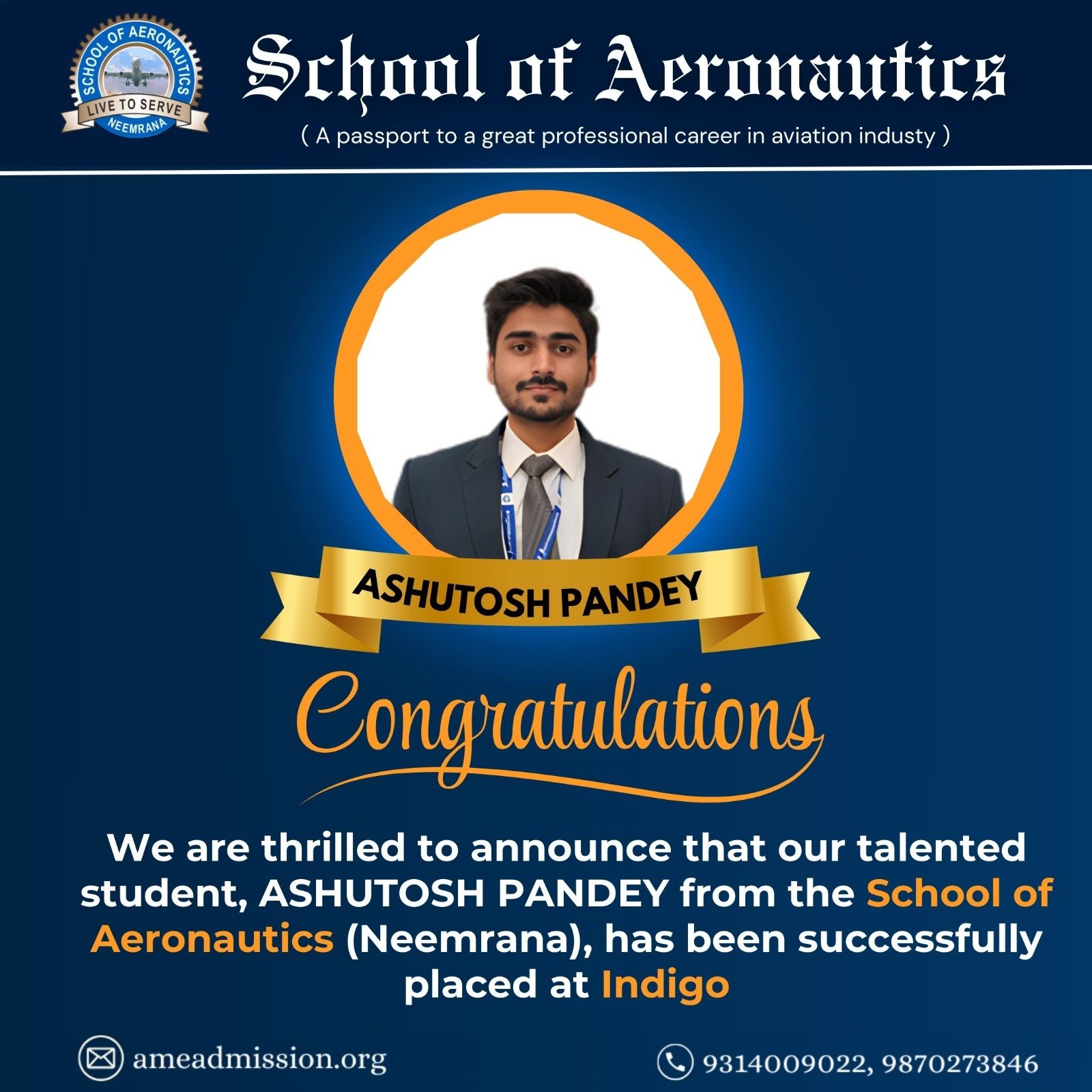
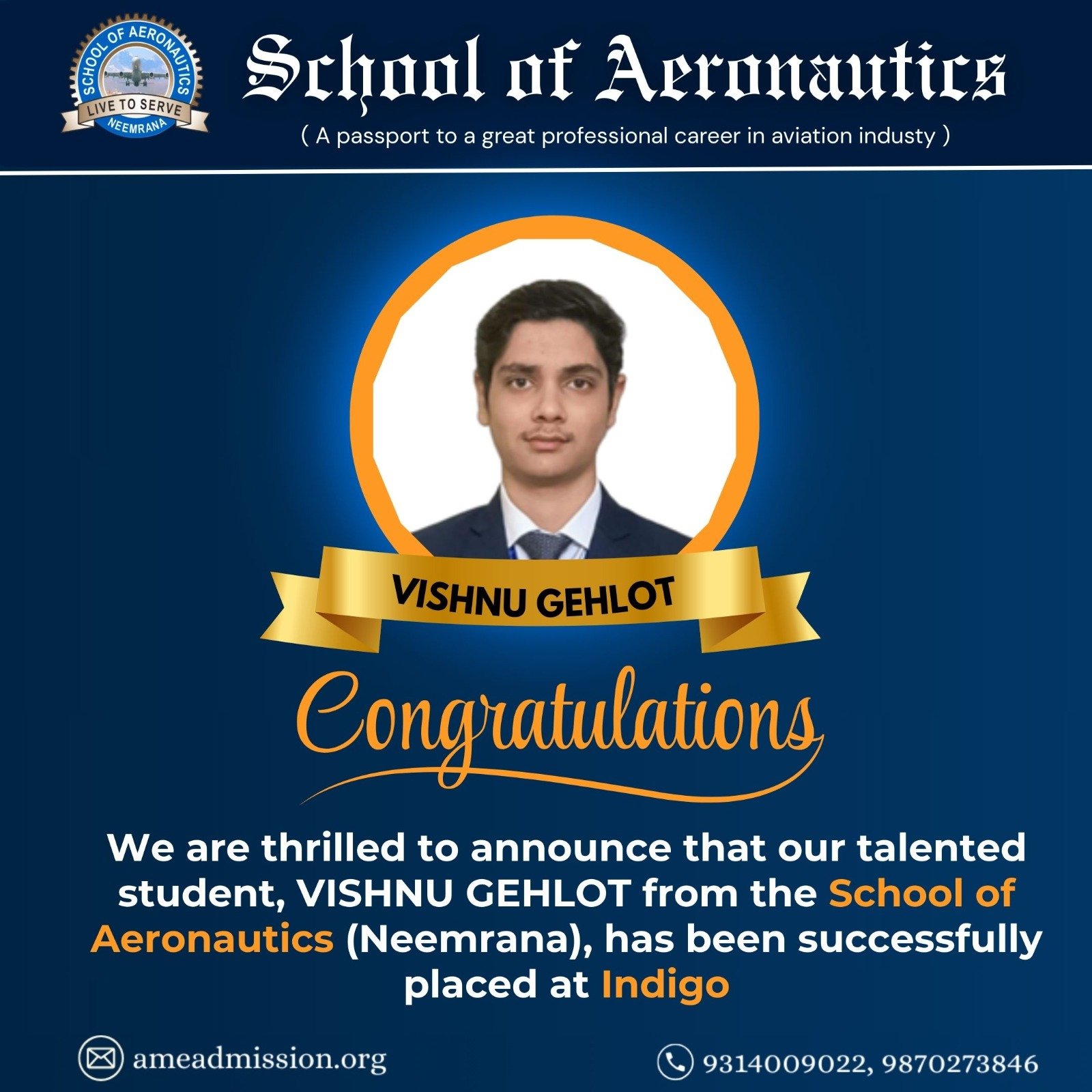
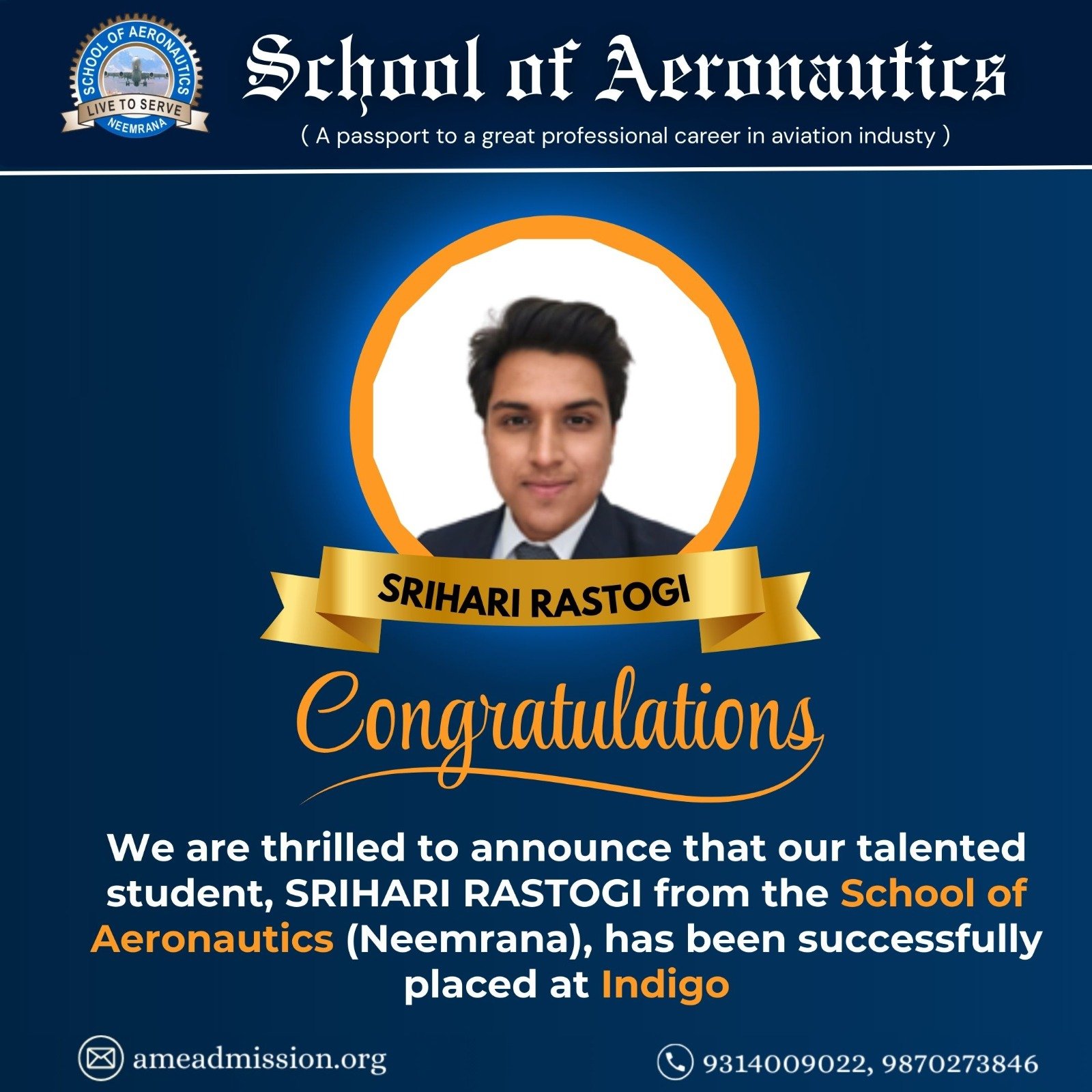
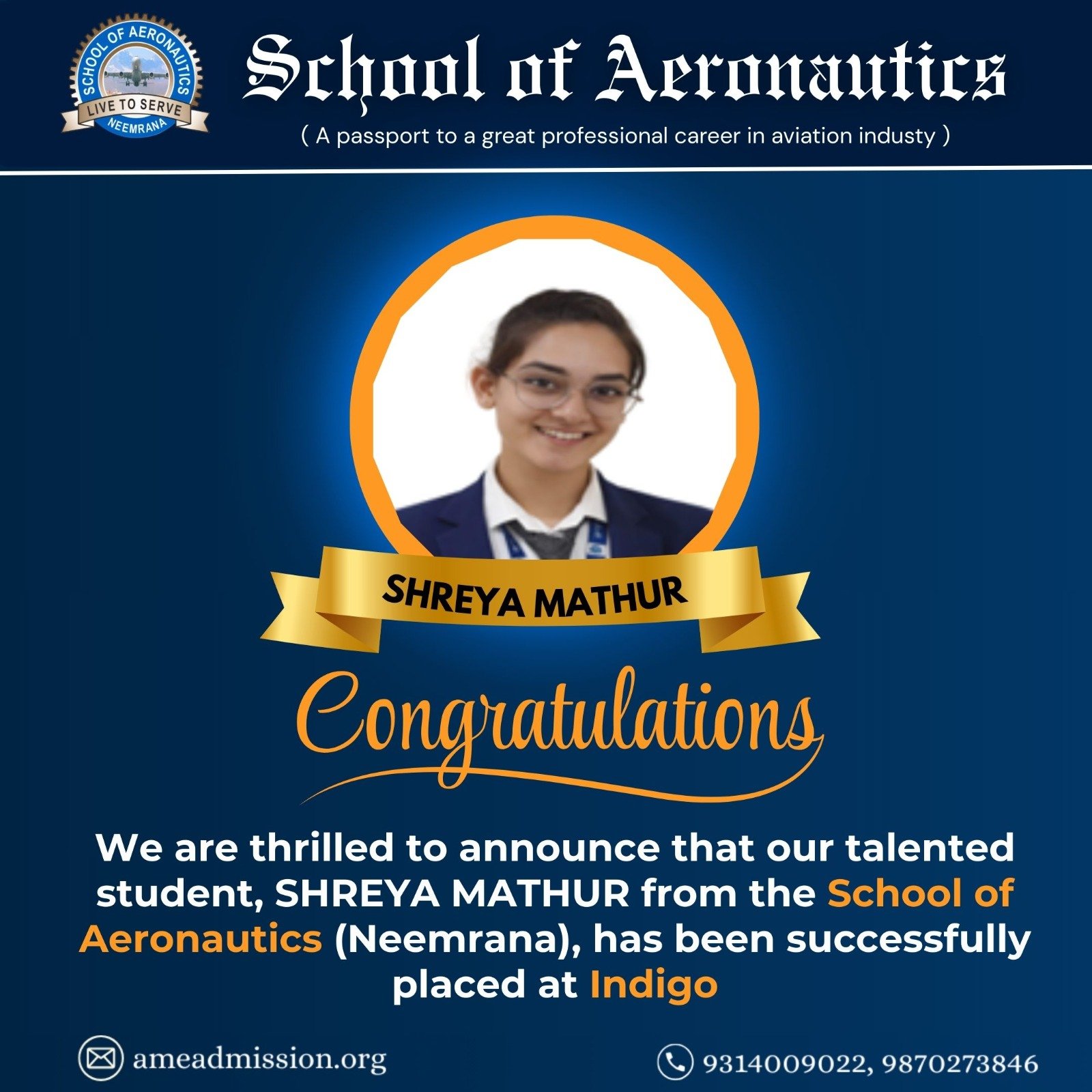




The addition of new regional airports requires permanent, locally based technical teams to handle line maintenance, which steadily increases the baseline demand for qualified engineers.

Confused about your career after 12th?
Get FREE one-on-one counselling from aviation experts and explore the best opportunities in the aviation industry.
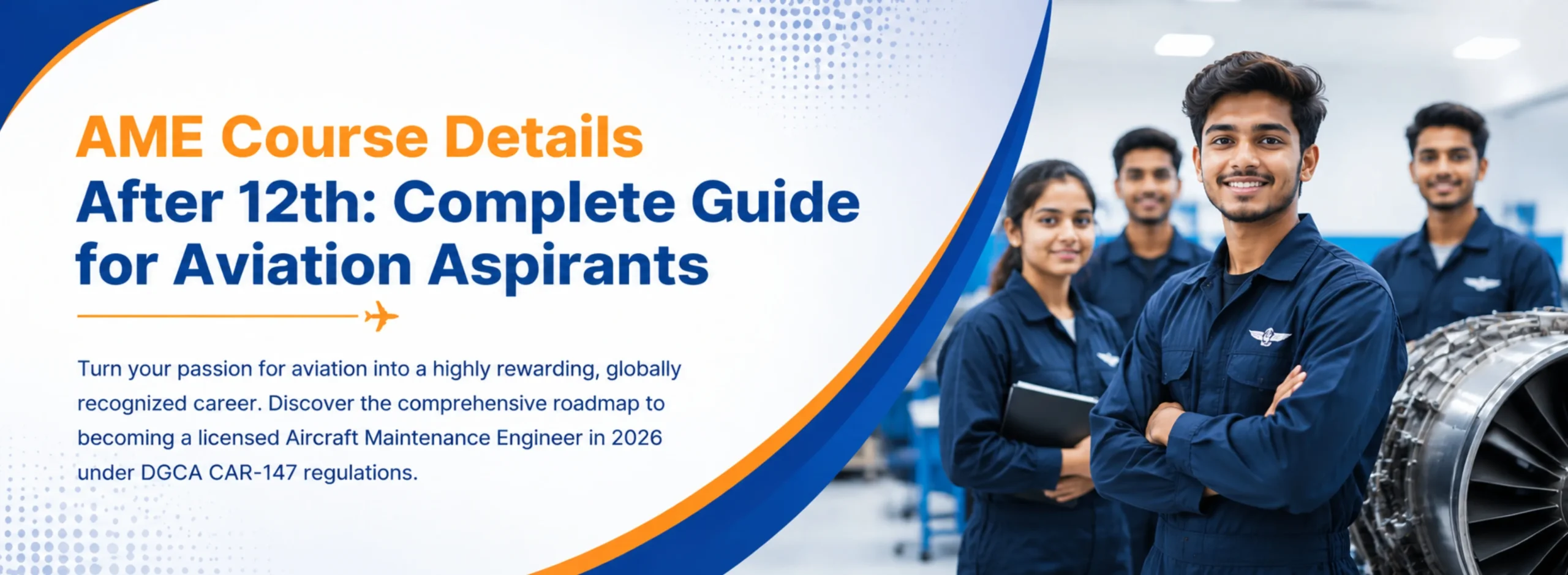
Turn your passion for aviation into a highly rewarding, globally recognized career. Discover the comprehensive roadmap to becoming a licensed Aircraft Maintenance Engineer in 2026 under DGCA CAR-147 regulations.
Years of Excellence
Alumni in Aviation
Acre Campus
Industry Connections
Choosing the right path after high school is one of the most critical decisions a student faces. If you have completed your 12th standard with Physics, Chemistry, and Mathematics (PCM) and carry an unyielding fascination for how massive flying structures navigate the skies, an Aviation Career After 12th holds spectacular promises. Among the array of available choices, the Aircraft Maintenance Engineering Course emerges as an exceptional, highly dynamic technical pathway that operates as the backbone of global commercial and defense flight networks.
Unlike conventional engineering programs that offer purely theoretical academic degrees, an AME Course After 12th is a highly intensive, regulatory-compliant technical program. It focuses directly on equipping candidates with practical competencies, hands-on operational training, and regulatory knowledge. As global air passenger traffic breaches record milestones in 2026 and leading regional carriers systematically deploy massive hundreds-strong aircraft orders, the global demand for skilled, certified maintenance professionals has reached unprecedented heights. This guide details every facet of the AME landscape to help you transition smoothly from a high school graduate to a fully certified aviation specialist.
Aircraft Maintenance Engineering is a highly specialized technical discipline dedicated entirely to ensuring the airworthiness, mechanical integrity, structural durability, and operational safety of all varieties of aircraft. Every commercial airliner, private charter jet, corporate turboprop, and military transport helicopter must meet incredibly stringent safety benchmarks before it is legally cleared to lift its wheels off the runway tarmac.
The primary role of an Aircraft Maintenance Engineer (AME) is to act as the ultimate authority on aviation safety. An AME conducts systematic, rigorous inspections, replaces aging or worn components, diagnoses complex electrical anomalies, fixes structural defects, and runs advanced diagnostic tests on powerplants and avionics suites. Their professional signature on a Flight Release Certificate is legally mandatory before any flight can take off.
The entire global aviation infrastructure relies completely on the competence of these engineers. Modern airlines manage tight flight turnarounds where mechanical delays can cause cascading financial and logistical disruptions. Because complex modern airliners contain millions of connected parts, flight crews rely entirely on the engineering team on the ground. AMEs keep these complex technological assets operating reliably, ensuring that public transport remains incredibly safe.
The structured core of the AME program is designed to move students efficiently from introductory physics concepts to advanced, practical aircraft diagnostics. The basic operational parameters of this professional path are outlined below:
| Particular | Details |
|---|---|
| Course Name | Aircraft Maintenance Engineering (AME) |
| Eligibility | 10+2 with Physics, Chemistry & Mathematics (PCM) with minimum 50% aggregate marks OR 3-Year Engineering Diploma |
| Course Duration | 2 Years Basic Training + 1 to 2 Years Mandatory Practical Experience |
| Course Type | DGCA CAR-147 Approved Aircraft Maintenance Engineering Programme |
| Admission Process | Entrance Examination Merit / Direct Application and Counseling |
| Career Sector | Airlines, MRO Companies, Defence Aviation, General Aviation and Aircraft Manufacturing |
| Average Course Fees | ₹8,00,000 (Approx.) |
In India, the structural standards for this course are strictly defined by the Directorate General of Civil Aviation (DGCA) under the Ministry of Civil Aviation. To step into this field, you must choose an institute that holds explicit, valid structural certification as a CAR-147 Basic Training Organization.
The program is split into two primary streams: Mechanical (Category B1), which covers heavy turbine powerplants, structures, landing gears, and fluid systems; and Avionics (Category B2), which focuses on cockpit instruments, radio communications, pulse systems, digital instrumentation, and electrical infrastructure.
Years of Excellence
Alumni in Aviation
Acre Campus
Industry Connections
Because of the immense responsibilities placed on an engineer, the AME Eligibility After 12th includes precise academic, age, and medical fitness criteria:
| Medical Parameter | Requirement |
|---|---|
| Color Vision | Normal Color Vision as Per Applicable DGCA Medical Standards |
| Night Vision | Normal Night Vision Required |
| General Vision | 6/6 Vision or Corrected to 6/6 with Spectacles/Contact Lenses (Subject to DGCA Norms) |
| Physical Fitness | Candidate Should Be Physically and Mentally Fit to Perform Aviation Maintenance Duties |
The total AME Course Duration framework runs across precise theoretical, practical, and on-job milestones, designed to meet international safety guidelines. The primary institutional phase spans 2 Years (Totaling 2,400 training hours). This curriculum is strictly balanced between theoretical instruction (60%) and practical workshop execution (40%).
To earn an unrestricted maintenance license, a student must follow a structured development path:
During this training period, students develop crucial analytical skills and mechanical habits. The 2,400-hour institutional track prepares you for the strict safety cultures maintained by modern commercial aviation systems.
The curriculum is divided into clear regulatory module groups specified under international civil aviation guidelines. The primary fields of study include:
| Subject | Description |
|---|---|
| Aircraft Systems | Covers fluid power dynamics, cabin environmental controls, landing gear actuation, emergency escape mechanisms, and fuel distribution systems. |
| Aircraft Structures | Focuses on structural metallurgy, composite materials, stress analysis, riveting techniques, and non-destructive testing (NDT) methods used in aircraft maintenance. |
| Aircraft Engines | Provides in-depth knowledge of turbofan engines, auxiliary power units (APUs), thermodynamics, compressor stages, and fuel control systems. |
| Aviation Safety | Covers hazardous material handling, fire protection systems, accident prevention practices, and aviation safety regulations. |
| Maintenance Practices | Includes practical training on precision tools, aircraft hardware, wiring repairs, inspection techniques, and calibration procedures. |
| Human Factors | Examines human performance, decision-making, communication, fatigue management, and error prevention in aviation maintenance. |
| Electrical Systems | Covers AC/DC power generation, electrical circuits, distribution systems, and aircraft electrical protection mechanisms. |
| Aerodynamics | Studies airflow principles, lift and drag forces, flight mechanics, boundary layers, and aircraft control surfaces. |
Succeeding as an aviation maintenance professional requires a combination of specialized technical abilities and strong personal habits:
An Aircraft Maintenance Engineering Course offers distinct advantages compared to traditional three or four-year general academic degrees:
1. Direct Route to High-Responsibility Work: The program prepares you quickly for practical engineering responsibilities. By age twenty-one or twenty-two, certified AMEs manage high-value aerospace assets and sign flight releases, long before graduates from traditional paths achieve similar organizational authority.
2. Rapid Professional Launch: Traditional engineering degrees require four full years of classroom study before a student enters the job market. The AME path moves you into active aviation maintenance hangars within twenty-four months, allowing you to build real-world experience early.
3. Global Career Mobility: Modern aircraft utilize highly standardized platforms across the globe. An engineer trained on an Airbus A320 or Boeing 737 platform in India works with the identical systems, maintenance manuals, and diagnostic setups used in Singapore, London, or Dubai. This technical consistency makes it much easier to transition to international roles.
4. Strong Sector Resilience: While general technology fields experience regular employment cycles, the physical fleet of aircraft requires constant safety oversight. Aircraft must complete their safety checks based on strict calendar or flight-hour intervals, regardless of broader economic fluctuations. This regulatory framework ensures highly stable, long-term demand for certified maintenance professionals.
Completing your basic training opens up various specialized career paths across the aviation sector:
Compensation in this field scales directly with your experience level, cleared regulatory modules, and the specific aircraft type ratings you earn:
| Career Phase | Experience Level | Average Annual Salary Range (INR) |
|---|---|---|
| Aircraft Technician | 0 to 2 Years | ₹4.2 Lakhs to ₹6.5 Lakhs |
| Licensed AME | 3 to 5 Years | ₹10.0 Lakhs to ₹18.0 Lakhs |
| Type-Rated Senior Engineer | 5+ Years | ₹24.0 Lakhs to ₹45.0 Lakhs+ |
Factors Influencing Earning Potential: Earning your initial license establishes a strong professional baseline. Your market value increases significantly as you pass additional DGCA modular tests and secure formal type-ratings on widely used commercial fleets like the Boeing 787 Dreamliner or Airbus A321neo. International defense contractors and prominent global airlines often provide substantial premiums for engineers holding multiple type certifications.
Aircraft Maintenance Engineering is a technical discipline governed by the Directorate General of Civil Aviation (DGCA) in India. AME professionals are responsible for maintaining, inspecting, and certifying aircraft for airworthiness a responsibility that places them at the absolute centre of aviation safety.
The AME programme at School of Aeronautics covers aerodynamics, aircraft structures, propulsion systems, avionics, aircraft electrical systems, hydraulics, pneumatics, and the full spectrum of DGCA regulatory requirements. Students learn to apply engineering principles to real-world maintenance scenarios, developing the technical judgment that is essential for a career in aviation.
Upon completing the programme and clearing DGCA examinations, AME graduates earn a licence that authorises them to certify aircraft for return-to-service after maintenance a role of enormous responsibility and corresponding professional standing in the aviation industry.
Speak with our admissions team to understand the admission process, eligibility, and how to prepare your application.
The financial and structural expansion of the aviation sector supports the long-term career outlook for modern graduates. In India and across the broader Asia-Pacific region, the aviation industry is experiencing sustained structural growth. Regional carriers have placed historic, multi-billion-dollar aircraft orders that will add hundreds of mainline commercial jets to the regional fleet over the coming decade.
This expansion is supported by major national initiatives like the UDAN regional connectivity scheme, which has modernized and reopened scores of regional airports. This expanding infrastructure connects previously underserved populations to major economic centers. This growing network of active airports requires dedicated, permanent teams of technicians and certifying engineers on-site to handle daily line maintenance and quick operational turnarounds.
At the same time, regional maintenance strategy is shifting away from relying on distant international repair hubs. Domestic and international partnerships are investing heavily in building localized, state-of-the-art Maintenance, Repair, and Overhaul (MRO) facilities. This shift allows complex structural checks and deep engine overhauls to be completed domestically, which helps reduce operational costs for airlines and creates long-term, high-skill technical employment opportunities within the country. This developing MRO infrastructure provides a highly stable career path for the next generation of certified aircraft maintenance engineers.
Securing a seat in a premier DGCA-approved CAR-147 training organization involves a clear, structured application process:
Selecting the right training center is a critical step because your practical competencies depend heavily on the quality of the campus infrastructure. Top-tier CAR-147 institutions feature advanced workshops, fully functional engine testing installations, composite repair laboratories, and specialized mock-up rigs. Many premium training centers invest in dedicated, on-site hangars housing real aircraft, giving students the opportunity to practice maintenance tasks in a realistic operational setting.
Furthermore, established academies bring together highly experienced instructional teams, often composed of retired defense maintenance specialists and senior licensed civil aviation engineers. These instructors provide invaluable mentorship alongside the core curriculum. Strong industry relationships are also a major advantage of leading schools, helping secure structured internships and practical training slots with prominent airlines and domestic MRO providers.
A simple, transparent six-step process to secure your place in North India’s best and oldest AME programme. Your aviation career begins here.
① Online Application
↓
② Eligibility Verification
↓
③ Counseling Session
↓
④ Document Verification
↓
⑤ Admission Confirmation
↓
⑥ Enrollment
Speak with our admissions team to understand the admission process, eligibility, and how to prepare your application.
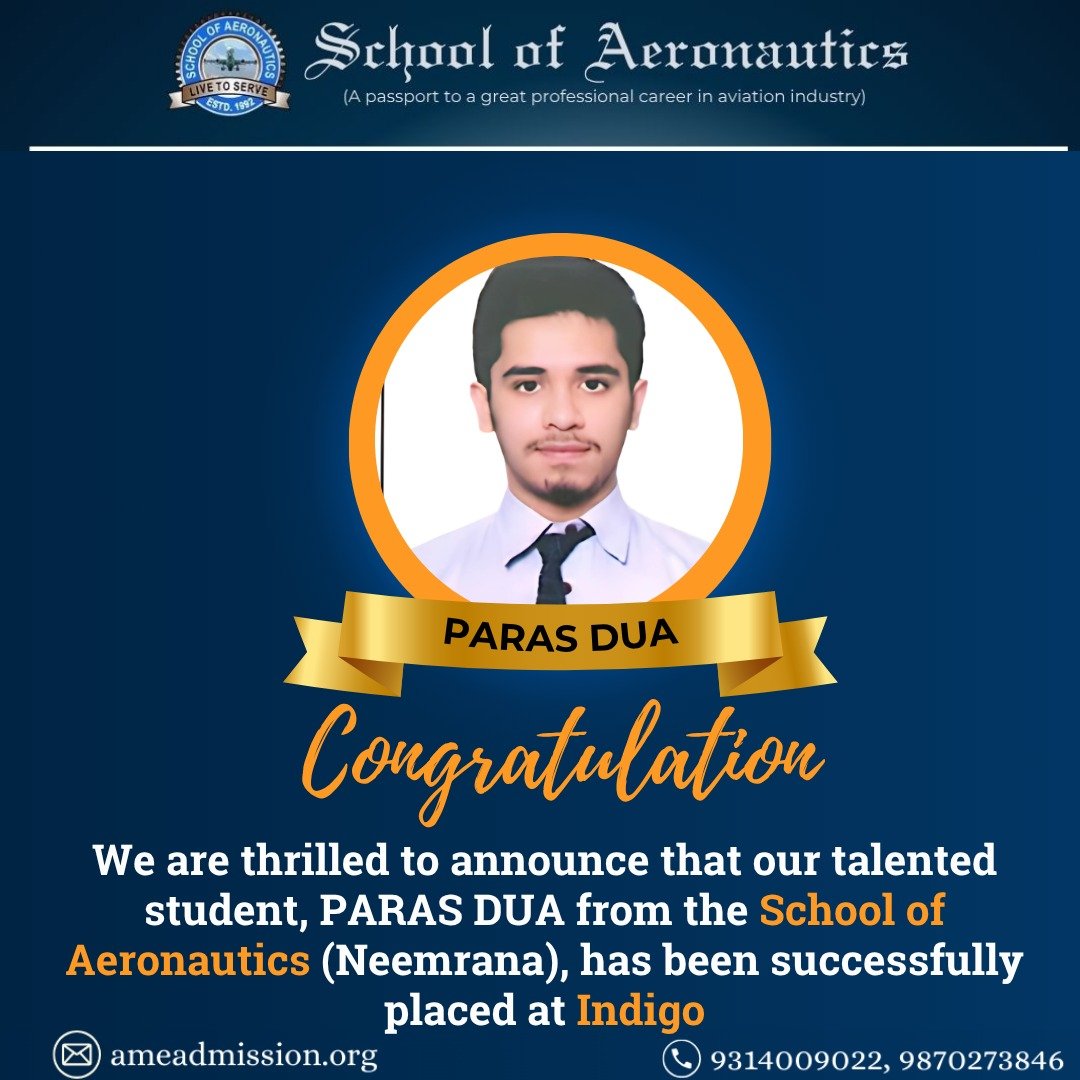
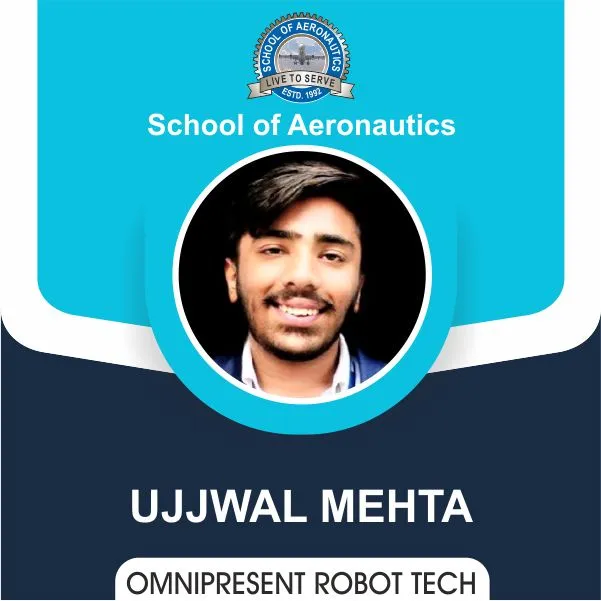
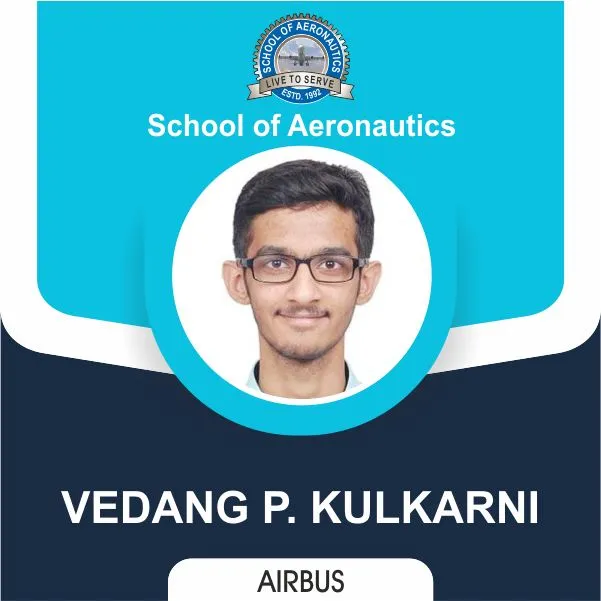
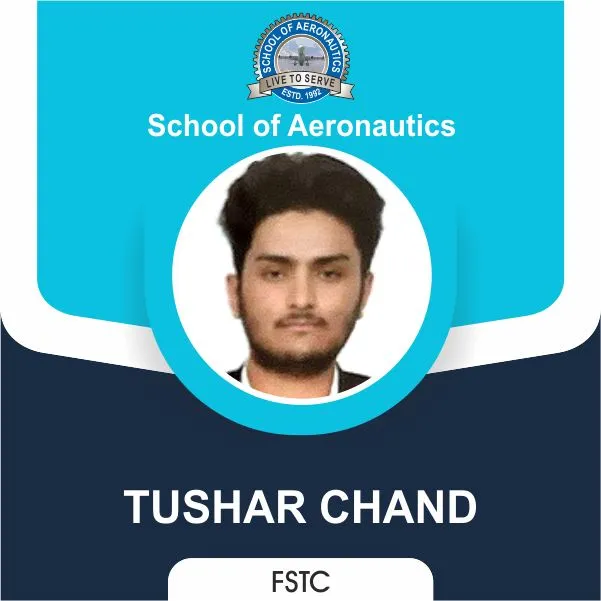
Real students. Real guidance. Real outcomes. Here’s what some of our alumni have shared about how career counselling shaped their aviation story.
Everything you need to know about AME, School of Aeronautics Neemrana, and how to build your aviation career
The course is a specialized technical licensing track designed to train students in inspecting, troubleshooting, repairing, and certifying the safety of various aircraft types under civil aviation rules.
No, a 10+2 high school background with Physics, Chemistry, and Mathematics is mandatory. Alternatively, students holding an AICTE-recognized 3-year engineering diploma can apply.
The basic institutional phase requires exactly 2 years of study, structured across 2,400 comprehensive training hours divided between classrooms and active maintenance workshops.
No, it is a specialized technical license training program. It focuses on preparing students to meet the stringent safety standards and modular examinations required to earn a DGCA aircraft maintenance license.
The Mechanical stream (B1) focuses on major structural components, powerplants, and hydraulic networks. The Avionics stream (B2) specializes in cockpit instrumentation, radar arrays, auto-flight installations, and electrical systems.
Aircraft wiring harnesses and complex system schematics rely on precise, color-coded layouts. Accurate color identification is a critical safety requirement for daily maintenance work, making color blindness a standard ground for rejection.
New graduates entering the field as aircraft technicians typically start with a salary range between ₹4.2 Lakhs and ₹6.5 Lakhs per year, which scales up quickly as type ratings are earned.
Yes, because training structures align closely with international frameworks, engineers can transition their skills to global markets by meeting the specific local aviation authority guidelines.
The initial curriculum focuses on electrical fundamentals, materials technology, hardware standards, basic aerodynamics, and essential human factors modules.
Many top-tier institutes utilize merit scores from national entrance tests like AME CEE to allocate scholarships and seats, though some centers offer direct admission options based on 12th board performance.
Yes, the deep understanding of maintenance workflows and safety compliance provides an excellent foundation for moving into operational management or quality assurance leadership positions.
The Central Examination Office of the DGCA typically coordinates computer-based modular examinations three times within a calendar year.
They monitor maintenance records, perform compliance audits across workshops, and ensure all hangar operations strictly follow regulatory updates.
Typically, tuition and laboratory fees are listed separately from residential costs. Hostel fees are calculated based on the specific campus amenities chosen by the student.
The addition of new regional airports requires permanent, locally based technical teams to handle line maintenance, which steadily increases the baseline demand for qualified engineers.
SOACET 2026 (School of Aeronautics Common Entrance Test) is a National Level AME Entrance Exam 2026 organized every year by the LNVM Society. The examination is conducted for admission and scholarship into aviation programs at the prestigious School of Aeronautics, Neemrana.