Confused about your career after 12th?
Get FREE one-on-one counselling from aviation experts and explore the best opportunities in the aviation industry.

If you’re exploring aeronautical engineering courses in India, you’re stepping into one of the most technically demanding and rewarding branches of engineering. From designing aircraft wings that generate lift efficiently to developing propulsion systems that power modern jets, aeronautical engineering courses train students to understand and build the machines that make flight possible.
This guide covers everything: the different aeronautical engineering courses available in India, a complete year-wise subjects breakdown, the detailed syllabus for core papers, and how to choose between a degree, diploma, or BSc pathway based on your goals.
Aeronautical engineering courses are structured academic programs that teach the principles of aircraft design, aerodynamics, propulsion, and structural engineering. Unlike a general mechanical engineering degree, these courses are built specifically around flight vehicles that operate within Earth’s atmosphere commercial aircraft, military jets, helicopters, and drones.
In India, aeronautical engineering courses are offered at multiple levels from a 3-year diploma to a full 4-year B.Tech degree each designed for a different entry point and career goal. Whether you’re a fresh 10+2 graduate or a diploma holder looking to specialize further, there’s a course structure that fits your academic background.
(Internal link: → [What is Aeronautical Engineering? Complete Guide] main pillar page)
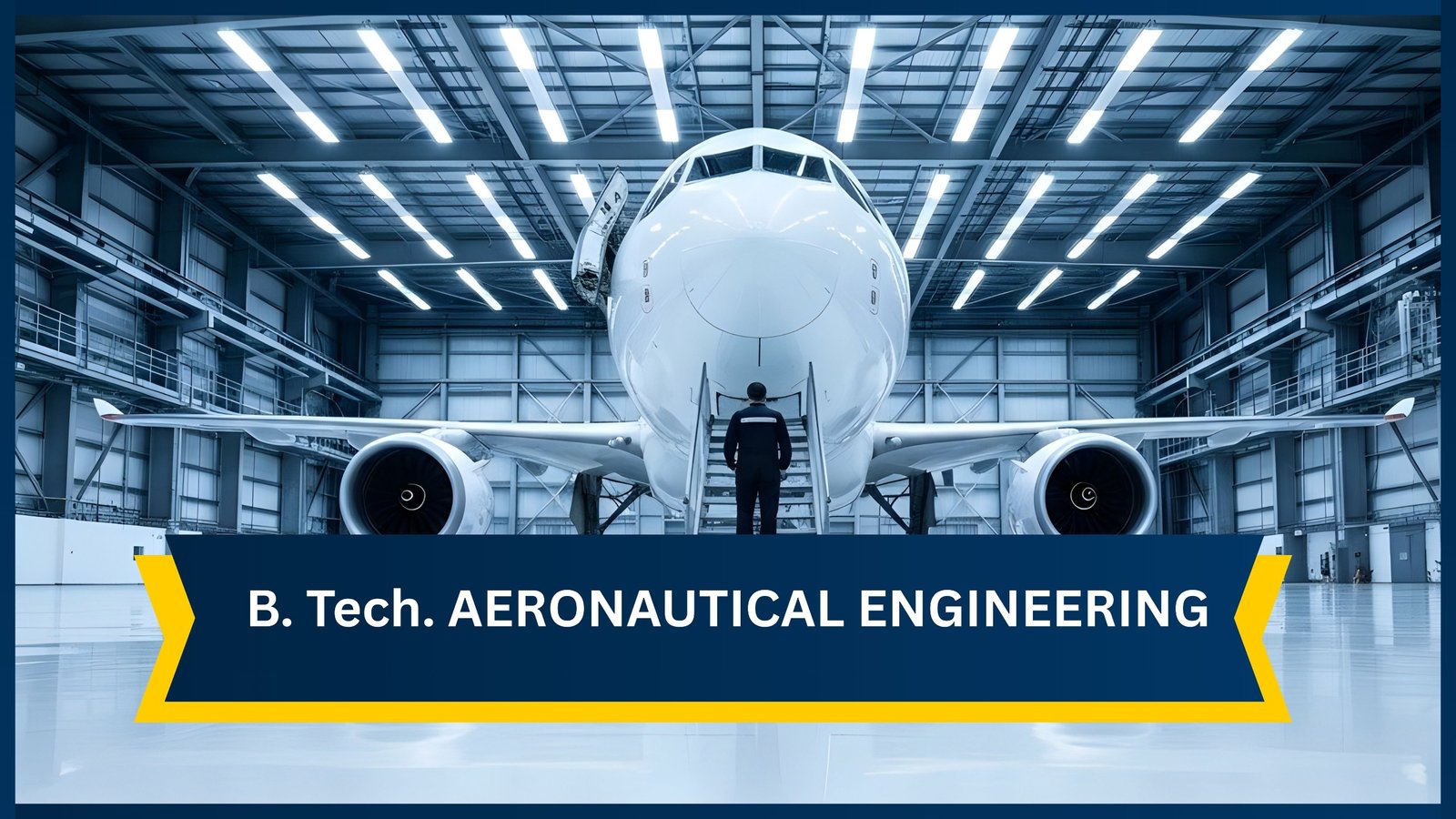
A four-year, AICTE-approved undergraduate degree open to students who’ve completed 10+2 with Physics, Chemistry, and Mathematics (PCM). This is the core design-and-engineering focused program for students aiming at R&D, manufacturing, or core aerospace engineering roles.
Best for: Students aiming for design engineering, R&D, or roles at organizations like HAL, ISRO, or DRDO.
A combined program pairing a design-focused aeronautical engineering degree with DGCA-recognized Aircraft Maintenance Engineering (AME) training giving graduates both an engineering qualification and a maintenance license pathway. This dual-track option is ideal for students who want maximum career flexibility across both design and maintenance streams.
Best for: Students who haven’t decided between design engineering and hands-on maintenance careers, and want to keep both doors open.
A combined program for students who want both a design-focused engineering degree and DGCA-recognized maintenance licensing ideal for those who haven’t decided between design and maintenance careers and want to keep both options open.
Best for: Students who haven’t decided between design engineering and hands-on maintenance careers, and want to keep both doors open.
(Internal link: → AME Program pillar page for full details)
| Course Type | Duration | Entry Requirement | Focus Area |
|---|---|---|---|
| B.Tech Aeronautical Engineering | 4 years | 10+2 (PCM) | Design, R&D, core engineering |
| AME (Aircraft Maintenance Engineering) | 3 years | 10+2 (PCM) / B.Sc. / Diploma | DGCA-licensed aircraft maintenance & certification |
| Integrated B.Tech (Aero) + AME Dual Pathway | Extended | 10+2 (PCM) | Design + maintenance dual pathway |
(Internal link: → Aeronautical Engineering Eligibility page for exact percentage and subject requirements per pathway)
The B.Tech aeronautical engineering subjects are structured to build progressively starting with foundational engineering sciences in Year 1 and moving toward highly specialized aerospace subjects by Year 4.
The first year focuses on core engineering fundamentals common across most engineering branches:
(Internal link: → Aeronautical Engineering Career & Scope page)
Year 2 introduces the mechanical and material science fundamentals that underpin all aeronautical engineering subjects to come:
(Internal link: → Aeronautical Engineering Career & Scope page)
This is where the aeronautical engineering syllabus becomes distinctly aviation-focused:
(Internal link: → Aeronautical Engineering Career & Scope page)
The final year focuses on advanced, applied, and often elective subjects, along with a capstone project:
(Internal link: → Aeronautical Engineering Career & Scope page)
Beyond the year-wise list, here’s what each major subject in the aeronautical engineering syllabus actually covers, so you know what to expect before you enroll.
| Subject | What It Covers |
|---|---|
| Aerodynamics | How air flows over aircraft surfaces — lift generation, drag, boundary layer behavior, and introductory CFD principles |
| Aircraft Structures | Structural design theory, stress and load analysis, and how airframes are engineered to withstand flight forces |
| Propulsion | Jet engine theory (turbojets, turbofans, turboprops), combustion, and the thermodynamics behind aircraft propulsion systems |
| Flight Mechanics | Aircraft stability, control surfaces, performance, and maneuverability throughout different flight phases |
| Avionics | Electronic systems for navigation, communication, and flight control integration |
| Materials Science | Composite fabrication, metal forming, corrosion resistance, and quality standards for aerospace-grade components |
| CFD (Computational Fluid Dynamics) | Simulation-based analysis of airflow, used extensively in modern aircraft design and testing |

While this core structure is broadly consistent across AICTE-approved institutions in India, exact subject sequencing, elective availability, and lab exposure can vary between universities always check the specific curriculum of your shortlisted institute.
| Detail | Information |
|---|---|
| Total Duration (B.Tech) | 4 years, 8 semesters |
| Mode of Study | Full-time, on-campus |
| Approval | AICTE-approved (verify for your specific institute) |
| Entrance Route | JEE Main, state-level engineering exams, or institute-specific tests like SOACET |
| Eligibility | 10+2 with Physics and Mathematics compulsory (Chemistry or Computer Science as third subject) |
| Lateral Entry | Diploma holders and B.Sc. (PCM) graduates can enter directly into Year 2 |
(Internal link: → Aeronautical Engineering Fees page for detailed cost breakdown by institute type)
Choosing between SOACET’s three programs depends on whether you want to design aircraft, maintain them, or keep both options open.
There’s no universally “better” choice it depends on whether you’re drawn to designing aircraft or keeping them flying safely, and how much time you want to invest before entering the workforce.
(Internal links: → B.Tech Aeronautical Engineering pillar page, → AME Program pillar page)
Beyond the technical syllabus, aeronautical engineering courses build a set of practical and analytical skills that employers actively look for:
A: SOACET offers three programs: a 4-year B.Tech in Aeronautical Engineering (design-focused), AME Aircraft Maintenance Engineering (a DGCA-licensed maintenance program), and an Integrated B.Tech + AME program that combines both. Diploma and B.Sc. (PCM) holders can also enter the B.Tech program directly into Year 2 through lateral entry.
A: A typical B.Tech aeronautical engineering program covers 35-40 subjects across 8 semesters, ranging from foundational sciences in Year 1 to specialized subjects like aerodynamics, propulsion, and avionics from Year 3 onward.
A: The core subjects are broadly standardized under AICTE guidelines, but exact sequencing, elective options, and lab facilities can vary between institutions. Always review the specific curriculum of your shortlisted college.
A: B.Tech Aeronautical Engineering is a design-and-engineering focused degree, ideal for R&D, manufacturing, and core engineering roles. AME (Aircraft Maintenance Engineering) is a DGCA-regulated program focused on inspecting, repairing, and certifying aircraft leading to a maintenance license rather than an engineering degree. Both are valid, well-respected career paths, just with different focus areas.
A: Yes. Diploma holders in relevant engineering streams can enter a B.Tech Aeronautical Engineering program directly into the second year through lateral entry, effectively saving one year compared to starting from Year 1.
A: It’s mathematically and conceptually demanding subjects like aerodynamics, propulsion, and CFD require strong analytical thinking. However, most students with a solid 10+2 PCM foundation find it manageable, especially as the coursework becomes more applied and project-based from the third year onward.
SOACET 2027 (School of Aeronautics Common Entrance Test) is a National Level AME Entrance Exam 2027 organized every year by the LNVM Society. The examination is conducted for admission and scholarship into aviation programs at the prestigious School of Aeronautics, Neemrana
CORPORATE OFFICE
H 974, PALAM EXTENSION, PART 1, SEC 7,
DWARKA, NEW DELHI 110077
I 04, DELHI – JAIPUR EXPY, RIICO INDUSTRIAL AREA,
NEEMRANA, RAJASTHAN 301705