

Confused about your career after 12th?
Get FREE one-on-one counselling from aviation experts and explore the best opportunities in the aviation industry.

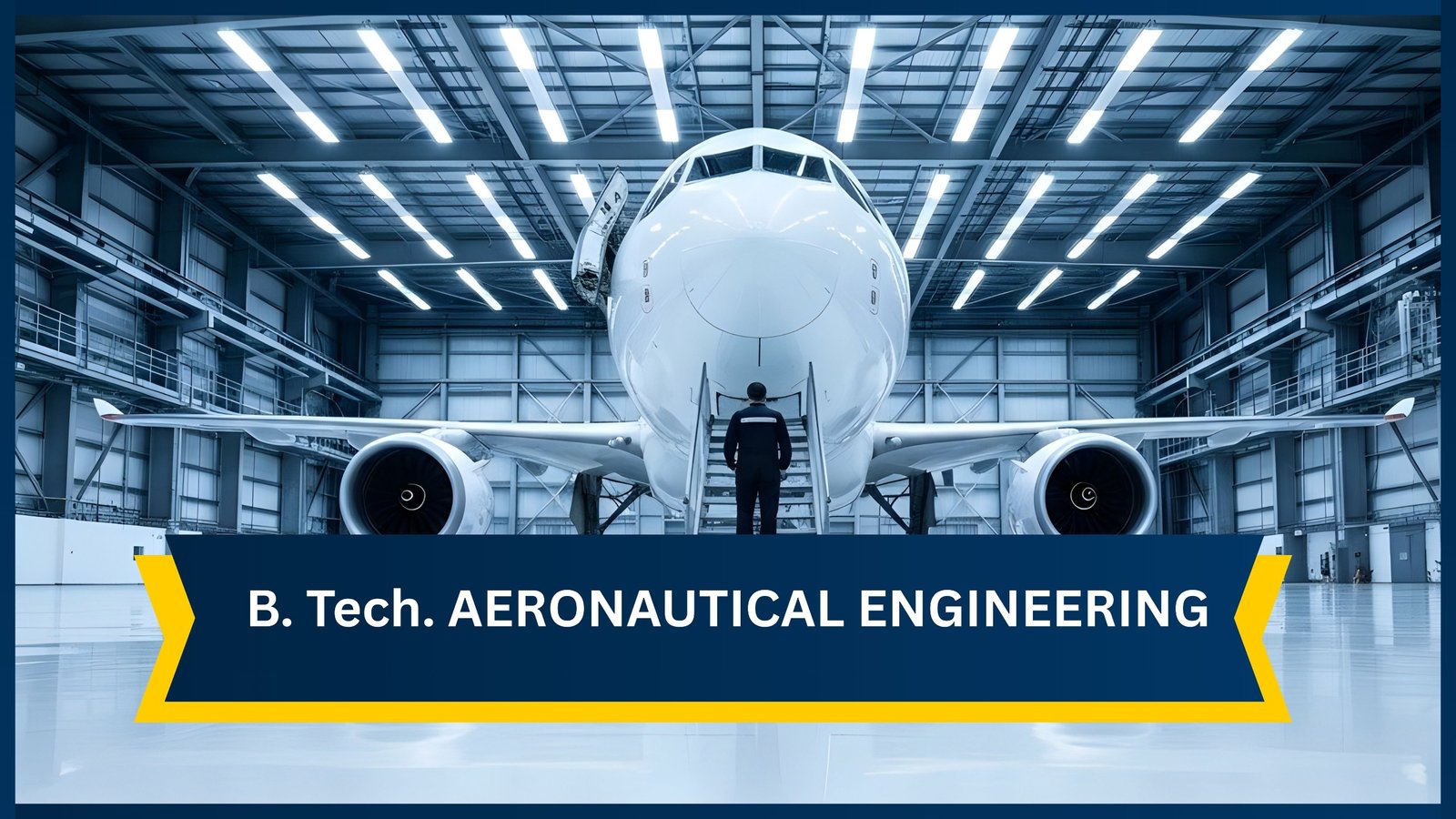
India’s aviation and aerospace sector is expanding faster than almost any other engineering-driven industry in the country and that expansion is directly fueling aeronautical engineering scope across design, research, manufacturing, and defence. If you’re wondering whether this is a field worth committing four years to, or exactly how to become an aeronautical engineer, this guide covers the complete picture: where the jobs are, what the career path looks like, and how to get there.
The scope of aeronautical engineering in India spans several distinct sectors, each offering a different kind of career:
India’s civil aviation market is projected to become one of the largest in the world over the coming decade, and government initiatives around domestic aircraft manufacturing and MRO (Maintenance, Repair, and Overhaul) capability are actively expanding demand for aerospace-trained engineers across both design and operational roles.
Your foundation starts in Class 11-12, where Physics, Chemistry, and Mathematics (PCM) are compulsory subjects. A strong grasp of physics and math specifically will make the engineering coursework significantly more manageable later.
Admission into a B.Tech Aeronautical Engineering program typically requires clearing an entrance exam JEE Main, a state-level engineering entrance test, or an institute-specific exam such as SOACET.
The core academic journey is a four-year B.Tech in Aeronautical Engineering, covering foundational engineering in the first two years and specialized aerospace subjects aerodynamics, propulsion, aircraft structures from the third year onward.
Internships, industrial visits, and final-year projects matter significantly in this field. Hands-on exposure to CAD tools, simulation software, and real design or testing environments makes a measurable difference when entering the job market.
Many aeronautical engineers pursue an M.Tech or M.S. in a specialized area propulsion, structures, avionics, or aerodynamics particularly if aiming for research-focused or senior design roles.
With a completed degree, entry points typically include campus placements, direct applications to aerospace manufacturers and government organizations, or competitive exams for PSU (Public Sector Undertaking) positions like HAL and ISRO.
The range of job opportunities for aeronautical engineers spans far beyond just “aircraft design.” Here’s a breakdown of the roles graduates actually move into.
| Role | What It Involves |
|---|---|
| Design Engineer | Designing aircraft components, structures, or systems using CAD and simulation tools |
| Aerodynamics Engineer | Analyzing and optimizing airflow behavior around aircraft surfaces |
| Propulsion Engineer | Developing and testing engine and propulsion systems |
| Structural Analysis Engineer | Ensuring airframes and components meet strength and safety requirements |
| Flight Test Engineer | Supporting pre-delivery testing and systems verification for new aircraft |
| Research Engineer | Working on R&D projects at organizations like ISRO, DRDO, or NAL |
| Production/Manufacturing Engineer | Overseeing quality control and production processes for aerospace components |
| Avionics Engineer | Working on navigation, communication, and flight-control electronic systems |
HAL, ISRO, DRDO, and NAL remain among the most sought-after employers for aeronautical engineering graduates in India, offering roles in design, testing, R&D, and production across both aviation and space programs. Entry is typically through campus placements, GATE-based recruitment, or dedicated PSU recruitment exams.
Companies like Tata Advanced Systems, Mahindra Aerospace, and various Boeing/Airbus supply-chain partners in India are expanding domestic design and manufacturing capacity, creating growing demand for aerospace-trained engineers in production and design roles.
For those drawn to research over industry, institutions like NAL, IISc, and IIT aerospace departments offer research fellowships and academic career tracks, often requiring further specialization through an M.Tech or Ph.D.
Global aerospace majors Boeing, Airbus, and various international MRO and manufacturing hubs also recruit Indian aeronautical engineering graduates, particularly those with strong academic records or specialized postgraduate qualifications.
Beyond your degree, certain skills consistently separate strong candidates in the aeronautical engineering job market:
A typical aeronautical engineering career path progresses through a few broad stages:
A: Aeronautical engineering scope in India spans government organizations (HAL, ISRO, DRDO), private aerospace manufacturers, research institutions, and international aerospace companies. With India’s aviation sector expanding rapidly and growing government focus on domestic manufacturing, demand for aerospace-trained engineers continues to grow across design, R&D, and production roles.
A: Complete 10+2 with Physics, Chemistry, and Mathematics, clear an engineering entrance exam (JEE Main, state-level exams, or institute-specific tests like SOACET), and complete a 4-year B.Tech in Aeronautical Engineering. Practical exposure through internships and projects significantly strengthens your career prospects after graduation.
A: Common roles include Design Engineer, Aerodynamics Engineer, Propulsion Engineer, Structural Analysis Engineer, Flight Test Engineer, Research Engineer, and Avionics Engineer, across employers ranging from government aerospace organizations to private manufacturers and research institutions.
A: For students genuinely interested in aviation and aerospace technology, it offers strong long-term scope particularly in India, where the aviation sector is expanding and domestic manufacturing capability is a growing government priority. It does require sustained academic commitment, given the technical depth of the coursework.
A: Not mandatorily, but many aeronautical engineers pursue an M.Tech or M.S. in a specialized area particularly those aiming for research-focused roles, senior design positions, or academic careers.
A: Aeronautical engineering scope centers on design, R&D, and manufacturing roles requiring a B.Tech degree. AME (Aircraft Maintenance Engineering) scope centers on aircraft maintenance, inspection, and certification, requiring a DGCA license rather than an engineering degree. Both offer strong career prospects, but in distinctly different areas of the aviation industry.
SOACET 2027 (School of Aeronautics Common Entrance Test) is a National Level AME Entrance Exam 2027 organized every year by the LNVM Society. The examination is conducted for admission and scholarship into aviation programs at the prestigious School of Aeronautics, Neemrana
CORPORATE OFFICE
H 974, PALAM EXTENSION, PART 1, SEC 7,
DWARKA, NEW DELHI 110077
I 04, DELHI – JAIPUR EXPY, RIICO INDUSTRIAL AREA,
NEEMRANA, RAJASTHAN 301705