Why 2026 is the Perfect Year to Start Your AME Career
The year 2026 marks an exciting turning point in Indian aviation. With the industry projected to add over 500 new aircraft to Indian fleets, expand regional connectivity under UDAN schemes, and establish India as a global MRO hub, the demand for qualified Aircraft Maintenance Engineers has never been higher. Starting your AME journey in 2026 positions you perfectly to ride this wave of unprecedented growth.
School of Aeronautics (SOA) is now accepting applications for AME Admission 2026, offering aspiring aviation professionals a DGCA-approved pathway to become certified Aircraft Maintenance Engineers. Whether you’re a 10+2 student planning your future, a diploma holder seeking specialization, or a B.Sc. graduate exploring career options, SOACET’s comprehensive AME program opens doors to rewarding careers across airlines, MRO facilities, aircraft manufacturers, and defense organizations.
This definitive guide covers everything you need to know about AME Admission 2026 at SOACET eligibility criteria, application process, program details, career prospects, and why 2026 is the ideal time to launch your aviation maintenance career.
What is Aircraft Maintenance Engineering?
Before diving into admission details, let’s understand what makes AME such a compelling career choice.
The AME Profession
Aircraft Maintenance Engineers are licensed aviation professionals responsible for ensuring aircraft safety, airworthiness, and operational readiness. Every commercial flight you see in the sky has been certified safe by an AME who has meticulously inspected, maintained, and approved that aircraft for flight operations.
Key Responsibilities Include:
- Conducting pre-flight and post-flight inspections
- Performing scheduled maintenance tasks (A, B, C, and D checks)
- Troubleshooting mechanical, electrical, and avionic problems
- Replacing defective components and systems
- Certifying aircraft as airworthy after maintenance
- Maintaining detailed technical documentation
- Ensuring compliance with DGCA regulations and manufacturer specifications
AME License Categories
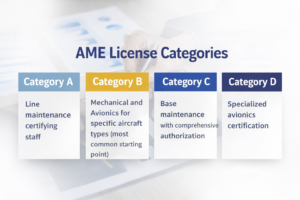
The Directorate General of Civil Aviation (DGCA) issues AME licenses in several categories:
- Category A: Line maintenance certifying staff
Category B: Mechanical and Avionics for specific aircraft types (most common starting point)
Category C: Base maintenance with comprehensive authorization
Category D: Specialized avionics certification
SOACET’s AME program prepares students for Category B certification, with pathways to advance to higher categories through experience.
Why Choose AME as a Career in 2026?
- High Demand: India faces an acute shortage of licensed AMEs with airlines actively recruiting.
Job Security: Aviation safety regulations ensure consistent demand for qualified professionals.
Attractive Salaries: Starting salaries of ₹3.5-6 lakhs per annum, rising to ₹15-30 lakhs+ with experience.
Global Opportunities: Work in India or convert license to work internationally.
Purposeful Work: Directly contribute to aviation safety and passenger welfare.
Career Growth: Clear progression path from junior AME to Chief Engineer positions.
Diverse Options: Choose from airlines, MROs, manufacturers, defense, or private aviation.
AME Admission 2026 at SOACET: Eligibility Criteria
School of Aeronautics (SOA) welcomes students from diverse educational backgrounds, offering multiple pathways to AME certification.
Route 1: Direct Entry After 10+2/Intermediate/Pre-Degree
Educational Qualification:
- Passed 10+2, Intermediate, or Pre-degree examination
- From a recognized board (CBSE, ICSE, State Boards, NIOS)
Subject Requirements:
- Compulsory: Mathematics, Physics, Chemistry
- All three subjects must have been studied in 10+2
Minimum Percentage:
- Typically 50% aggregate in Physics, Chemistry, and Mathematics (PCM)
- Reserved category students may have percentage relaxation as per government norms
Age Requirements:
- Minimum: 16 years completed
- Maximum: Generally no upper age limit
Medical Fitness:
- Must obtain DGCA Class II Medical Certificate
- Can be completed after provisional admission
This is the most common pathway for students completing their higher secondary education and planning to directly enter aviation maintenance careers.
Route 2: Lateral Entry Through B.Sc. Degree
Educational Qualification:
- Completed B.Sc. degree from a recognized university
Subject Requirements:
- Compulsory: Mathematics, Physics, Chemistry
- All three subjects must have been part of B.Sc. curriculum
Recognition:
- Degree must be from UGC-recognized university
- Both semester and annual pattern degrees accepted
Advantages:
- Strong theoretical foundation in sciences
- May receive exemptions for certain basic modules
- Mature perspective from graduate-level education
B.Sc. graduates bring deep subject knowledge that enhances their understanding of aircraft systems physics, materials chemistry, and mathematical principles underlying aircraft operations.
Route 3: Lateral Entry Through Engineering Diploma
Educational Qualification:
- Three-year diploma in engineering from recognized institution
Eligible Specializations:
- Mechanical Engineering
- Electrical Engineering
- Electronics Engineering
- Instrumentation Engineering
- Other relevant technical diplomas
Recognition:
- AICTE-approved or State Technical Board recognized diplomas
Benefits:
- Practical technical skills from diploma training
- Familiarity with workshop practices and tools
- Possible exemptions for certain theoretical modules
- Shorter learning curve for practical training
Diploma holders in mechanical, electrical, or electronics possess valuable technical knowledge that directly applies to aircraft systems maintenance.
Additional Requirements for All Applicants
Medical Fitness: All AME candidates must pass DGCA Class II Medical examination covering:
- General physical health
- Vision (correctable to 6/6 in both eyes)
- Color vision (must distinguish aviation signal colors)
- Hearing ability
- No serious chronic conditions affecting safety-critical work
English Proficiency: Moderate proficiency in English for understanding technical manuals and documentation
Citizenship: Indian citizens and eligible foreign nationals can apply
AME Program Structure at SOACET
Program Duration
Total Duration: Approximately 2.5 to 3 years
- Theoretical Training: 12-18 months
- Basic Practical Training: 6-12 months
- On-the-Job Training (OJT): 6-12 months (concurrent with module exams)
DGCA-Approved Curriculum
SOACET’s AME program strictly follows DGCA-prescribed syllabus, ensuring students receive training that meets national and international aviation standards.
Module-Based Structure:
Foundation Modules (1-10):
- Mathematics – Arithmetic, algebra, geometry, trigonometry
- Physics – Mechanics, thermodynamics, electricity, magnetism
- Electrical Fundamentals – DC/AC theory, circuits, batteries
- Electronic Fundamentals – Semiconductors, digital electronics
- Digital Techniques – Logic circuits, microprocessors, computer systems
- Materials and Hardware – Aircraft materials, corrosion, fasteners
- Maintenance Practices – Safety, tools, inspection, documentation
- Basic Aerodynamics – Principles of flight, airfoil theory
- Human Factors – Aviation psychology, error management, safety culture
- Aviation Legislation – DGCA regulations, airworthiness standards
Specialized Modules (11-17):
Turbine Aeroplane Aerodynamics, Structures, and Systems
Helicopter Aerodynamics, Structures, and Systems
Aircraft Aerodynamics, Structures, and Systems
Propulsion – Overview of all propulsion systems
Gas Turbine Engine – Detailed turbine engine systems
Piston Engine – Reciprocating engines and systems
Propeller – Propeller theory, types, and maintenance
Stream Selection:
- Mechanical Stream: Focuses on airframe and powerplant systems
- Avionics Stream: Emphasizes electronic and avionic systems
Most students begin with mechanical stream, then add avionics later.
Training Components
Theoretical Classes:
- Classroom instruction by DGCA-approved instructors
- Lectures, presentations, and interactive sessions
- Assignments, tests, and assessments
Practical Workshops:
- Hands-on training with actual aircraft components
- Sheet metal work, welding, riveting
- Electrical wiring and circuit assembly
- Hydraulic and pneumatic system assembly
- Engine handling and testing
- Use of specialized tools and equipment
Aircraft Hangar Training:
- Training on actual aircraft
- Component removal and installation
- System testing and troubleshooting
- Documentation practices
- Ground equipment operation
On-the-Job Training (OJT):
- Supervised work at airlines or MRO facilities
- Real-world maintenance operations
- Exposure to line and base maintenance
- Building required experience hours for licensing
DGCA Module Examinations
- Students appear for DGCA written examinations for each module
- Minimum 75% marks required to pass each module
- Multiple attempts allowed
- Can appear for modules progressively
- All modules must be cleared for license eligibility
Why Choose SOACET for AME Admission 2026?
DGCA Approval and Accreditation
- DGCA Approved: SOACET is an authorized DGCA-approved AME training organization
- Regular Audits: Facilities and curriculum regularly audited for compliance
- Quality Standards: Maintains high standards required by aviation authorities
- License Eligibility: Students eligible to obtain DGCA AME license upon completion
World-Class Infrastructure
Aircraft Training Aids:
- Multiple aircraft for hands-on training
- Aircraft sections: fuselage, wings, empennage
- Landing gear assemblies (nose and main)
- Flight control surfaces and systems
- Complete cockpit trainers
Engine Training Equipment:
- Gas turbine engines (turbojet, turbofan, turboprop)
- Piston engines (radial and inline configurations)
- Engine test cells and running equipment
- Cutaway engines showing internal components
- Engine accessories and systems
Specialized Workshops:
- Sheet Metal Workshop with forming and riveting equipment
- Composite Materials Workshop for modern aircraft repairs
- Electrical/Avionics Workshop with test benches
- Hydraulic/Pneumatic Systems Workshop
- Non-Destructive Testing (NDT) Laboratory
- Welding and Fabrication Workshop
Library and Learning Resources:
- Comprehensive collection of aviation maintenance manuals
- DGCA reference materials and publications
- Manufacturer technical documentation
- Digital resources and e-learning platforms
- Aviation magazines and journals
Experienced Faculty
- Industry Professionals: Instructors with airline and MRO experience
- DGCA Approved: All faculty approved by DGCA as instructors
- Continuous Training: Regular faculty development programs
- Mentorship Approach: Personalized guidance and support
- Guest Lecturers: Industry experts share real-world insights
Industry Partnerships and Placement Support
Airline Collaborations:
- Tie-ups with major airlines for OJT placements
- Air India, IndiGo, SpiceJet, Vistara connections
- Private charter and business aviation operators
MRO Facility Partnerships:
- Training agreements with leading MRO organizations
- Access to diverse aircraft types during training
- Exposure to latest maintenance practices and technologies
Placement Cell Services:
- Dedicated team for career guidance and placement
- Resume building and interview preparation workshops
- Campus recruitment drives
- Job notifications and application support
- Alumni network connections
- 80-90% placement rate for AME graduates
Recruitment Partners Include:
- Major domestic airlines
- International carriers operating in India
- MRO facilities across India
- Aircraft manufacturers (HAL, private firms)
- General aviation operators
- Defense establishments
Student-Centric Approach
Comprehensive Support:
- Academic counseling and performance tracking
- Doubt clearing sessions and remedial classes
- DGCA exam preparation guidance
- Medical examination facilitation
- Documentation and licensing assistance
Facilities:
- Separate boys and girls hostels with modern amenities
- Mess providing nutritious meals
- Wi-Fi enabled campus
- Sports and recreational facilities
- Student activity centers
- 24/7 security
Holistic Development:
- Technical competitions and workshops
- Industrial visits to airlines and MRO facilities
- Participation in aviation exhibitions
- Soft skills and personality development
- Leadership training programs
Career Opportunities After AME Certification
Airlines – India’s Largest Employer of AMEs
Major Carriers:
- Air India, IndiGo, SpiceJet, Vistara, Air Asia India, Go First
- Growing fleets creating constant demand
Positions Available:
- Line Maintenance Engineer (day-to-day inspections and minor repairs)
- Base Maintenance Engineer (heavy checks and overhauls)
- Component Shop Engineer (specialized systems)
- Planning and Scheduling Engineer
- Quality Assurance positions
Starting Salary: ₹3.5 to ₹6 lakhs per annum Experienced Professionals: ₹8 to ₹20 lakhs per annum Senior Management: ₹20 to ₹40 lakhs per annum
MRO (Maintenance, Repair, Overhaul) Organizations
Major MROs in India:
- Air India Engineering Services Limited (AIESL)
- GMR Aero Technic
- Bird Group
- Taj-SIA Engineering
- Private MRO startups
Roles:
- Aircraft Maintenance Certifying Staff
- Engine Overhaul Specialist
- Component Repair Engineer
- NDT Technician
- Quality Inspector
Salary Range: ₹4 to ₹15 lakhs per annum
Aircraft Manufacturers
Organizations:
- Hindustan Aeronautics Limited (HAL)
- Mahindra Aerospace
- Tata Advanced Systems
- Private aerospace startups
Positions:
- Production Quality Engineer
- Flight Test Support Engineer
- Customer Support Engineer
- Technical Publications Specialist
Salary Range: ₹4.5 to ₹12 lakhs per annum
Defense and Government Sectors
Opportunities:
- Indian Air Force (technical branches)
- Indian Navy (aviation wing)
- Coast Guard (aircraft maintenance)
- DGCA (as inspector after experience)
- Airports Authority of India
Benefits:
- Job security and stability
- Government pay scales and benefits
- Pension and retirement benefits
- Career growth opportunities
General Aviation and Business Jets
- Corporate aircraft maintenance
- VIP helicopter operations
- Charter operator technical staff
- Flying school maintenance departments
Salary Range: ₹4 to ₹10 lakhs per annum
International Opportunities
Gulf Region:
- Emirates, Etihad, Qatar Airways, Saudi Airlines
- Salary: $40,000 to $70,000 per annum (₹35-60 lakhs)
Asia-Pacific:
- Singapore Airlines, Cathay Pacific, Malaysia Airlines
- Salary: $35,000 to $65,000 per annum
Europe and Americas:
- Major carriers worldwide (requires license conversion)
- Salary: $50,000 to $90,000+ per annum
AME Admission 2026: Application Process
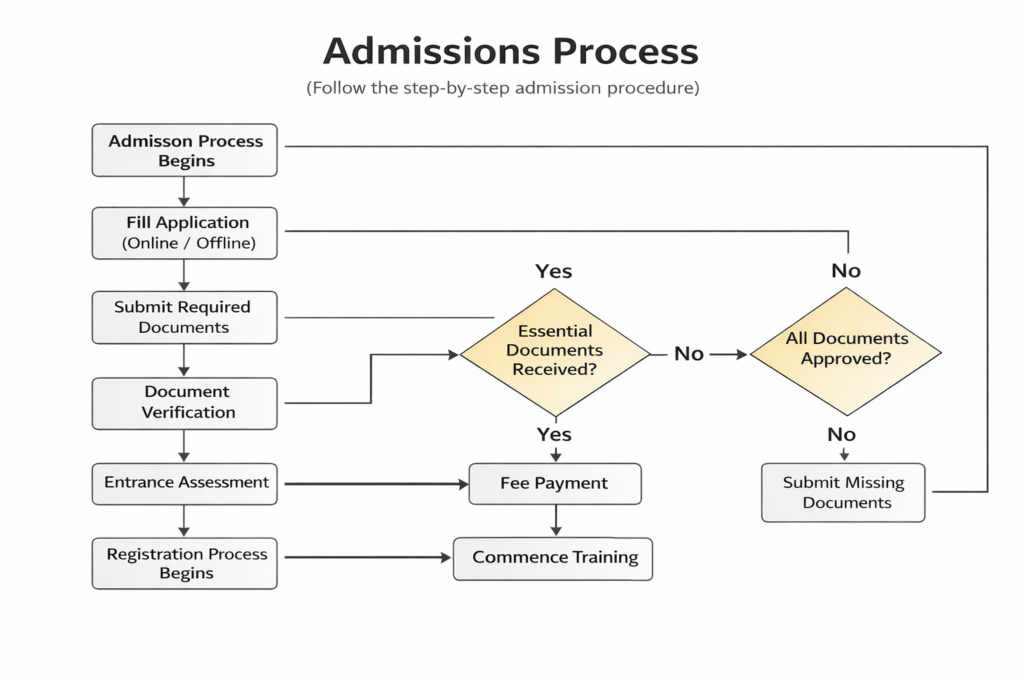
Step 1: Check Eligibility
Verify you meet one of these requirements:
- 10+2 with Physics, Chemistry, Mathematics (minimum 50%)
- B.Sc. with Physics, Chemistry, Mathematics
- Diploma in Mechanical/Electrical/Electronics Engineering
Step 2: Gather Required Documents
Prepare the following:
- 10th standard mark sheet and certificate
- 12th standard mark sheet and certificate (or B.Sc./Diploma certificates)
- Transfer certificate from previous institution
- Character certificate
- Caste certificate (if claiming reservation benefits)
- Passport size photographs (recent)
- Aadhar card and identity proof
- Medical fitness certificate (can be submitted later)
Step 3: Online Application
Visit: https://soacet.org
Complete Application Form:
- Personal details (name, date of birth, contact information)
- Educational qualifications
- Category (General/SC/ST/OBC)
- Stream preference (Mechanical/Avionics)
- Upload scanned documents
Pay Application Fee:
- Online payment via credit/debit card, net banking, or UPI
- Fee details available on website
- Keep payment receipt for reference
Submit Application:
- Review all information carefully
- Submit online
- Save/print application form for records
Step 4: Entrance Assessment (If Applicable)
Some candidates may be called for:
- Aptitude test (basic mathematics, physics, English)
- Personal interview
- Document verification
SOACET will notify selected candidates via email/SMS.
Step 5: Admission Counseling
Counseling Process:
- Called based on merit/entrance test performance
- Document verification
- Program details explanation
- Fee structure discussion
- Seat allocation
Confirm Admission:
- Accept seat offer
- Pay admission fee and first installment
- Submit original documents
- Receive admission confirmation
Step 6: Medical Examination
Complete DGCA Class II Medical:
- Get list of DGCA-approved medical examiners
- Schedule appointment
- Complete all medical tests
- Submit medical certificate to SOACET
Can be done within first few months of program commencement.
Step 7: Commence Training
Orientation Program:
- Introduction to aviation industry
- DGCA regulations overview
- Campus and facility tour
- Schedule distribution
Begin Classes:
- Start with foundation modules
- Practical training introduction
- Integration into student life
Important Dates for AME Admission 2026
Note: Visit https://soacet.org for exact dates as they’re announced
Tentative Timeline:
November 2025 – December 2025:
- Admission notification release
- Application form availability
- Information brochure publication
January 2026:
- Application submission begins
- Early bird applications encouraged
February 2026 – March 2026:
- Last date for application submission
- Entrance test (if applicable)
- Merit list publication
April 2026:
- Counseling sessions
- Seat allocation
- Admission confirmation
May 2026 – June 2026:
- Final document submission
- Medical examination completion
- Academic session commencement
Subscribe to Updates:
- Register on SOACET website for email notifications
- Follow SOACET social media for announcements
- Check website regularly for updates
Fee Structure and Financial Assistance
Program Fees
Note: For current fee details, visit https://soacet.org or contact admissions office
Typical Components:
- Tuition fees (module-wise or annual)
- Examination fees (DGCA module exams)
- Practical training fees
- Library and laboratory fees
- Development charges
Payment Options:
- One-time payment (may include discount)
- Semester-wise payment
- Module-wise payment
- EMI options through education loan
Scholarship Opportunities
Merit-Based Scholarships:
- For students with outstanding academic records
- Based on 10+2 or entrance test performance
- Can cover 10-50% of tuition fees
Need-Based Financial Aid:
- For economically disadvantaged students
- Requires income certificate
- Partial fee waivers available
Government Scholarships:
- SC/ST scholarships
- OBC scholarships
- Minority community scholarships
- State government schemes
Education Loans:
- SOACET assists in education loan applications
- Tie-ups with major banks
- Competitive interest rates
- Moratorium period during study
Return on Investment
Consider:
- Starting salary: ₹3.5-6 lakhs per annum
- Program duration: 2.5-3 years
- Quick loan recovery within 2-3 years of employment
- Long-term earning potential: ₹15-30+ lakhs
- Job security and career growth
- International opportunities
AME training offers excellent ROI with relatively short payback period.
Success Stories: SOACET AME Alumni
While specific testimonials would feature actual SOACET graduates, typical success stories include:
Rajesh Kumar – 2020 Batch: “Completed AME from SOACET, now working with IndiGo as Line Maintenance Engineer at Delhi Airport. The hands-on training and industry exposure helped me excel in interviews.”
Priya Sharma – 2019 Batch: “SOACET’s faculty went beyond syllabus to ensure we understood practical applications. Currently with Air India Engineering, earning well and proud to contribute to aviation safety.”
Mohammed Arif – 2021 Batch: “Joined from diploma background. SOACET’s lateral entry option and exemptions helped. Now at GMR Aero Technic in Hyderabad with excellent growth prospects.”
Frequently Asked Questions – AME Admission 2026
What is the last date for AME Admission 2026 applications?
Visit https://soacet.org for official dates. Typically, applications close in March 2026, but apply early as seats fill quickly.
Can I apply if I have 48% in 10+2 instead of 50%?
Standard requirement is 50% aggregate in PCM. However, some institutions have management quota or special provisions. Contact SOACET admissions directly to discuss your specific case.
Is there any entrance exam for AME admission?
It varies by institution. Some accept students based purely on 10+2 merit, while others conduct aptitude tests. SOACET will notify if entrance test is required. DGCA module exams come later during training.
How long does it take to become a licensed AME?
Approximately 3-4 years total: 2.5-3 years for theoretical and basic practical training at SOACET, followed by completing DGCA module exams and required OJT hours for license eligibility.
What is the fee structure for AME program?
Fee structure varies. Contact SOACET admissions office or visit https://soacet.org for detailed current fee information, payment plans, and scholarship options.
Are there hostel facilities for outstation students?
Yes, SOACET provides separate hostel accommodation for male and female students with mess facilities, Wi-Fi, and security. Hostel fees are separate from tuition fees.
Can girls pursue AME courses?
Absolutely! Aircraft maintenance engineering welcomes women professionals. Many airlines and MROs actively encourage gender diversity. Female AMEs have excellent career prospects with equal opportunities.
What is the difference between AME and B.Tech Aeronautical Engineering?
AME is a DGCA certification program focused on aircraft maintenance and certification authority. B.Tech is a degree program focused on aircraft design and engineering. AMEs maintain and certify aircraft; engineers design them. SOACET also offers integrated programs combining both.
Will I get a job after completing AME?
Qualified AMEs with DGCA license are in high demand. SOA placement cell actively supports job placement with 80-90% placement success. However, clearing all DGCA modules and obtaining license is essential for best opportunities.
Can I work abroad with Indian AME license?
Yes! Indian AME license is recognized in several countries. For working in USA (FAA), Europe (EASA), or other regions, you may need license conversion through additional exams, but your training and experience significantly help in the process.
Take Off Toward Your Aviation Career in 2026
The aviation industry is soaring, and 2026 represents an exceptional opportunity to enter this dynamic field as an Aircraft Maintenance Engineer. With India’s aviation sector expanding rapidly, MRO capabilities growing, and the nation positioning itself as a global aviation hub, qualified AMEs will be at the forefront of this transformation.
SOACET’s AME Admission 2026 offers you the perfect launchpad:
- DGCA-approved training ensuring quality and industry recognition
- Flexible entry pathways welcoming students from 10+2, B.Sc., and diploma backgrounds
- World-class infrastructure with actual aircraft, engines, and systems
- Experienced faculty bringing real-world aviation expertise
- Strong industry connections facilitating OJT and placements
- Comprehensive support from admission through licensing and beyond
Whether you dream of maintaining commercial airliners at busy airports, specializing in business jet maintenance, working with defense aircraft, or pursuing international opportunities, your journey begins with quality AME training.
Your Next Steps:
- Visit the Official Website Go to https://soacet.org to:
- Download detailed program brochure
- Check exact admission dates and deadlines
- Review current fee structure
- Access online application portal
- Contact Admissions Office
- Get personalized counseling
- Clarify doubts about eligibility
- Discuss scholarship opportunities
- Schedule campus visit
- Prepare Your Application
- Gather required documents
- Calculate your PCM aggregate percentage
- Prepare for potential entrance assessment
- Ready financial arrangements
- Apply Early
- Don’t wait for deadlines
- Early applications may receive priority
- More time for document processing
- Better chance for preferred batch
- Plan Your Medical Exam
- Identify DGCA-approved medical examiners nearby
- Understand medical requirements
- Budget for medical examination costs
The Time is Now
AME Admission 2026 isn’t just about enrolling in a course it’s about investing in a career that offers security, growth, purpose, and excitement. It’s about joining an elite group of professionals who keep aviation safe. It’s about being part of India’s aviation revolution.
Every aircraft that lands safely, every passenger who arrives home, every cargo shipment delivered behind it all are the skilled hands and sharp minds of Aircraft Maintenance Engineers. In 2026, that could be you.
Don’t let this opportunity fly away. Visit https://soacet.org today and take the first step toward your AME career. Your future in aviation awaits!