Passing your 12th-grade board exams with Physics, Chemistry, and Mathematics (PCM) is a massive academic milestone. Historically, the default “safe bet” for PCM students has been to enroll in a traditional core engineering branch. Among these, B.Tech in Mechanical Engineering has long been hailed as the “evergreen” branch promising deep technical knowledge, a broad spectrum of job opportunities, and stable career progression.
However, as we progress through 2026, the global industrial landscape is experiencing a massive shift. General manufacturing, automotive engineering, and industrial design are undergoing a major transition driven by automation, robotics, and changing supply chains. At the same time, the global aviation sector is experiencing an unprecedented post-pandemic expansion, creating a severe shortage of specialized technicians and safety-certified engineers.
This has brought PCM graduates to a critical career crossroads: ame vs mechanical engineering.
Should you build a versatile, broad-based engineering career focused on general machine design, thermal systems, and manufacturing, or should you pursue a highly specialized, license-based professional path managing physical airworthiness on the active tarmac?
Read Before: Aircraft Maintenance Engineering: A Promising Career Path
1. Defining the Contenders: General Machine Innovation vs. Specialized Airworthiness
To establish a clear baseline of comparison, we must understand what each program actually trains you to do. The fundamental difference lies in your scope of operation: one works on a broad universe of mechanical and thermal systems, while the other focuses exclusively on safety-critical, regulated flight vehicles.
B.Tech Mechanical Engineering (Broad-Based):
Machine Design —> Thermal Systems —> Industrial Manufacturing —> Diverse Industries
Aircraft Maintenance Engineering (Specialized License):
System Diagnosis —> Regulatory Compliance —> Safety Certifications —> Civil Aviation
What is B.Tech in Mechanical Engineering?
B.Tech in Mechanical Engineering is a 4-year, undergraduate academic degree program that focuses on the principles of mechanics, kinematics, thermodynamics, material sciences, and structural analysis.
- The Core Objective: To design, analyze, manufacture, and maintain mechanical systems, ranging from small micro-sensors and medical devices to massive power plants, automobiles, and industrial machinery.
- The Nature of Work: Highly versatile, theoretical, and design-oriented. You study how heat transfer occurs in heat exchangers, how forces distribute through internal structural frames, and how to program automated assembly-line robotic arms.
- The Future Outlook: The field is rapidly adapting to include electric vehicles (EVs), additive manufacturing (3D printing), smart materials, and computer-aided engineering (CAE) simulations.
What is Aircraft Maintenance Engineering (AME)?
Aircraft Maintenance Engineering (AME) is a highly specialized, license-based professional program governed strictly by civil aviation authorities. In India, this program is regulated under the strict guidelines of the Directorate General of Civil Aviation (DGCA), Government of India, under CAR 147 (Basic) standards.
- The Core Objective: To inspect, troubleshoot, repair, overhaul, and certify active commercial and military aircraft to ensure they are 100% safe and legally airworthy before every single flight.
- The Nature of Work: Highly practical, safety-critical, and hands-on. You do not design new aircraft; instead, you operate on active aircraft in hangars, using high-precision calibration tools, reading flight data logs, and running physical diagnostic tests on jet engines.
- The Legal Power: Exceptional. Under international and national civil aviation laws, no pilot, regardless of experience, is legally permitted to fly an aircraft without a signed Certificate of Release to Service (CRS) from a licensed AME.
2. AME vs Mechanical Engineering: Head-to-Head Comparison Matrix
When evaluating ame vs mechanical engineering, looking at a structured, head-to-head comparison matrix helps map out the primary differences in credentials, lifestyle, and career velocity:
| Feature | Aircraft Maintenance (AME) | B.Tech Mechanical Engineering |
| Credential Type | Professional License (CAR 66 / 147) | Undergraduate Academic Degree (B.Tech / B.E.) |
| Course Duration | 2 to 3 Years (including practical OJT) | 4 Years (8 Semesters) |
| Primary Regulator | Directorate General of Civil Aviation (DGCA) | AICTE / UGC / Affiliated Universities |
| Core Philosophy | Practical diagnostics, safety, and airworthiness. | Design, manufacturing, analysis, and system optimization. |
| Legal Power | Extremely High. Can legally ground an aircraft. | None over daily operational dispatch. |
| Workspace | Active airport hangars, tarmacs, and MRO hubs. | Tech parks, design offices, manufacturing floors, labs. |
| Vulnerability to AI | Near Zero. Requires physical presence & tactile touch. | Low to Moderate. Basic CAD designs can be AI-assisted. |
| Primary Streams | Mechanical (B1.1) or Avionics (B2). | Thermal, Design, Manufacturing, Robotics. |
| Barrier to Entry | Strict color-vision & physical fitness norms. | General physical fitness. |
3. The 2026 Paradigm Shift: General Manufacturing vs. Aviation Super-Cycle
The job market of 2026 is structurally different from that of five or ten years ago. If you are comparing aircraft maintenance engineering vs btech mechanical, you must understand how current technology and industrial trends are redefining job security.
The Mechanical Engineering Shift: Automation and Versatility
The traditional mechanical engineering sector is facing an automation revolution. In 2026, assembly lines are increasingly populated by smart robots, and CAD/CAM software has integrated AI tools that can generate optimized component designs in seconds. While this has improved efficiency, it has reduced the demand for entry-level “drafting” and routine CAD jobs.
However, the strength of a B.Tech in Mechanical Engineering remains its absolute versatility. Because the principles of mechanics are universal, a mechanical engineer can transition into the automotive sector, energy sector, robotics, biomedical design, or even management and software consulting. The drawback is that this versatility comes with high competition, as millions of general engineering graduates enter the job market each year.
The Aviation Boom: Why Safety-Certified Aviation Engineers are in Critical Demand
In stark contrast, you cannot run an automated AI script to physically replace a damaged turbine blade inside a heavy jet engine, inspect a landing gear hydraulic seal under weather elements on a live tarmac, or take the legal responsibility for passenger safety. Aircraft maintenance is deeply tied to physical laws, tactile feedback, and absolute regulatory accountability.
According to industrial briefings, India is the fastest-growing aviation market globally. Indian carriers have placed massive, historic orders for over 1,700 next-generation aircraft (such as the Airbus A321neo and Boeing 737 MAX).
To accommodate this fleet expansion, India’s domestic Maintenance, Repair, and Overhaul (MRO) sector is projected to triple in size by 2035. Airbus and Boeing estimate a critical deficit of licensed aircraft engineers and technicians over the next decade. There is a massive, physical, human skill shortage that cannot be replaced by automated machinery or software scripts.
4. Academic Blueprint: What You Will Study
The subjects and theories you will study during your university years are shaped by your target professional environment. Both fields rely heavily on mathematical and physical principles but apply them differently.
The B.Tech Mechanical Engineering Syllabus: Mastering Design & Thermal Cycles
The Mechanical Engineering curriculum focuses heavily on thermodynamic cycles, fluid dynamics, manufacturing science, and general machine design.
For instance, mechanical engineers must calculate the thermodynamic efficiency (n) of a gas turbine or power plant operating on the classical Brayton Cycle. This is modeled using the equation:
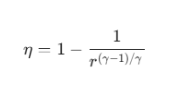
Where:
- r represents the pressure ratio of the compressor.
- Y represents the heat capacity ratio of the working fluid.
Similarly, calculating the bending stress (Q) on a general machine shaft or frame under torque relies on direct structural mechanics:
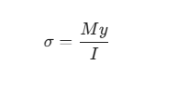
Where:
- M represents the applied bending moment.
- y represents the perpendicular distance from the neutral axis.
- I represents the second moment of area of the cross-section.
Key core subjects include:
- Thermodynamics & Heat Transfer: Analyzing thermal energy systems, boilers, and heat exchangers.
- Fluid Mechanics & Hydraulic Machines: Studying the behavior of liquids and gases in industrial pipes and pumps.
- Machine Design & Kinematics: Drafting gears, cams, shafts, and linkages using CAD tools.
- Computer Integrated Manufacturing (CIM): Programming CNC machines and automated robotics.
The AME Syllabus: Mastering Mechanical Diagnostics & Legislation
The AME curriculum focuses heavily on the practical application of maintenance manuals, diagnostics, aviation safety legislation, and material limitations under continuous flight fatigue.
While AMEs study the same thermodynamic principles of turbine propulsion, they focus on identifying wear and tear, corrosion, structural cracking, and systemic malfunctions. For example, during airframe inspections, calculating the safety factor (FS) of a structural repair is paramount:
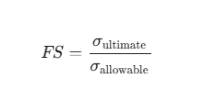
Where:
- q ultimate represents the maximum stress the aviation-grade alloy can withstand before structural failure.
- q allowable represents the maximum stress expected during high-G flight maneuvers.
Key core subjects include:
- Aviation Legislation: Mastering the strict regulatory frameworks set by the DGCA, ICAO, and EASA.
- Aircraft Materials & Hardware: Studying the properties of carbon-fiber composites, titanium alloys, and lock-wiring techniques.
- Gas Turbine Engines & Propulsion: Practical disassembly, inspection, and ground-testing of jet engines.
- Aviation Maintenance Practices: Mastering non-destructive testing (NDT), precision rigging, and hydraulic troubleshooting.
- Human Factors: Studying the psychology of fatigue, stress, and communication protocols in high-pressure hangar environments.
5. Career Scope and Job Roles
Graduating in either field leads to entirely different daily routines, professional environments, and lifestyle outcomes.
Your Career in B.Tech Mechanical Engineering
As a mechanical engineer, you operate in a diverse array of manufacturing, energy, or technological sectors. Your role is primarily centered around design, production, and project management. Common job roles include:
- Mechanical Design Engineer: Conceptualizing and drawing machine parts, frames, and thermal enclosures using CAD tools like SolidWorks, CATIA, or ANSYS.
- Production Engineer: Managing manufacturing assembly lines, improving machine uptime, and overseeing quality control protocols on factory floors.
- Thermal Project Manager: Designing HVAC (Heating, Ventilation, and Air Conditioning) layouts for massive commercial infrastructures or data centers.
- Robotics Specialist: Programming and installing industrial robotic arms and conveyors inside smart manufacturing plants.
Top Recruiters: Tata Motors, Maruti Suzuki, L&T, BHEL, NTPC, Mahindra & Mahindra, Reliance Industries, and various manufacturing MNCs.
Your Career in Aircraft Maintenance Engineering
As a licensed AME, you operate in a high-prestige, safety-critical airline environment. Your skills are highly valued because airlines lose millions of rupees for every hour a modern commercial jetliner is grounded due to a technical snag. Common job roles include:
- Licensed Certifying Engineer: Conducting pre-flight, weekly, and heavy maintenance checks, troubleshooting snags, and signing the Certificate of Release to Service (CRS).
- MRO Technical Specialist: Performing deep-level dismantling, testing, and reassembly of turbofan engines and composite wings during mandatory heavy C-checks and D-checks.
- Technical Log Officer: Managing technical logbooks, tracking engine wear-and-tear cycles, and tracking rotable components.
- Aviation Quality Auditor: Conducting internal audits to ensure the airline’s maintenance practices adhere strictly to DGCA safety mandates.
Top Recruiters: Commercial airlines (IndiGo, Air India, Akasa Air, SpiceJet), international carriers (Emirates, Qatar Airways, Singapore Airlines), and major domestic MRO hubs like AIESL, Indamer, and GMR Aero Technic.
6. Financial Trajectory: Which Engineering Branch Has Higher Salary?
When evaluating which engineering branch has higher salary, you must analyze the financial return over a 15-year career horizon. The trajectories of these two careers behave very differently:
AME Salary Progression (Exponential):
Trainee (₹3L – ₹5.5L) —> Licensed AME (₹10L – ₹18L) —> Type-Rated Specialist (₹24L – ₹50L+)
B.Tech Mechanical Salary Progression (Linear):
Trainee (₹3.5L – ₹6L) —> Senior Engineer (₹8L – ₹15L) —> Project Manager (₹18L – ₹32L)
Entry-Level Phase (Years 1–2)
- B.Tech Mechanical: Generally commands a steady starting salary for freshers, ranging from ₹3.5 Lakhs to ₹6.0 Lakhs per annum as a Graduate Engineer Trainee (GET) or Assistant Engineer in manufacturing plants.
- AME (Trainee Technician): Starts with a modest stipend or salary, ranging from ₹3.0 Lakhs to ₹5.5 Lakhs per annum. During this phase, you are accumulating the mandatory practical experience hours required to obtain your basic license.
Mid-Career Phase (Years 3–7)
- B.Tech Mechanical: Progresses linearly based on corporate appraisals and project handovers, reaching ₹8.0 Lakhs to ₹15 Lakhs per annum as a Senior Engineer or Assistant Manager.
- AME (Licensed Engineer): Once you clear your DGCA module exams and obtain your Basic AME License (BAMEL), your salary experiences an exponential jump. Licensed AMEs easily earn ₹10 Lakhs to ₹18 Lakhs per annum, rapidly matching or exceeding general engineering counterparts due to the high legal accountability of their signature.
Senior Specialist Phase (Years 10+)
- B.Tech Mechanical: Senior design leads, plant heads, or project managers at major manufacturing giants earn ₹18 Lakhs to ₹32 Lakhs per annum.
- AME (Type-Rated Certifying Engineer): The financial peak of this profession is highly lucrative. If you undergo specialized type-rating training for heavily utilized commercial jets (like the Boeing 787 or Airbus A321neo), your signature becomes incredibly valuable. Type-rated senior certifying engineers in India earn ₹24 Lakhs to ₹50+ Lakhs per annum, while overseas roles in major aviation hubs like Dubai, Doha, or Singapore offer tax-free salaries exceeding ₹1 Crore per annum.
7. Calculating Educational Payback (ROI Model)
To make a smart financial decision, we can use a basic economic mathematical model to calculate the Educational Payback Period (). This measures how quickly you can recover your total educational and training costs once you enter the job market:

Let’s model the ROI for both paths based on standard 2026 Indian institutional data:
Case A: Aircraft Maintenance Engineering (At SOACET)
- Total Educational Cost (Ci): ~₹6,00,000 (Fees for a 3-year DGCA-approved CAR 147 program).
- Average Initial Salary as Licensed Basic AME (Sa): ~₹12,00,000 per annum (reached rapidly within 3 years of completing training)
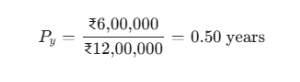
Using our formula:
This indicates an accelerated payback period of just 6 months once licensing is achieved to recover your total educational capital.
Case B: Standard B.Tech Mechanical (Private Engineering College)
- Total Educational Cost (Ci): ~₹8,00,000 (Combined tuition and campus fees for 4 years).
- Average Initial Salary (Sa): ~₹4,50,000 per annum.
Using our formula:
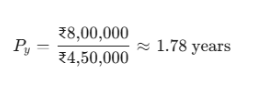
This indicates a significantly longer payback period of approximately 1.8 years to recover your initial capital investment.
8. Diagnostic Matrix: How to Choose Your Path?
Still feeling torn? Ask yourself these four simple diagnostic questions to identify your natural technical path:
- Do you prefer manufacturing processes or technical diagnostics? If you love general manufacturing, casting, automotive design, and factory automation, choose Mechanical Engineering. If you prefer aircraft structures, jet turbine propulsion, and troubleshooting high-precision aviation systems, choose AME.
- How do you feel about regulatory responsibility? As a licensed AME, you carry the legal and psychological responsibility of flight safety; if you sign off on a faulty plane, you are legally accountable. If you prefer a corporate workspace with lower immediate physical stakes, B.Tech Mechanical is more suitable.
- Are you prepared for continuous, strict regulatory exams? Aviation is a highly regulated, license-based career where you must pass tough regulatory exams (like the DGCA modules with a passing score of ). If you prefer traditional university semester grading systems, B.Tech is the standard choice.
- How fast do you want to enter the workforce? AME is a focused technical program designed to get you on the hangar floor within 3 years. B.Tech Mechanical requires a minimum of 4 years of academic study before entry-level recruitment.
Why Choose School of Aeronautics (SOACET) for Your Journey?
Since 1992, the School of Aeronautics (SOACET) has served as India’s premier launchpad for aviation leaders. Whether you choose AME or B.Tech in Aeronautical Engineering, SOACET provides an educational platform that balances academic depth with unparalleled physical grit.
1. The Neemrana “Live Hangar” Advantage
You cannot learn flight safety, propulsion cycles, or structural mechanics solely from textbook diagrams. Our Neemrana campus features an active hangar housing actual, heavyweight operational aircraft, including a Fokker F-27 and a Beechcraft. Our students trace working hydraulic lines, test structural wings, inspect turbofan blades, and conduct live engine runs.
2. Strategic Civil and University Approvals
At SOACET, you don’t have to choose between a university degree and a technical license. We offer integrated programs where you can work toward your AICTE-approved B.Tech in Aeronautical Engineering from a recognized university like Bikaner Technical University (BTU) while simultaneously undergoing DGCA-approved CAR 147 basic AME training.
3. Dedicated Exam Support Cell
Clearing competitive university exams and rigorous DGCA module papers requires expert mentorship. SOACET maintains a dedicated Exam Support Cell providing specialized coaching, module mock tests, and a vast international technical library, resulting in one of the highest clearance rates in the country.
Frequently Asked Questions (FAQs)
Q1. Is Aircraft Maintenance Engineering equivalent to a B.Tech Mechanical degree?
No. Standard AME is a professional, license-based technical course approved by the DGCA under CAR 147, whereas B.Tech is a 4-year undergraduate academic degree. However, you can pursue both concurrently via SOACET’s unique integrated dual-track programs.
Q2. Can a Mechanical Engineer work as an Aircraft Maintenance Engineer?
No. A general B.Tech Mechanical graduate cannot sign the Flight Release Certificate (CRS) for commercial aircraft. To become a licensed certifying engineer, a candidate must complete the DGCA-approved CAR 147 basic training and clear the mandatory regulatory module exams.
Q3. Can an AME work in the general manufacturing or mechanical sector?
An AME specializing in Category B1.1 (Mechanical) holds deep practical knowledge of structural engines, hydraulics, and materials. While they are highly valued in aerospace manufacturing, general core engineering roles in automotive or thermal plants often prefer a formal B.Tech degree.
Q4. Are education loans available for AME courses at SOACET?
Yes. Because SOACET is a highly recognized, DGCA-approved, and BTU-affiliated institution, all major public and private banks provide structured educational loans to cover the costs of tuition, practical labs, and hostel charges.
Conclusion: Take the Leap Toward Takeoff
When evaluating ame vs mechanical engineering, the debate isn’t about which path is universally superior; it is about finding the environment that matches your natural talents, licensing appetite, and long-term career expectations.
One path puts you in the general design offices and factory floors of global manufacturing and thermal industries, optimizing machine operations from a corporate desk or plant floor. The other puts you on the active tarmac and hangar floors of daily aviation operations, ensuring that the heavy machines keeping humanity connected remain absolutely safe and airworthy. Both pathways lead to highly respected, intellectually challenging, and financially rewarding careers.
If you are someone who finds beauty in specialized flying machines, values active movement over sedentary office desks, and wants a future-proof career that cannot be automated by software tools, it’s time to step away from the traditional desk.
The runway is clear, and the skies are waiting. Are you ready for takeoff?