
Passing your 12th-grade board exams with Physics, Chemistry, and Mathematics (PCM) is a massive academic milestone. Historically, the default “safe bet” for PCM students has been to enroll in a B.Tech in Computer Science Engineering (CSE). For over two decades, the software sector promised steady recruitment, air-conditioned offices, and rapid salary growth.
However, as we progress through 2026, the global tech landscape is experiencing a massive shift. The rapid rise of Generative AI, code-automation tools, and a structural restructuring within the IT sector have led to a major hiring reset. IT companies are slashing fresher intake and replacing mass coding teams with smaller, highly specialized AI-driven units.
In sharp contrast, the Indian aviation sector is undergoing an unprecedented boom. From major commercial carriers placing record-breaking aircraft orders to the Union Budget introducing massive customs duty cuts for aviation components, the demand for physical aerospace design, system testing, and aircraft maintenance has never been more urgent.
This brings PCM graduates to a critical crossroads: B.Tech Aeronautical vs B.Tech CSE.
Should you build a career designing, analyzing, and flight-testing physical machines that conquer the skies, or should you sit at a workstation writing digital code?
Read Before: SOACET 2025: Admission Documents needed for Aeronautical Engineering or AME
1. Defining the Contenders: Physical Flight Safety vs. Virtual Logic
To establish a clear baseline of comparison, we must define what each program actually trains you to do. The fundamental difference lies in your medium of operation: one works on high-stakes, physical transport systems, while the other builds virtual software architectures.
B.Tech Aeronautical Engineering (Physical):
Aerodynamic Principles —> Propulsion Modeling —> Flight Testing —> Real-World Impact
B.Tech Computer Science Engineering (Virtual):
Algorithmic Logic —> Data Infrastructure —> Software Deployment —> Digital Impact
What is B.Tech in Aeronautical Engineering?
B.Tech in Aeronautical Engineering is an academic, degree-based discipline that focuses on the design, development, construction, aerodynamics, propulsion, and structural testing of flight vehicles operating within the Earth’s atmosphere.
- The Core Objective: To innovate and design aircraft, missiles, drones, and helicopters that are lighter, faster, safer, and more fuel-efficient.
- The Nature of Work: A mixture of theoretical physics, computer-aided design (CAD/CFD), and hands-on laboratory testing. You study how structural wing ribs withstand aerodynamic bending, how jet engines generate thermal thrust, and how flight control systems maintain aerodynamic stability.
- The Future Outlook: The field is rapidly evolving to include electric vertical take-off and landing (eVTOL) “flying cars,” sustainable aviation fuels (SAF), carbon-fiber composite manufacturing, and autonomous drone navigation networks.
What is B.Tech in Computer Science Engineering (CSE)?
B.Tech in Computer Science Engineering (CSE) is an academic, degree-based discipline that focuses on the theoretical foundations of computation, algorithms, software application development, database management, and cloud infrastructure.
- The Core Objective: To design, code, and deploy scalable software applications, construct robust web architectures, and implement artificial intelligence algorithms.
- The Nature of Work: Highly cognitive, abstract, and screen-based. You spend your day utilizing programming languages like Python, Java, or C++ to write code, debug data structures, manage cloud APIs, and deploy software services.
- The Future Outlook: The field is heavily focused on machine learning model integration, cybersecurity, big data analytics, blockchain systems, and cloud-native software architecture.
2. B.Tech Aeronautical vs B.Tech CSE: Head-to-Head Comparison
When evaluating B.Tech Aeronautical vs B.Tech CSE, looking at a structured, head-to-head comparison matrix helps map out the primary differences in credentials, lifestyle, and career velocity:
| Feature | B.Tech Aeronautical Engineering | B.Tech Computer Science (CSE) |
| Course Duration | 4 Years (8 Semesters) | 4 Years (8 Semesters) |
| Primary Regulator | AICTE / UGC / Affiliated Universities | AICTE / UGC / Affiliated Universities |
| Core Philosophy | Physical application, diagnostics, and human safety. | Abstract logic, software scalability, and algorithms. |
| Primary Focus | Aircraft, helicopters, UAVs, missiles, engines. | Software, networks, databases, cloud, AI models. |
| Vulnerability to AI | Extremely Low. Requires physical presence & touch. | Moderate to High. Basic coding is highly automated. |
| Workspace | R&D centers, manufacturing floors, flight test lines. | Tech parks, software development centers, remote desks. |
| Legal Power | High. Designs must pass civil aviation clearances. | Minimal. No immediate regulatory legal clearance. |
| Primary Streams | Propulsion, Aerodynamics, Structures, Avionics. | Software Dev, Cyber, Cloud, AI/ML, DevOps. |
3. The 2026 Paradigm Shift: AI Automation vs. Physical Aerospace Boom
The job market of 2026 is structurally different from that of five or ten years ago. If you are comparing aeronautical engineering vs computer science, you must understand how current technology and industrial trends are redefining job security.
The IT Shift: Why Coding Headcounts are Shrinking
In the technology sector, the traditional “pyramid hiring model” (where IT giants recruited tens of thousands of fresh graduates annually to write basic boilerplate code) is fading. In 2026, companies are aggressively deploying generative AI tools to write clean code, run automated tests, and handle database scripting in seconds.
Staffing data reveals that the share of entry-level fresher hiring in the IT sector has fallen considerably. IT services firms are realizing they can maintain stable, multi-million dollar revenues with flat or lower headcounts by replacing large development teams with smaller, highly specialized, AI-assisted units. While high-paying roles still exist for top-tier software architects and security experts, the “average” coding job is highly vulnerable to automated scripts.
The Aviation Sector: why hands-on aeronautical engineers are in short supply
In sharp contrast, you cannot run an AI script to physically replace a damaged compressor blade, conduct a physical wind-tunnel test of a new wing profile, or analyze the structural shear stresses on a composite material. Aeronautical engineering remains deeply tied to physical laws, tactile feedback, and absolute regulatory accountability.
According to aerospace industry reports, India is the fastest-growing aviation market globally. Indian carriers have placed massive, historic orders for over 1,700 next-generation aircraft (such as the Airbus A321neo and Boeing 737 MAX).
To accommodate this fleet expansion, India’s domestic aerospace engineering, manufacturing, and Maintenance, Repair, and Overhaul (MRO) sectors are projected to triple in size by 2035. Airbus and Boeing estimate a critical deficit of skilled aerospace engineers over the next decade. There is a massive, physical, human skill shortage that cannot be replaced by software.
Note: Book a FREE counselling session through SOACET to understand the AME admission process clearly.
4. Academic Blueprint: What You Will Study
The subjects and theories you will study during your university years are shaped by your target professional environment. Both fields rely heavily on mathematical principles but apply them to completely different mediums.
The Aeronautical Engineering Syllabus: Mastering Fluids and Forces
The Aeronautical Engineering curriculum focuses heavily on practical physics, metallurgy, thermodynamics, aerodynamics, and structural mechanics.
For instance, when designing an aerodynamic wing, an engineer must calculate the lift force (L) generated under varying flight conditions. This is modeled using the classical lift equation:
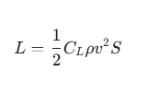
Where:
- CL represents the dimensionless coefficient of lift.
- P represents the density of the air.
- v represents the aircraft’s velocity relative to the air.
- S represents the total planform wing surface area.
Similarly, calculating the bending stress (q) on an internal wing member (spar) under high-G maneuver loads relies on direct structural mechanics:
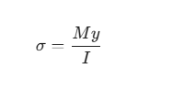
Where:
- M represents the bending moment applied.
- y represents the perpendicular distance from the neutral axis.
- I represents the second moment of area of the structural spar.
Key core subjects include:
- Aerodynamics: The physics of subsonic and supersonic fluid flows.
- Aircraft Propulsion: Analyzing the thermodynamic cycles of gas turbine and piston engines.
- Aircraft Structures: Calculating structural stress, shear flows, and fatigue limits of advanced composite materials.
- Flight Mechanics: Analyzing flight stability, control loops, and maneuver performance.
The B.Tech CSE Syllabus: Mastering Algorithmic Complexity
The Computer Science curriculum is centered around abstract logic, computational mathematics, database structures, and software architecture.
For example, when writing code to search databases, a developer must analyze algorithm runtimes. Designing scalable applications relies on recursive calculations. Solving runtime equations often requires the Master Theorem for divide-and-conquer recurrences:
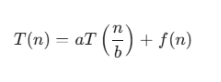
Where:
- a>1 represents the number of subproblems in the recursion.
- b>1 represents the factor by which the subproblem size is divided.
- f(n) represents the cost of work done outside the recursive calls.
Key core subjects include:
- Data Structures and Algorithms (DSA): Designing efficient paths for database navigation and search.
- Database Management Systems (DBMS): Managing SQL/NoSQL databases on cloud infrastructures.
- Artificial Intelligence and Machine Learning: Designing and training neural networks.
- Computer Networks: Navigating data communication protocols across distributed systems.
5. Career Scope and Job Roles
Graduating in either field leads to entirely different daily routines, professional environments, and lifestyle outcomes.
Your Career in Aeronautical Engineering
As an Aeronautical Engineer, you operate in a high-prestige, safety-critical environment. Your designs and analyses directly impact human safety and physical transportation systems. Common job roles include:
- Aeronautical Design Engineer: Conceptualizing and drawing airframes, wings, and control systems using CATIA, SolidWorks, or ANSYS.
- Structural Analyst: Running high-pressure simulation models to ensure fuselage frames do not experience structural fatigue over thousands of flight hours.
- Propulsion Engineer: Optimizing jet engine thermodynamic combustion, exhaust nozzle designs, and gas turbine compressor stages.
- Flight Test Engineer: Working on active runways and test platforms to analyze real-time telemetry data collected during experimental flights of prototype aircraft.
Top Recruiters: Defence Research and Development Organisation (DRDO), Indian Space Research Organisation (ISRO), Hindustan Aeronautics Limited (HAL), Boeing India, Airbus, Tata Advanced Systems, and Mahindra Aerospace.
Your Career in Computer Science Engineering
As a B.Tech CSE graduate, you will work primarily in controlled software development environments, designing the virtual systems that power modern enterprises. Common job roles include:
- Full-Stack Developer: Building the user interfaces (front-end) and database architectures (back-end) for web and mobile applications.
- Cloud Architect: Designing secure, scalable, and multi-cloud infrastructure environments on AWS, Azure, or Google Cloud.
- ML Ops Specialist: Deploying, training, and managing machine learning models in live production environments.
- Cybersecurity Analyst: Defending corporate networks, database servers, and cloud applications from external cyber threats.
Top Recruiters: Indian tech giants (TCS, Infosys, Wipro, HCL), global product MNCs (Microsoft, Google, Oracle), tech consulting firms (Accenture, Capgemini), and Global Capability Centers (GCCs).
6. Financial Trajectory: Which is the Best Engineering Branch for a High Salary?
When evaluating the best engineering branch for high salary, you must analyze the financial return over a 15-year career horizon. The trajectories of these two careers behave very differently:
Entry-Level Phase (Years 1–2)
- B.Tech CSE: Generally commands a steady starting salary for freshers, ranging from ₹4.5 Lakhs to ₹8.5 Lakhs per annum as a Graduate Engineer Trainee (GET) or Associate Software Developer.
- B.Tech Aeronautical: Starts with a competitive range of ₹4.5 Lakhs to ₹7.5 Lakhs per annum as a Graduate Engineer Trainee (GET) in manufacturing, design, or research organizations.
Mid-Career Phase (Years 3–7)
- B.Tech CSE: Progresses steadily based on software stack upgrades and project handovers, reaching ₹10 Lakhs to ₹18 Lakhs per annum.
- B.Tech Aeronautical: Once you gain deep domain expertise in highly specialized niches like Computational Fluid Dynamics (CFD), propulsion design, or composite structures, your salary jumps to ₹12 Lakhs to ₹20 Lakhs per annum, rapidly matching or exceeding IT counterparts due to the scarcity of aerospace talent.
Senior Specialist Phase (Years 10+)
- B.Tech CSE: Senior software architects, DevOps leads, or cloud security managers at major MNCs or startups earn ₹25 Lakhs to ₹45 Lakhs per annum.
- B.Tech Aeronautical: The financial peak of this profession is highly lucrative. Senior aerospace designers, lead structural engineers, or R&D directors at major global defense and commercial aerospace giants earn ₹28 Lakhs to ₹50+ Lakhs per annum, while global roles in major aerospace hubs like Toulouse, Seattle, Singapore, or Munich offer salaries exceeding ₹1 Crore per annum.
7. Calculating Educational Payback (ROI Model)
To make a smart financial decision, we can use a basic economic mathematical model to calculate the Educational Payback Period (Py). This measures how quickly you can recover your total educational and training costs once you enter the job market:

Let’s model the ROI for both paths based on standard 2026 private college data:
Case A: B.Tech in Aeronautical Engineering (At SOACET)
- Total Educational Cost (Ci): ~₹6,50,000 (Average fees for a 4-year B.Tech program including practical lab and training resources).
- Average Initial Salary (Sa): ~₹6,00,000 per annum.
Using our formula:
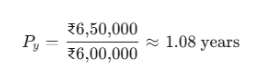
This indicates an accelerated payback period of just 1.1 years to recover your total educational capital.
Case B: Standard B.Tech CSE (Tier-2 Private College)
- Total Educational Cost (Ci): ~₹9,50,000 (Combined fees for 4 years, including specialized high-end computer resources and residential charges).
- Average Initial Salary (Sa): ~₹4,50,000 per annum (due to market saturation and higher competition among fresh coders).
Using our formula:
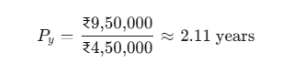
This indicates a significantly longer payback period of approximately 2.1 years to recover your initial capital investment.
8. Diagnostic Matrix: How to Choose Your Path?
Still feeling torn? Ask yourself these four simple diagnostic questions to identify your natural technical path:
- Do you prefer tangible, physical mechanics or abstract virtual logic? If you love physical structures, aerodynamics, heat transfer, and seeing the machines you designed fly in the sky, choose B.Tech Aeronautical. If you prefer sitting at a computer workstation, writing code, and debugging software databases, choose B.Tech CSE.
- How do you feel about the physical workspace environment? If the thought of sitting in the same office chair, staring at the same dual monitors, under fluorescent lighting for 250 days a year makes you feel anxious, choose Aeronautical Engineering. If you value indoor comfort and a highly controlled environment, a CSE desk job is more suitable.
- What is your tolerance for safety responsibility? As an aerospace designer or systems analyst, you carry the legal and psychological responsibility of structural safety; if your design has a flaw, passenger lives could be at stake. If you prefer a corporate workspace with lower immediate physical stakes, B.Tech CSE is the natural choice.
- Are you prepared for global, physical skill mobility? Aerospace engineering principles are highly standardized across EASA, FAA, and civil aviation bodies, making your physical skill highly portable to global manufacturing and design hubs. If you prefer working remotely or from home, software code is more flexible.
Why Study B.Tech Aeronautical Engineering at School of Aeronautics (SOACET)?
Since 1992, the School of Aeronautics (SOACET) has served as India’s premier launchpad for aviation leaders. Whether you choose AME or B.Tech in Aeronautical Engineering, SOACET provides an educational platform that balances academic depth with unparalleled physical grit.
1. The Neemrana “Live Hangar” Advantage
You cannot learn flight safety, propulsion cycles, or structural mechanics solely from textbook diagrams. Our Neemrana campus features an active hangar housing actual, heavyweight operational aircraft, including a Fokker F-27 and a Beechcraft. Our B.Tech students trace working hydraulic lines, test structural wings, inspect turbofan blades, and conduct live engine runs.
2. Strategic Civil and University Approvals
At SOACET, you don’t have to choose between a university degree and a technical license. We offer integrated programs where you can work toward your AICTE-approved B.Tech in Aeronautical Engineering from a recognized university like Bikaner Technical University (BTU) while simultaneously undergoing DGCA-approved CAR 147 basic AME training.
3. Dedicated Exam Support Cell
Clearing competitive university exams and rigorous DGCA module papers requires expert mentorship. SOACET maintains a dedicated Exam Support Cell providing specialized coaching, module mock tests, and a vast international technical library, resulting in one of the highest clearance rates in the country.
Frequently Asked Questions (FAQs)
Q1. Is Aeronautical Engineering equivalent to a B.Tech CSE degree?
Both are 4-year B.Tech degrees approved by AICTE. However, Aeronautical Engineering focuses on mechanical, aerodynamic, and structural sciences, while B.Tech CSE focuses on computational logic, databases, and software design.
Q2. How has the AI boom affected jobs in both sectors?
The AI boom has automated many low-level, routine coding and testing roles in the IT sector, compressing entry-level fresher hiring for CSE graduates. In contrast, physical aeronautical design, system testing, and structural stress analysis cannot be automated, making aerospace careers highly stable.
Q3. Can an Aeronautical Engineer work in the IT or software sector?
Yes. Aeronautical B.Tech students undergo extensive training in computational mechanics, system modeling, and coding platforms like MATLAB and Python. Many aerospace engineers transition to computational engineering, fluid modeling, or database analytics inside tech MNCs. However, CSE graduates cannot work in core aeronautical design without specialized retraining.
Q4. Are education loans available for Aeronautical Engineering at SOACET?
Yes. Because SOACET is a highly recognized, AICTE-approved, and BTU-affiliated institution, all major public and private banks provide structured educational loans to cover the costs of tuition, practical labs, and residential charges.
Conclusion: Take the Leap Toward Takeoff
When evaluating B.Tech Aeronautical vs B.Tech CSE, the debate isn’t about which path is universally superior; it is about finding the environment that matches your natural talents, biological preferences, and long-term career expectations.
One path puts you at the keyboard of digital innovation, managing database architectures and building the virtual platforms of tomorrow from a corporate desk. The other puts you on the design floors and hangar bays of daily aviation operations, ensuring that the heavy machines keeping humanity connected remain absolutely safe and airworthy. Both pathways lead to highly respected, intellectually challenging, and financially rewarding careers.
If you are someone who finds beauty in physical machines, values active movement over sedentary confinement, and wants a future-proof career that cannot be automated by software scripts, it’s time to step away from the desk.
The runway is clear, and the skies are waiting. Are you ready for takeoff?