Every single day, thousands of commercial flights crisscross the global sky, carrying millions of passengers across oceans, mountain ranges, and international borders. We have become so accustomed to the convenience of modern air travel that we rarely stop to contemplate the sheer technical marvel of the experience. Traversing 10,000 kilometers in a pressurized aluminum and composite tube, cruising at at 900 km/h an altitude of 11, 000 meters above sea level, is a feat that defies the direct laws of gravity.
None of this would be possible without the relentless, decade-by-decade innovations in flight science. When analyzing how modern civilization is connected, we must examine the impact of aeronautical engineering on commercial aviation.
From the basic streamlining of the early biplanes to the carbon-fiber composite structures, high-bypass turbofans, and sustainable aviation fuel (SAF) mandates of 2026, aeronautical engineers have systematically transformed the commercial airliner from a high-risk novelty into the safest, most efficient, and most technologically advanced mode of public transportation on Earth.
1. Redefining Aerodynamic Efficiency: The Battle Against Drag
At the heart of the impact of aeronautical engineering on commercial aviation is the continuous pursuit of aerodynamic perfection. To make an aircraft fly faster while consuming less fuel, engineers must optimize the balance between the lift force (L) keeping the aircraft aloft and the aerodynamic drag force (D) resisting forward motion.
The Mathematics of Lift and Drag
Aerodynamicists model the physical forces acting on a commercial airliner using two fundamental equations. The generated lift force is calculated as: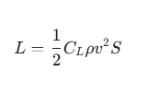
Where:
- CL represents the dimensionless coefficient of lift (dictated by the wing’s angle of attack and airfoil chamber).
- P represents the density of the air at the specific operating altitude.
- v represents the true airspeed of the aircraft relative to the surrounding airflow.
- S represents the total wing planform surface area.
Simultaneously, the resisting aerodynamic drag force (D) that the engines must overcome is modeled using the drag equation:
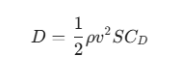
Where represents the total coefficient of drag. This total drag is composed of two primary components: parasite drag (due to skin friction and pressure profiles) and induced drag (a direct byproduct of lift generation).
Total Drag Components
|
+—————+—————+
| |
Parasite Drag Induced Drag
(Skin friction & shape) (Wingtip vortex byproduct)
Engineering Aerodynamic Breakthroughs
To minimize CD and maximize fuel range, aeronautical engineers have introduced several revolutionary design modifications:
- Supercritical Wings: Modern airliners utilize specialized supercritical airfoils that delay the onset of shockwaves at transonic speeds (M=0.80), reducing wave drag and dramatically improving high-speed efficiency.
- Wingtip Devices (Winglets): By installing vertical or blended wingtip extensions, engineers disrupt the high-pressure air curling over the wingtips. This minimizes the strength of wingtip vortices, reducing induced drag by up to 5% and saving billions of dollars in fuel costs annually for global airlines.
- Morphing and Active Control Wings: Looking toward 2030, researchers are designing smart wings that dynamically alter their camber during different phases of flight, mimicking birds to maintain optimal aerodynamic efficiency.
2. The Materials Revolution: Transitioning to Advanced Composites
An aircraft must be robust enough to withstand extreme atmospheric turbulence, pressurization cycles, and thermal variations, yet light enough to fly efficiently. Historically, commercial planes were constructed primarily of aluminum alloys. However, the modern era has seen a massive shift toward advanced composites.
The Mechanical Physics of Lightweight Materials
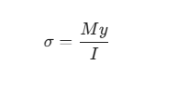
Reducing the structural weight of an airliner directly translates to reduced fuel consumption and increased payload capacity. When designing a wing spar the primary structural member of a wing subjected to immense bending loads engineers must calculate the bending stress (O) to ensure it does not fail:
Where:
- M represents the bending moment applied to the wing station.
- y represents the perpendicular distance from the neutral axis to the outermost fiber of the spar.
- I represents the second moment of area of the spar cross-section.
By utilizing composite materials, which have a significantly higher strength-to-weight ratio than traditional aluminum, engineers can design cross-sections with a higher second moment of area (I) while minimizing the total physical mass.
Airliner Structural Composition
|
+—————–+—————–+
| |
Aluminum Alloys Advanced Composites
(Fuselage & frameworks) (CFRP & GLARE structures)
Case Studies: Boeing 787 and Airbus A350
The impact of aeronautical engineering is vividly illustrated by modern twin-aisle jets:
- The Boeing 787 Dreamliner: Constructed of over 50% carbon-fiber reinforced polymers (CFRP) by weight. The composite fuselage allows for higher cabin pressure and humidity levels, drastically reducing passenger jet lag and fatigue.
- The Airbus A350 XWB: Utilizes a composite wing structure with a high aspect ratio, allowing the wing to bend and flex naturally during flight. This modular design reduces structural weight by 20% to 30% , contributing directly to a double-digit improvement in fuel efficiency compared to older-generation fleets.
3. Propulsion Evolution: High-Bypass Turbofans and Green Fuels
The thermodynamic powerhouse of commercial flight is the gas turbine engine. The transition from noisy, fuel-thirsty turbojets to modern, ultra-efficient high-bypass turbofan engines is a direct result of advanced propulsion engineering.
Thermodynamic Efficiency and the Brayton Cycle
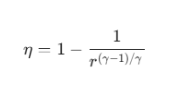
Commercial jet engines operate on the thermodynamic Brayton Cycle. The thermal efficiency (n) of an ideal Brayton cycle is calculated using the pressure ratio of the compressor:
Where:
- rp represents the compressor pressure ratio ().
- y represents the heat capacity ratio of the working gas (approx. 1.4 for air).
Propulsion engineers have pushed the boundaries of metallurgy and blade design to increase and operating temperatures, resulting in engines like the CFM LEAP and Pratt & Whitney Geared Turbofan (GTF). These engines achieve exceptionally high bypass ratios (up to ), utilizing a large fan to push cool air around the core engine rather than through it, reducing fuel burn by to and cutting engine noise in half.
The 2026 Shift: Sustainable Aviation Fuel (SAF) & Decarbonization
As we navigate through 2026, the global commercial aviation sector is under immense pressure to decarbonize. Aeronautical engineers are actively adapting engine fuel systems to run on Sustainable Aviation Fuel (SAF) derived from biological waste, agricultural residues, and synthetic power-to-liquid (PtL) pathways.
These biofuels can reduce lifecycle carbon emissions by up to compared to conventional jet kerosene. Currently, engineers are designing and certifying engines capable of running on a SAF blend, while simultaneously researching hydrogen-combustion and hybrid-electric commuter aircraft for the 2030s.
4. Enhanced Safety and Digital Avionics: Reaching Zero-Error Tolerances
Commercial air travel is statistically the safest mode of long-distance transport. This immaculate safety record is not an accident; it is the direct result of rigorous, safety-critical aeronautical engineering.
Avionics & Flight Control Systems
|
+——————-+——————-+
| |
Fly-By-Wire Avionics Suite
(Electronic flight envelope) (Predictive health & radar)
A. Fly-By-Wire (FBW) Technology
Traditional aircraft used a complex system of mechanical pulleys, cables, and hydraulic valves to move the control surfaces on the wings and tail. Modern airliners utilize digital Fly-By-Wire systems.
The pilot’s stick inputs are converted into electronic signals, analyzed by flight control computers, and transmitted to hydraulic actuators. This system includes “flight envelope protection,” ensuring that the computer will prevent the pilot from making a maneuver that would overstress the structure or cause an aerodynamic stall.
B. Structural Redundancy & Crashworthiness
Aeronautical engineers utilize the principle of “fail-safe” design. Critical flight control systems, hydraulic lines, and avionics channels are duplicated or triplicated. If one hydraulic pump fails, backup systems immediately take over without any loss of pilot control.
Additionally, advancements in crashworthiness such as energy-absorbing cabin seats, fire-resistant interior composite panels, and emergency evacuation slides ensure that passenger survival rates are maximized in the rare event of an incident.
C. Predictive Health Monitoring & Digital Twins
In 2026, modern commercial planes are flying data hubs. IoT sensors embedded in turbofan engines, landing gears, and control actuators continuously stream real-time telemetry back to airline maintenance bases. By utilizing “Digital Twins” virtual, computational replicas of the active plane engineers can predict when a component will experience wear and replace it before a malfunction ever occurs, maximizing dispatch reliability.
Why Choose the School of Aeronautics (SOACET) for Your Aeronautical Journey?
If you are a student inspired by the impact of aeronautical engineering on commercial aviation, your first step is choosing the right training ground. Since 1992, the School of Aeronautics (SOACET) has served as India’s premier launchpad for aviation leaders.
1. The Neemrana “Live Hangar” Advantage
At SOACET, we believe that you cannot learn the complexities of aerodynamics or propulsion solely from textbook pages. Our Neemrana campus features an active hangar housing actual, heavyweight operational aircraft, including a Fokker F-27 and a Beechcraft. Our students trace working hydraulic lines, test structural wings, inspect turbine blades, and conduct live engine runs.
2. High-End Simulation & Computational Labs
SOACET houses advanced computer-aided design (CAD) and analysis labs equipped with licensed professional software packages including:
- CATIA: For 3D surface modeling of complex aerodynamic airfoils and fuselages.
- ANSYS Fluent: For running complex CFD airflow simulations and Finite Element Method structural stress calculations.
- MATLAB: For designing automated control loops, autopilot feedback structures, and trajectory models.
3. Dual-Track Integrated Programs
For those who want a strong academic safety net, SOACET offers unique integrated programs. You can pursue your DGCA-approved AME course alongside an AICTE-approved, BTU-affiliated B.Tech in Aeronautical Engineering. This dual-track gives you a formal university degree and a licensing pathway simultaneously, making your professional profile exceptionally attractive to global employers.
Frequently Asked Questions (FAQs)
Q1. How has AI changed aeronautical engineering?
AI has revolutionized the design phase. Aeronautical engineers use machine learning algorithms to optimize airfoil shapes, generate lightweight generative structural designs, and analyze massive amounts of telemetry data for predictive aircraft maintenance.
Q2. Is the aviation industry still hiring after the pandemic?
The commercial aviation sector has not only fully recovered but is experiencing a historic boom. Airlines globally are facing a severe shortage of skilled design engineers, avionics technicians, and aircraft maintenance specialists to manage their rapidly expanding fleets.
Q3. Can an aeronautical engineer work in the green energy sector?
Absolutely! The aerodynamic principles used to design aircraft wings are directly applicable to the design of high-efficiency wind turbine blades. Additionally, aerospace expertise in lightweight materials and hydrogen combustion is highly valued in the sustainable automotive and energy sectors.
Conclusion: Lead the Future of Flight
The impact of aeronautical engineering on commercial aviation is undeniable. It has shrunk our world, connected cultures, and driven global economic prosperity. As we look toward a future dominated by sustainable fuels, supersonic designs, and electric flight, the role of the aeronautical engineer is more critical than it has ever been.
By choosing an institution like the School of Aeronautics (SOACET), which perfectly balances academic university depth with unparalleled live aircraft hangar experience, you ensure that your technical career launches with maximum thrust.
The runway is clear, and the skies of tomorrow are waiting for you. Are you ready for takeoff?