
Choosing a technical career path is one of the most significant decisions a student will make. Historically, students who enjoyed logical problem-solving and mathematics automatically gravitated toward computer science or information technology. However, as we progress through 2026, the job market has changed dramatically.
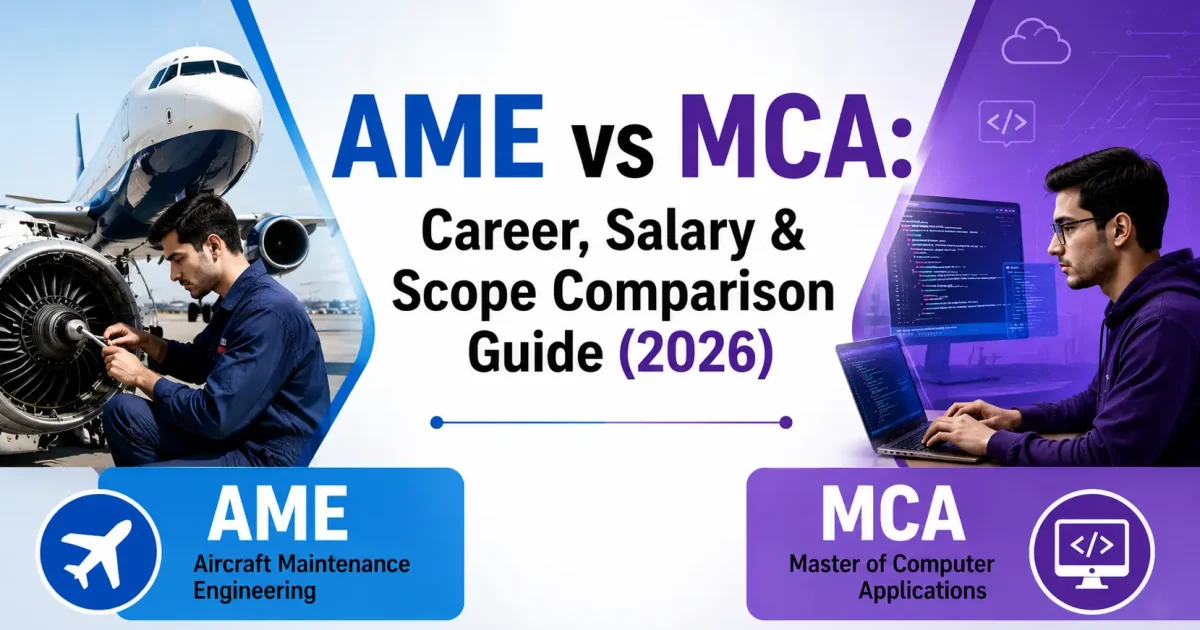
Standard coding jobs are facing immense structural pressures due to AI-driven automation, while the physical world of logistics and transportation is experiencing a massive, human-centric boom. This brings students to an interesting crossroads: AME vs MCA.
Should you pursue a professional license to manage physical airworthiness on the active airport tarmac, or should you spend five years in higher education to build a career in software engineering?
Read Before: Aeronautical vs Aerospace Engineering – Key Differences Explained (2026)
1. Defining the Contenders: Physical Flight Safety vs. Virtual Systems
To establish a clear baseline of comparison, we must understand what each program actually trains you to do. The fundamental difference lies in your medium of operation: one works on high-stakes, physical aerospace machines, while the other designs virtual software architectures.
What is Aircraft Maintenance Engineering (AME)?
Aircraft Maintenance Engineering (AME) is a highly specialized, license-based professional program governed strictly by civil aviation authorities.
- The Core Objective: To inspect, troubleshoot, repair, overhaul, and certify commercial and military aircraft to ensure they are 100% safe and legally “airworthy” before every single flight.
- The Qualification: A professional AME License issued by the regulatory authority the Directorate General of Civil Aviation (DGCA), Government of India under strict CAR 147 (Basic) guidelines.
- The Nature of Work: Highly practical and safety-critical. You work on operational aircraft in active hangars, utilizing precision tools to calibrate gas turbine engines, test landing gear hydraulics, and certify flight computers.
- The Legal Power: Exceptional. No pilot, regardless of experience, is legally permitted to turn on the engines or taxi onto the runway without a signed Certificate of Release to Service (CRS) from a licensed AME.
What is Master of Computer Applications (MCA)?
Master of Computer Applications (MCA) is a structured, post-graduate academic degree that focuses on advanced computer science, application software development, database administration, and system design.
- The Core Objective: To design, code, and deploy scalable software applications, manage cloud databases, construct web architectures, and implement artificial intelligence algorithms.
- The Qualification: A formal 2-year post-graduate university degree approved by the All India Council for Technical Education (AICTE) and the University Grants Commission (UGC).
- The Nature of Work: Desk-based, analytical, and logical. You spend your day at a workstation utilizing programming languages like Python, Java, or C++, and deploying code to cloud servers or managing database structures.
- The Legal Power: Minimal over daily operational dispatch. While you hold administrative control over software deployment, your day-to-day work does not carry immediate legal safety-certification weight like an aviation license.
2. AME vs MCA: Key Comparison Matrix
When evaluating ame vs mca, looking at a structured, head-to-head comparison matrix helps map out the primary differences in credentials, lifestyle, and career velocity:
| Feature | Aircraft Maintenance (AME) | Master of Computer Applications (MCA) |
| Credential Type | Professional License (CAR 66 / 147) | Postgraduate Academic Degree (MCA) |
| Course Duration | 2 to 3 Years (including practical training) | 2 Years (Requires prior 3-year graduation) |
| Primary Regulator | Directorate General of Civil Aviation (DGCA) | AICTE / UGC / Affiliated Universities |
| Workspace | Active airport hangars, tarmacs, and MRO hubs. | Tech parks, software development centers, remote desks. |
| Core Philosophy | Practical application, diagnostics, and human safety. | Abstract logic, software scalability, and algorithms. |
| Vulnerability to AI | Extremely Low. Requires physical presence & touch. | Moderate to High. Basic coding is highly automated. |
| Legal Power | High. Can legally ground an aircraft. | Low. No immediate legal dispatch authority. |
| Stream Divisions | Mechanical (B1.1) or Avionics (B2). | Software Dev, Database, AI/ML, Cloud, DevOps. |
3. Eligibility & Duration: The Critical Timeline Difference
One of the most important factors that students and parents overlook is the time-to-market how quickly you can enter the workforce and start earning.
AME Pathway:
12th PCM / Diploma —> AME Course (2-3 Years) —> Hangar Floor (Age 19-21)
MCA Pathway:
12th PCM/Any —> UG Degree (3 Years) —> MCA (2 Years) —> IT Sector (Age 22-24)
The AME Timeline
You can enroll in a DGCA-approved AME course immediately after your 12th-grade board exams (provided you had Physics, Chemistry, and Mathematics) or after completing a 3-year AICTE-approved engineering diploma.
- This means you can complete your academic training and step onto an airport hangar floor as a trainee technician by the age of 19 or 20.
The MCA Timeline
MCA is a postgraduate program. You cannot join it directly after the 12th class.
- First, you must complete a 3-year Bachelor’s degree, such as a BCA (Bachelor of Computer Applications), B.Sc. in Computer Science, or B.Sc. in IT.
- After completing your undergraduate degree, you must crack an entrance exam (like NIMCET, MAH MCA CET, or CUET PG) to secure admission to a 2-year MCA program.
- This represents a minimum educational runway of 5 years before you can secure your first entry-level IT job.
If you are looking for a fast, direct path into a highly specialized professional field, the aircraft maintenance engineering vs mca course timeline heavily favors AME.
4. The 2026 Job Market: IT Saturation vs. Aviation Super-Cycle
The economic realities of 2026 are vastly different from those of the previous decade. If you are comparing a aviation maintenance vs coding career, you must analyze how current technology and industrial trends are redefining job security.
Note: Book a FREE counselling session through SOACET to understand the AME admission process clearly.
The IT Sector: Why coding headcounts are shrinking
The technology sector is experiencing a major transition. The introduction of highly advanced Generative AI and automated coding tools (such as Copilot and Devin) has allowed software development teams to drastically increase their productivity. Consequently, IT services firms have reduced their intake of entry-level freshers.
An MCA graduate in 2026 must compete with hundreds of thousands of standard computer science graduates for a shrinking pool of entry-level coding roles. To succeed, an MCA candidate must specialize deeply in highly complex niches like Machine Learning, Cloud Architecture, or Cybersecurity, as standard web development and basic database scripting are increasingly automated by AI.
The Aviation Sector: Why hands-on engineers are in short supply
In sharp contrast, you cannot run an AI script to physically replace a turbofan engine compressor blade, inspect a landing gear hydraulic seal, or torque a titanium bolt in an active hangar. Aviation is a highly physical, safety-critical field that requires human sight, human touch, and absolute legal accountability.
According to aerospace industry reports, India is the fastest-growing aviation market globally. Indian carriers have placed massive, historic orders for over 1,700 next-generation aircraft (such as the Airbus A321neo and Boeing 737 MAX).
To accommodate this fleet expansion, India’s domestic Maintenance, Repair, and Overhaul (MRO) sector is projected to triple in size by 2035. Airbus and Boeing estimate a critical deficit of licensed aircraft technicians and certifying engineers over the next decade. There is a massive, physical, human skill shortage that cannot be replaced by software scripts.
5. Academic Blueprint: What You Will Study
The subjects and theories you will study during your training are shaped by your target professional environment. Both fields rely heavily on mathematical principles but apply them to completely different mediums.
The AME Syllabus: Mastering Mechanical Safety & Fluids
The AME curriculum focuses heavily on practical physics, metallurgy, thermodynamics, aerodynamics, and aviation legislation.
For instance, during inspections of airfoils and wing panels, an engineer must understand fluid behavior. Calculating the lift force (L) generated by an aircraft wing under high aerodynamic load relies on the classical lift equation: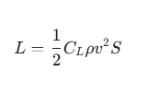
Where:
- CL represents the dimensionless coefficient of lift.
- P represents the density of the air.
- v represents the velocity of the aircraft relative to the air.
- S represents the total planform wing surface area.
Key core subjects include:
- Aviation Legislation: Mastering the strict regulatory frameworks set by the DGCA, ICAO, and EASA.
- Aircraft Materials: Studying the properties of carbon-fiber composites and titanium alloys.
- Propulsion Systems: Understanding the thermodynamic cycles of gas turbine and piston engines.
- Avionics & Communication: Navigating radar, satellite navigation (GPS), and autopilot loops.
The MCA Syllabus: Mastering Algorithmic Complexity & Systems
The MCA curriculum is centered around abstract logic, computational mathematics, and software architecture.
For example, when design teams build scalable database applications, developers must analyze search algorithm execution speeds. Finding the computational complexity of a binary search algorithm relies on logarithmic step calculations: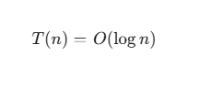
Where:
- T(n) represents the execution time of the algorithm.
- n represents the total number of data records in the system.
- O represents the asymptotic upper bound of complexity (Big O Notation).
Key core subjects include:
- Advanced Data Structures & Algorithms (DSA): Designing efficient paths for database navigation and search.
- Cloud Architecture: Managing scalable, multi-tenant databases on AWS, Azure, or Google Cloud.
- Machine Learning & Neural Networks: Training algorithms to recognize patterns and automate actions.
- Cybersecurity Protocols: Defending enterprise networks and application interfaces from sophisticated cyber attacks.
6. Career Scope and Job Roles
Both fields lead to completely different daily routines, professional environments, and lifestyle outcomes.
Your Career in Aircraft Maintenance Engineering
As a licensed AME, you operate on the front lines of airline operations. Your skills are highly valued because airlines lose millions of rupees for every hour a modern commercial jetliner is grounded due to a technical snag. Common job roles include:
- Licensed Certifying Engineer: Conducting pre-flight, weekly, and heavy maintenance checks, troubleshooting snags, and signing the Certificate of Release to Service (CRS).
- MRO Specialist: Performing deep-level dismantling, testing, and reassembly of aircraft structures during mandatory C-Checks and D-Checks.
- Quality Assurance (QA) Manager: Overseeing compliance with civil aviation regulations and ensuring the airline’s maintenance department adheres strictly to safety protocols.
- Technical Officer: Managing technical logbooks, tracking engine wear-and-tear cycles, and tracking rotables.
Top Recruiters: Commercial airlines (IndiGo, Air India, Akasa Air, SpiceJet), international carriers (Emirates, Qatar Airways, Singapore Airlines), and major domestic MRO hubs like AIESL, Indamer, and GMR Aero Technic.
Your Career in Computer Applications
As an MCA graduate, you will work primarily in controlled software development environments. Common job roles include:
- Full-Stack Developer: Designing and maintaining both the front-end user interfaces and the back-end database engines of modern web applications.
- Cloud Security Engineer: Designing secure cloud configurations and protecting enterprise data systems.
- Database Administrator (DBA): Ensuring high-availability, low-latency, and integrity of massive enterprise SQL/NoSQL data warehouses.
- ML Ops Specialist: Deploying and managing machine learning models in production environments.
Top Recruiters: Indian tech giants (TCS, Infosys, Wipro, HCL), global product MNCs (Microsoft, Google, Oracle), and Global Capability Centers (GCCs) expanding their innovation hubs across Bengaluru, Hyderabad, and Pune.
7. Salary Trajectory Comparison (AME vs MCA)
When comparing ame vs mca, the financial return on your educational investment and the speed of salary progression are major considerations. The trajectories of these two careers behave very differently:
Entry-Level Phase (Years 1–2)
- MCA Graduate: Commands a steady starting salary, typically ranging from ₹4.0 Lakhs to ₹7.5 Lakhs per annum as an Associate Software Engineer or Trainee Developer.
- AME (Trainee Technician): Starts with a relatively modest stipend or salary, ranging from ₹3.0 Lakhs to ₹5.0 Lakhs per annum. During this phase, you are gainfully accumulating the practical experience hours required to obtain your basic license.
Mid-Career Phase (Years 3–7)
- MCA Graduate: Progresses steadily based on technical stack upgrades and project handovers, reaching ₹9 Lakhs to ₹16 Lakhs per annum.
- AME (Licensed Engineer): Once you clear your DGCA module exams and obtain your Basic AME License (BAMEL), your salary experiences an exponential jump. Licensed AMEs easily earn ₹12 Lakhs to ₹20 Lakhs per annum, rapidly matching or exceeding their IT counterparts.
Senior Specialist Phase (Years 10+)
- MCA Graduate: Senior cloud architects, lead data engineers, or software development managers earn ₹22 Lakhs to ₹45 Lakhs per annum.
- AME (Type-Rated Certifying Engineer): The financial peak of this profession is highly lucrative. If you undergo specialized type-rating training for heavily utilized commercial jets (like the Boeing 787 or Airbus A321neo), your signature becomes incredibly valuable. Type-rated senior certifying engineers in India earn ₹24 Lakhs to ₹50+ Lakhs per annum, while overseas roles in hubs like Dubai, Doha, or Singapore offer tax-free salaries exceeding ₹1 Crore per annum.
8. Calculating Educational Payback (ROI Model)
To make a smart financial decision, we can use a basic economic mathematical model to calculate the Educational Payback Period (Py). This measures how quickly you can recover your total educational and training costs once you enter the job market:
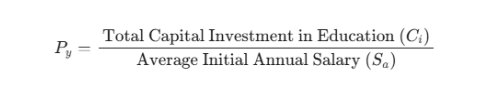
Let’s model the ROI for both paths based on standard 2026 data:
Case A: Aircraft Maintenance Engineering (AME) Course
- Total Educational Cost (Ci): ~₹6,00,000 (Average fee for a 3-year DGCA-approved CAR 147 program).
- Average Initial Salary as Licensed Basic AME (Sa): ~₹12,00,000 per annum (reached rapidly within 3 years of completing training).
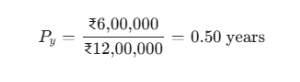
Using our formula:
This indicates an accelerated payback period of just 6 months once licensing is achieved.
Case B: Post-Graduate MCA Path (BCA + MCA)
- Total Educational Cost (Ci): ~₹8,00,000 (Combined fees for 3 years of BCA and 2 years of MCA, including training resources and residential charges).
- Average Initial Salary as Software Engineer (Sa): ~₹4,50,000 per annum.
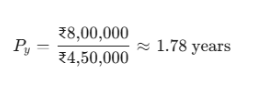
Using our formula:
This indicates a longer payback period of approximately 1.8 years to recover the initial capital investment.
9. Diagnostic Questions: How to Choose Your Path?
Still feeling torn? Ask yourself these four simple diagnostic questions to identify your natural technical path:
- Do you prefer tangible, mechanical machinery or abstract logic blocks? If you love physical mechanisms, holding precision tools, and troubleshooting aircraft systems, choose AME. If you prefer sitting at a computer workstation, writing logical scripts, and debugging software systems, choose MCA.
- What is your tolerance for safety responsibility? As a licensed AME, you carry the legal and psychological responsibility of passenger lives; if you sign off on a faulty plane, you are legally accountable. If you prefer to work in a corporate database environment, MCA is more suitable.
- Are you ready for national licensing exams? AME is a highly regulated, license-based career where you must pass tough DGCA modules (passing score is 75% ). If you prefer traditional university semester grading systems, MCA is the standard academic choice.
- How fast do you want to enter the workforce? AME is a focused technical program designed to get you on the hangar floor within 3 years. MCA requires a minimum of 5 years of higher university education (BCA + MCA).
Why Study Aviation at the School of Aeronautics (SOACET)?
Since 1992, the School of Aeronautics (SOACET) has served as India’s premier launchpad for aviation leaders. Whether you choose AME or B.Tech in Aeronautical Engineering, SOACET provides an educational platform that balances academic depth with unparalleled physical training.
1. The Neemrana “Live Hangar” Advantage
You cannot learn flight safety or turbine diagnostics solely from textbook diagrams. Our Neemrana campus features an active, on-site hangar housing actual, heavyweight operational aircraft, including a Fokker F-27 and a Beechcraft. Our students trace working hydraulic lines, test structural wings, inspect turbofan blades, and conduct live engine runs.
2. Strategic Civil and University Approvals
At SOACET, you don’t have to choose between a university degree and a technical license. We offer integrated programs where you can work toward your AICTE-approved B.Tech in Aeronautical Engineering from a recognized university like Bikaner Technical University (BTU) while simultaneously undergoing DGCA-approved CAR 147 basic AME training.
3. Dedicated Exam Support Cell
Clearing competitive university semester papers and rigorous DGCA module exams requires expert mentorship. SOACET maintains a dedicated Exam Support Cell providing specialized coaching, module mock tests, and a vast international technical library, resulting in one of the highest clearance rates in the country.
Frequently Asked Questions (FAQs)
Q1. Is Aircraft Maintenance Engineering equivalent to an MCA degree?
No. Standard AME is a professional, license-based technical course approved by the DGCA under CAR 147, whereas MCA is a postgraduate academic degree. However, they can lead to similar high-level pay scales in their respective sectors.
Q2. Can an AME work in IT or software sectors?
If an AME specializes in Avionics (Category B2) and chooses to upskill in system architecture or programming, they can transition into aerospace software development. However, core software engineers (MCA) cannot work as licensed aircraft technicians without completing DGCA-approved CAR 147 training.
Q3. How is the IT layoff trend in 2026 affecting MCA graduates?
While top-tier specialists in Cloud Engineering, AI, and Cybersecurity remain in demand, traditional junior developer roles are declining. Companies are using automated AI generation to handle routine coding, making standard, low-complexity IT jobs more vulnerable.
Q4. Are education loans available for both courses?
Yes. Because SOACET is a highly recognized, DGCA-approved, and BTU-affiliated institution, all major public and private banks provide structured educational loans to cover the costs of tuition, practical labs, and residential charges.
Conclusion: Take the Leap Toward Takeoff
When evaluating AME vs MCA, the debate isn’t about which course is universally superior; it is about finding the path that matches your natural talents, timeline expectations, and career goals.
One path puts you at the keyboard of digital innovation, managing database architectures and building the virtual platforms of tomorrow. The other puts you on the hangar floor of daily aviation operations, ensuring that the heavy machines keeping humanity connected remain absolutely safe and airworthy. Both pathways lead to highly respected, intellectually challenging, and financially rewarding careers.
By choosing an institution like the School of Aeronautics (SOACET), which perfectly balances academic depth with unparalleled live hangar experience, you ensure that your technical career launches with maximum thrust.
The runway is clear, and the skies are waiting. Are you ready for takeoff?