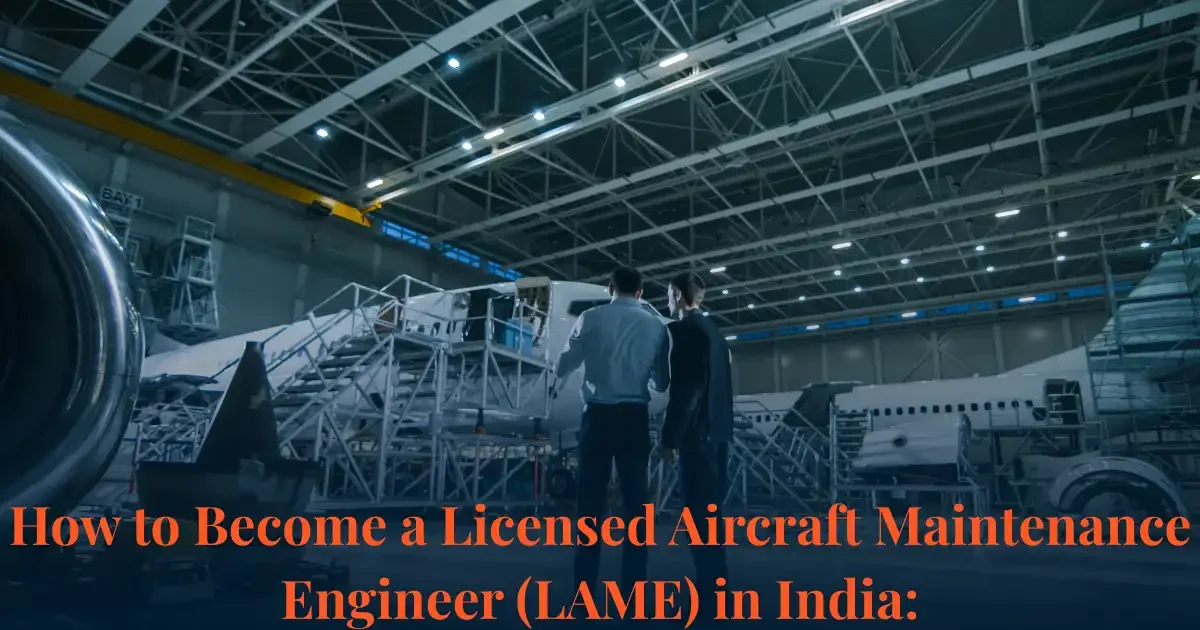
Every aircraft that takes off from an Indian airport does so because a Licensed Aircraft Maintenance Engineer signed off on its airworthiness. That signature carries legal and regulatory weight it’s not a formality, it’s the final technical checkpoint standing between an aircraft and the runway. For students weighing hands-on, safety-critical technical careers, understanding exactly how someone becomes licensed to hold that authority matters far more than knowing the job title exists.
This guide walks through what a LAME actually is, how the path from student to licensed professional works under India’s regulatory framework, and importantly where AME training ends and actual licensing begins, since the two get conflated more often than they should.
What Is a Licensed Aircraft Maintenance Engineer (LAME)?
A Licensed Aircraft Maintenance Engineer is a professional who holds a valid license, issued by India’s Directorate General of Civil Aviation (DGCA), authorizing them to certify aircraft maintenance work as complete and the aircraft as airworthy. This certification authority, often called a Certificate of Release to Service (CRS), is what legally distinguishes a licensed engineer from maintenance personnel who perform technical work without independent sign-off authority.
The distinction matters: many people work within aircraft maintenance environments technicians, apprentices, engineers still completing licensing requirements but only a licensed individual can independently certify that maintenance work meets airworthiness standards. That authority is precisely why the licensing pathway is regulated as rigorously as it is; a LAME’s judgment call directly affects flight safety.
What Does a Licensed Aircraft Maintenance Engineer Do?
Core responsibilities typically include:
- Aircraft inspection: scheduled and unscheduled checks against approved maintenance programs
- Maintenance tasks: repair, replacement, and servicing of aircraft systems within the engineer’s licensed category
- Troubleshooting: diagnosing faults and determining appropriate corrective action
- Maintenance documentation: maintaining accurate technical records, a legally required part of the role
- Compliance with approved procedures: following manufacturer and regulatory-approved maintenance instructions precisely
- Certification/sign-off responsibilities: issuing a Certificate of Release to Service where the engineer’s specific license, category, and authorization permit it
It’s worth being precise here: exact privileges depend on the individual’s license category (B1, B2, or others), the specific aircraft type endorsements they hold, their employer’s organizational approvals, and applicable DGCA regulations not every LAME can certify every type of work on every aircraft.
How to Become a Licensed Aircraft Maintenance Engineer in India
Step 1: Complete the Required Educational Qualification
Under DGCA’s CAR 66.A.15 requirements, the standard entry pathway requires passing Class 12 (10+2) with Physics, Chemistry, and Mathematics (PCM) from a recognized board. Candidates with certain relevant diploma qualifications may also have eligibility routes into AME training, depending on the specific institute and program not every student follows an identical entry path, so checking current AME eligibility criteria for your specific target program matters.
Step 2: Join an Appropriate AME Training Pathway
Training must be completed through a DGCA-approved training organization to lead toward valid licensing training from a non-approved institute generally doesn’t count toward a recognized DGCA license, regardless of course content quality. When evaluating institutes, verify current DGCA approval status directly and confirm which specific license categories (B1.1, B1.3, B2, etc.) that particular institute is approved to train for, since approval doesn’t automatically cover every category.
Admissions Contact: For program details, dual specialisation options, fees, and the AME Admission Process 2026 at the SOA School of Aeronautics, Neemrana,
Visit the official website at https://soacet.org/ or contact (+91-9870273846 +91-9314009022) the admissions team directly through the website.
Step 3: Complete Required Technical Training / Knowledge Requirements
Training programs cover the technical syllabus aligned with CAR-66 module requirements aircraft systems, materials, structures, regulations, and maintenance theory combined with practical, hands-on instruction. The specific module breakdown differs somewhat between B1 (mechanical) and B2 (avionics) pathways, reflecting their different technical focus areas.
Step 4: Complete Required Examinations
Candidates register through DGCA’s official examination portal (PARIKSHA) and appear for module examinations often referred to as QPREFs corresponding to their license category. Each module has its own examination, and candidates are permitted a limited number of consecutive attempts before a mandatory waiting period applies, which is worth planning around rather than treating exams casually.
Step 5: Gain Required Practical / Maintenance Experience
Beyond passing examinations, candidates need documented practical maintenance experience gained under appropriate supervision within an approved maintenance environment. This is a genuine hands-on requirement, not a formality it’s where classroom and simulated training gets tested against real aircraft maintenance conditions. Exact experience duration requirements should be verified against current DGCA regulations at the time of application, since specifics can vary by pathway and category.
Step 6: Meet Licensing Requirements
Once module examinations and practical experience requirements are satisfied and properly documented, candidates apply to DGCA for licensing in the relevant category. This is the step that formally transitions someone from “AME-trained” to “licensed” a distinction worth repeating, since completing training alone does not itself confer a license.
Step 7: Aircraft Type Training / Additional Requirements
Many licensed engineers pursue additional aircraft type-specific training and endorsements after initial licensing, since a base license typically needs to be supplemented with type-specific authorization before an engineer can certify work on a particular aircraft model. This is often where meaningful career and salary progression actually happens.
Step 8: Build a Professional Aviation Career
With licensing (and increasingly, type endorsements) in place, most LAMEs build careers with airlines, MRO (Maintenance, Repair, and Overhaul) organizations, aircraft maintenance organizations, aviation operators, or specialized maintenance facilities, with career growth typically tied to accumulating additional type ratings and experience over time.
Eligibility to Become a LAME in India
| Requirement | Details |
|---|---|
| Educational Qualification | Class 12 (10+2) with Physics, Chemistry, and Mathematics, per CAR 66.A.15; relevant diploma pathways may apply depending on the specific program |
| Training | Must be completed through a DGCA-approved training organization for the relevant license category |
| Technical Knowledge | CAR-66-aligned syllabus covering aircraft systems, structures, materials, and regulations |
| Examinations | Module examinations (QPREFs) registered and conducted via DGCA’s PARIKSHA portal |
| Practical Experience | Documented hands-on maintenance experience under appropriate supervision; exact duration should be verified against current DGCA regulations |
| Licensing | Formal DGCA license issued only after examinations and experience requirements are satisfied and verified |
| Additional Requirements | Aircraft type-specific training/endorsements typically required before certifying work on a specific aircraft model |
LAME Licence Categories
DGCA issues aircraft maintenance licenses under distinct categories, with B1 and B2 being the primary pathways most AME students pursue, alongside other categories (such as A and B3) that apply to more specific contexts.
Category B1 (Mechanical) covers airframe, engine, and mechanical/electrical systems, with subcategories (B1.1, B1.2, B1.3, B1.4) differentiated by aircraft type turbine aeroplanes, piston aeroplanes, turbine helicopters, and piston helicopters, respectively.
Category B2 (Avionics) covers electrical and avionics systems, authorizing certification of maintenance work on aircraft instrumentation, communication, and navigation systems.
B1 vs B2 Aircraft Maintenance Licence
| Factor | B1 | B2 |
|---|---|---|
| Main Area | Mechanical | Avionics |
| Major Systems | Airframe, engine, mechanical systems | Electrical, avionics, instruments |
| Suitable For | Students interested in mechanical aircraft systems | Students interested in aircraft electronics |
| Career Areas | Maintenance / mechanical technician roles | Avionics / electrical maintenance roles |
Exact licence privileges what an individual license holder can and cannot certify are governed entirely by applicable DGCA regulations and the specific endorsements on that person’s license, not by the general B1/B2 category alone.
How Long Does It Take to Become a LAME?
There’s no single guaranteed timeline. Duration depends on the specific training pathway chosen, how quickly a candidate clears module examinations, how fast practical experience requirements are fulfilled, and individual circumstances. As a general educational pathway (not a regulatory guarantee), AME training programs commonly run in the range of 2 to 4 years depending on institute and category, but actual time to full licensing, including practical experience accumulation, can extend meaningfully beyond program completion. Candidates should verify current, specific timeline expectations directly with their chosen training institute and against current DGCA requirements.
Skills Required to Become a Successful LAME
Technical Skills
- Aircraft systems and structures knowledge
- Engine and/or avionics systems (depending on B1/B2 path)
- Troubleshooting and fault diagnosis
- Maintenance procedures and regulatory compliance
- Technical documentation accuracy
- Aviation safety practices
Professional Skills
- Attention to detail small oversights carry serious safety consequences
- Clear communication, including technical English for documentation
- Teamwork, since maintenance work is rarely a solo task
- Discipline and adherence to procedure without shortcuts
- Problem-solving under time and operational pressure
- Sound decision-making, particularly when signing off on airworthiness
- Commitment to continuous learning, since regulations and aircraft technology both evolve
Where Can a Licensed Aircraft Maintenance Engineer Work?
- Airlines: line and base maintenance roles for domestic and international carriers
- MRO organizations: dedicated maintenance, repair, and overhaul companies, a segment India is actively investing in expanding
- Aircraft maintenance organizations: independent or specialized maintenance providers
- Aviation operators: private, charter, and business aviation operators
- Specialized maintenance facilities: including helicopter-specific or type-specific maintenance centers
Specific companies actively hiring at any given time should be verified directly through current job postings rather than assumed from this general overview.
Licensed Aircraft Maintenance Engineer Salary in India
| Career Stage | Salary Factors |
|---|---|
| Entry-Level | Qualification, specific training institute, organization type, and location all influence starting compensation |
| Experienced | Years of experience, specialization area, and current license/endorsement status |
| Licensed / Type-Rated Professionals | Specific license category, aircraft type endorsements held, employer, and accumulated experience |
| Senior Maintenance Roles | Leadership responsibility, technical specialization depth, and organizational scope |
Reported figures from current industry sources suggest entry-level licensed AMEs without a type endorsement often start in a broad range of roughly ₹28,000–₹55,000 per month, with meaningful increases as type endorsements and experience accumulate. Treat this as an indicative range, not a guarantee actual compensation depends heavily on employer, city, license category, and individual negotiation, and candidates should verify current figures against recent job postings and placement data rather than relying on any fixed number, including this one.
Career Growth After Becoming a LAME
Progression typically follows a pattern shaped by licensing and experience: from newly licensed engineer, toward type-rated specialist as additional aircraft endorsements are earned, then into senior technical roles, maintenance supervision, or specialized functions like quality assurance, maintenance planning, or reliability engineering. Some experienced LAMEs move into technical management roles overseeing broader maintenance operations. Actual progression depends on licensing achieved, employer structure, available opportunities, and individual performance it isn’t automatic or guaranteed by tenure alone.
LAME vs Aeronautical Engineer
| Factor | LAME | Aeronautical Engineer |
|---|---|---|
| Primary Focus | Aircraft maintenance and airworthiness certification | Aircraft engineering, design, and manufacturing |
| Main Pathway | DGCA-approved AME training + CAR-66 licensing (exams + experience) | AICTE-approved B.Tech. engineering degree |
| Work Environment | Airlines, MRO, maintenance organizations | Aerospace manufacturers, R&D, airlines (engineering roles) |
| Core Skills | Maintenance, troubleshooting, regulatory compliance | Design, structural/aerodynamic analysis, engineering |
| Career Direction | Licensed maintenance progression | Engineering and technical/design progression |
Neither path is universally “better” the right choice depends on whether you’re drawn to hands-on, licensed technical work with direct safety certification authority, or design and engineering-focused work centered on how aircraft are built rather than maintained.
Is LAME a Good Career in India?
For the right candidate, yes, with realistic expectations. It offers genuine technical responsibility (few careers hand you legal sign-off authority over aviation safety this directly), a clear, licensing-driven specialization path, and steady demand tied to India’s expanding aircraft fleet and MRO sector. It also demands real discipline: rigorous exam preparation, hands-on precision, and often shift-based work depending on the employer and maintenance environment. It’s not accurate to promise a guaranteed high salary or absolute job security, as career outcomes depend on how seriously a candidate pursues licensing, type endorsements, and continued skill development. For students who genuinely want hands-on technical work with a direct stake in aviation safety, though, it remains a strong, well-regarded option.
Future Scope of Licensed Aircraft Maintenance Engineering
India’s aviation ecosystem is expanding fleet size significantly Airbus projects the commercial fleet could nearly triple over the next decade, which directly drives sustained maintenance engineer demand. The government and private sector are actively investing in domestic MRO capacity specifically to reduce reliance on overseas maintenance, with Airbus projecting India’s MRO market could reach roughly $9.5 billion as the fleet scales. New aircraft technologies, digital and predictive maintenance systems (sensor-based condition monitoring feeding data analytics platforms), and increasingly connected, avionics-heavy aircraft are all shifting what the role requires, rewarding LAMEs who combine traditional hands-on technical skill with comfort interpreting data-driven maintenance insights. This doesn’t reduce the need for licensed judgment; it changes what that judgment gets applied to.
How to Choose the Right AME Training Institution
Before enrolling, verify:
- Regulatory approval status: confirm current DGCA approval directly, and specifically which license categories the institute is approved to train for
- Training facilities: actual aircraft, engines, and equipment available for hands-on training, not just classroom infrastructure
- Practical training depth: how much genuine hands-on exposure students get versus purely theoretical instruction
- Faculty expertise: instructors with real industry maintenance background
- Examination support: how the institute prepares students specifically for DGCA module examinations
- Placement/career guidance: ask for specifics (which employers, what roles) rather than accepting vague claims
- Fee transparency: clear, upfront understanding of total costs, not just headline tuition
- Course structure: how the curriculum maps to CAR-66 module requirements specifically
Frequently Asked Questions
What is a Licensed Aircraft Maintenance Engineer?
A professional holding a valid DGCA license authorizing them to certify aircraft maintenance work and sign off on airworthiness, distinct from maintenance personnel who perform technical work without independent certification authority.
How can I become a LAME in India?
Complete Class 12 with PCM, enroll in DGCA-approved AME training, pass CAR-66 module examinations through DGCA’s PARIKSHA portal, complete required practical maintenance experience, and apply for licensing once all requirements are documented and verified.
What qualification is required to become a LAME?
Under CAR 66.A.15, the standard entry requirement is Class 12 (10+2) with Physics, Chemistry, and Mathematics from a recognized board, though specific diploma-based pathways may apply depending on the program.
Is AME the same as LAME?
Not exactly. AME typically refers to the training and education pathway, while LAME specifically refers to someone who has completed licensing and holds DGCA certification authority. Completing AME training alone doesn’t automatically make someone a LAME.
What is the DGCA AME licensing process?
It involves DGCA-approved training, passing CAR-66 module examinations, completing documented practical maintenance experience, and then a formal license application and approval. Training and licensing are distinct, sequential steps.
What is the difference between B1 and B2?
B1 (Mechanical) covers airframe, engine, and mechanical systems; B2 (Avionics) covers electrical and avionics systems. Both are regulated under DGCA’s CAR-66 framework, with B1 further divided by aircraft type.
How long does it take to become a LAME?
There’s no guaranteed timeline training programs commonly run 2 to 4 years, but full licensing (including practical experience requirements) can extend meaningfully beyond program completion depending on individual pace and pathway.
Where can a LAME work?
Airlines, MRO organizations, independent aircraft maintenance organizations, private/charter aviation operators, and specialized or type-specific maintenance facilities.
What is the salary of a LAME in India?
Entry-level licensed engineers without a type endorsement often start in a broad range around ₹28,000–₹55,000 per month based on current industry reporting, with substantial growth possible through type endorsements and experience. Treat this as indicative, not guaranteed, and verify current figures directly.
Is LAME a good career option?
Yes, for candidates genuinely drawn to hands-on, safety-critical technical work with a clear licensing-driven progression path, though it requires real discipline in exam preparation and skill-building, without guaranteed salary or placement outcomes.
What is the difference between LAME and Aeronautical Engineer?
LAME focuses on aircraft maintenance and certification through a DGCA licensing pathway Aeronautical Engineer focuses on aircraft design, structures, and manufacturing through an academic engineering degree. Different work, different pathways, neither universally “better.”
Can an AME work for an airline?
Yes, once licensed, airlines are among the largest employers of LAMEs, for both line maintenance (routine, quick-turnaround work) and base maintenance (more extensive, scheduled maintenance work) roles.
Conclusion
Becoming a Licensed Aircraft Maintenance Engineer is a structured, regulation-driven journey one that runs through DGCA-approved training, CAR-66 module examinations, documented practical experience, and formal licensing, not simply completing a course. The distinction between AME training and actual LAME licensing matters throughout this entire pathway, since certification authority over aircraft airworthiness is earned through the full process, not granted by education alone. For students genuinely drawn to hands-on technical work with direct responsibility for aviation safety, it remains one of the most concrete, licensing-backed career paths in Indian aviation, one worth pursuing deliberately, with realistic expectations about the discipline it demands and the genuine opportunity it offers.
If becoming a Licensed Aircraft Maintenance Engineer sounds like the hands-on, safety-critical career you’re looking for, the next step is understanding your specific eligibility and the training pathway that fits your goals. Explore SOACET’s Aircraft Maintenance Engineering program to learn about our curriculum, training facilities, and approval status, and reach out to our admissions team with any questions about eligibility, the CAR-66 licensing process, or choosing between the B1 and B2 pathway.
- Visit: www.soacet.org
- Explore Programs & Admissions: www.soacet.org/admissions-2026