AME Admission 2026 – Complete Guide

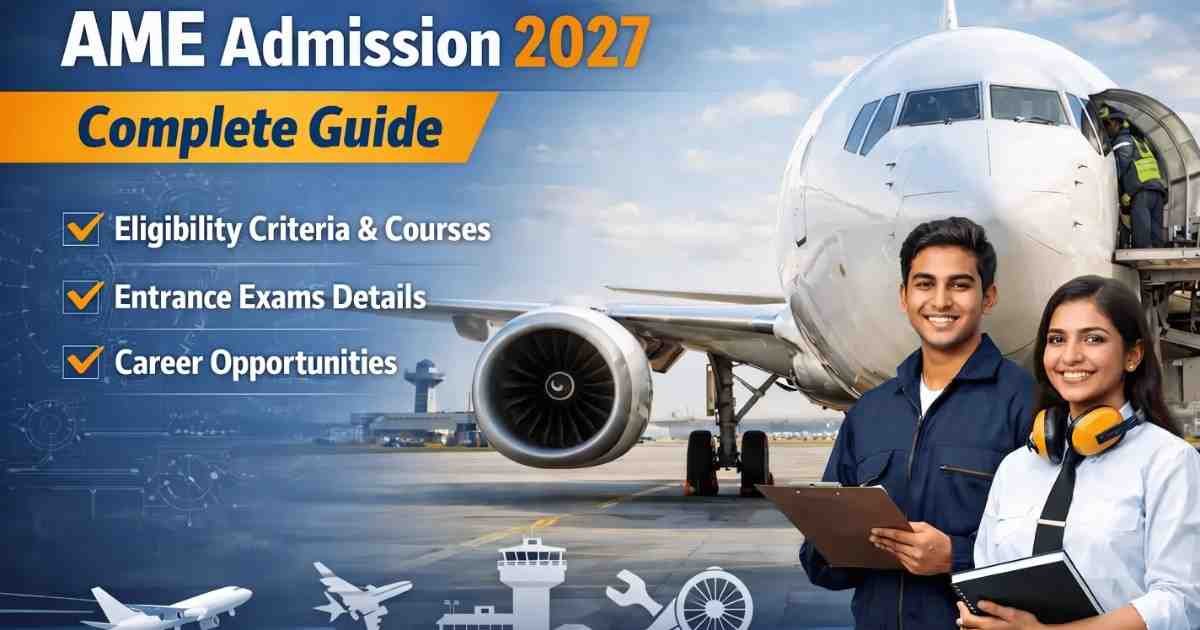
AME Admission 2026 complete guide aviation course banner

Table of Contents

Table of Contents

What is AME, and Why Choose It in 2026?

AME Admission 2026 is now open, and if you are passionate about aviation, this is the most important opportunity you should not miss. Aircraft Maintenance Engineering (AME) is a professional certification course approved by the Directorate General of Civil Aviation (DGCA), Government of India. It trains students to inspect, maintain, repair, and certify aircraft as safe and airworthy for flight operations.Every single commercial flight that takes off from an Indian airport has been certified by a licensed Aircraft Maintenance Engineer. This makes AME professionals a non-negotiable pillar of the aviation industry. Without their sign-off, no aircraft can legally fly.So why is 2026 the best year to pursue AME admission? The numbers tell a clear story:
  • India is on track to become the world’s third-largest aviation market by 2030
  • Indian airlines have placed orders for 1,000+ new aircraft over the next decade
  • The domestic MRO (Maintenance, Repair, and Overhaul) industry is expected to grow to $4 billion by 2030
  • India currently faces a shortage of over 15,000 licensed AMEs
This gap between demand and supply translates directly into excellent job opportunities, competitive salaries, and strong job security for anyone who completes AME training in 2026.At the School of Aeronautics, students can apply for AME Admission 2026 through SOACET (School of Aeronautics Common Entrance Exam), a structured, merit-based entrance examination that selects the most qualified and dedicated aviation aspirants.

AME Admission 2026 – Eligibility Criteria

Before applying for AME Admission 2026, every candidate must confirm they meet the eligibility requirements. The criteria are designed to ensure students have the foundational knowledge in science and mathematics necessary for aircraft maintenance training.

Academic Qualification

Route 1: After 10+2 / Intermediate / Pre-DegreeThis is the most common route for AME admission. Students who have completed their higher secondary education are directly eligible.
RequirementDetails
Qualification10+2 or equivalent from a recognised board
Compulsory SubjectsPhysics and Mathematics
Optional SubjectChemistry OR Computer Science
Minimum Marks50% aggregate in PCM / PCM+CS
Recognized BoardsCBSE, ICSE, all State Boards, NIOS
Why PCM is essential: Physics builds the foundation for understanding flight mechanics, aerodynamics, and engine thermodynamics. Mathematics enables students to handle complex calculations in structural analysis, fuel systems, and performance data. These are not optional for aviation they are the language of the industry.Route 2: After B.Sc. (Science Graduate)Science graduates who have studied Physics, Chemistry, and Mathematics at the degree level are also eligible for AME Admission 2026.
RequirementDetails
QualificationB.Sc. from a UGC-recognised university
Compulsory SubjectsPhysics, Chemistry, Mathematics
Minimum Marks50% aggregate in degree
B.Sc. graduates bring stronger theoretical knowledge and often grasp DGCA module content more quickly, making them excellent candidates for AME programs.Route 3: After Engineering DiplomaDiploma holders in engineering can also apply for AME Admission 2026 through lateral entry.
RequirementDetails
Qualification3-year Engineering Diploma
Eligible BranchesMechanical, Electrical, Electronics, Instrumentation, Telecommunications
RecognitionAICTE or State Technical Board approved
Diploma candidates may receive subject exemptions based on their prior technical knowledge, which can reduce their overall training duration.

Additional Eligibility Requirements

Age Limit:
  • Minimum: 16 years at the time of admission
  • Maximum: Generally up to 28 years (may vary by category)
Medical Fitness: All AME candidates must obtain a DGCA Class II Medical Certificate from a DGCA-approved Aviation Medical Examiner. This examination includes:
  • Vision test (correctable to 6/6)
  • Colour vision test (must distinguish aviation signal colours)
  • Hearing assessment
  • General physical and mental health evaluation
The medical certificate can be obtained after provisional admission it does not need to be submitted with the initial application.English Language: Basic proficiency in reading and writing English is required, as all aircraft technical manuals, DGCA documents, and maintenance records are written in English.

Entrance Exam for AME Admission 2026 – SOACET

One of the most important steps in your AME Admission 2026 journey is the entrance examination. At the School of Aeronautics, admission is granted through the SOACET – School of Aeronautics Common Entrance Exam.

What is SOACET?

SOACET is the official entrance examination conducted by the School of Aeronautics every year to select meritorious students for their aviation programs. It is not a national-level exam like JEE or NEET it is specifically designed by the School of Aeronautics to identify students who are ready for the demands of DGCA-approved aviation training.Why SOACET is designed this way: The AME course is highly technical and requires specific aptitude in physics, mathematics, and logical reasoning. SOACET tests these precise skills so that students who join are genuinely prepared for the rigorous DGCA curriculum ahead.

SOACET 2026 Exam Pattern

AspectDetails
Exam NameSOACET – School Of Aeronautics Common Entrance Exam
Conducted BySchool Of Aeronautics
ModeOnline (Computer-Based) / Offline
Duration2 to 3 Hours
Question TypeMultiple Choice Questions (MCQs)
Total QuestionsAs per the official notification
Subjects TestedPhysics, Chemistry, Mathematics, English
Marking SchemeAs per the official notification
Official Websitesoacet.org

SOACET 2026 Syllabus Overview

  • Physics: Mechanics, Laws of Motion, Thermodynamics, Electricity and Magnetism, Optics, Wave Motion, Modern Physics
  • Chemistry: Atomic Structure, Chemical Bonding, Physical Chemistry, Organic and Inorganic Chemistry Basics, States of Matter
  • Mathematics: Algebra, Trigonometry, Calculus (Differentiation and Integration), Coordinate Geometry, Vectors, Probability and Statistics
  • English and Aptitude: Reading Comprehension, Grammar, Vocabulary, Logical Reasoning, Numerical Ability

SOACET 2026 Preparation Tips

Strong preparation for SOACET begins with a thorough revision of NCERT textbooks for Classes 11 and 12 in Physics, Chemistry, and Mathematics. Beyond NCERT:
  • Solve the previous year SOACET question papers available at soacet.org
  • Practice timed mock tests weekly to build speed and accuracy
  • Make formula sheets for Physics and Mathematics for quick revision
  • Focus on organic chemistry reactions and modern physics numericals common scoring areas
  • Build English reading habits by reading aviation news and general articles daily
  • Start preparation at least 4 to 6 months before the exam date

SOACET Registration Process

  1. Visit soacet.org
  2. Click “Apply Now” or “Register for SOACET 2026”
  3. Fill in personal and academic details
  4. Upload a photograph, signature, and required documents
  5. Pay the application fee online
  6. Submit and download your application confirmation
  7. Download the admit card before the exam from soacet.org

AME Course Duration and Structure

Understanding the course structure is a critical part of planning your AME Admission 2026. The AME program at the School of Aeronautics follows the complete DGCA-prescribed curriculum, ensuring that every graduate is fully prepared for licensing examinations.

Total Duration: 2.5 to 3 Years

The program is divided into three distinct phases:Phase 1 – Theoretical Training (12 to 18 Months)This phase covers all DGCA Modules (1 to 17) in classroom settings:
ModuleSubject
Module 1Mathematics
Module 2Physics
Module 3Electrical Fundamentals
Module 4Electronic Fundamentals
Module 5Digital Techniques and Electronic Instrument Systems
Module 6Materials and Hardware
Module 7Maintenance Practices
Module 8Basic Aerodynamics
Module 9Human Factors
Module 10Aviation Legislation
Module 11–13Aircraft Aerodynamics, Structures, and Systems
Module 14–17Propulsion, Gas Turbine, Piston Engine, Propeller
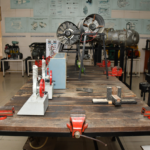
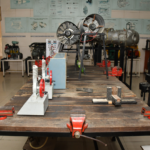
Phase 2 – Practical Workshop Training (6 to 12 Months)Students work hands-on with real aircraft and components:
  • Sheet Metal Workshop – Forming, riveting, skin repair
  • Composite Materials Workshop – Modern aircraft materials and repairs
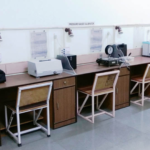
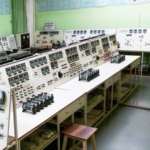
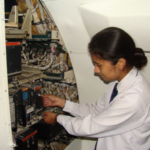
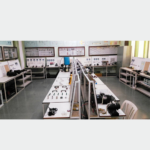
  • Electrical and Avionics Lab – Wiring, circuits, system testing
  • Hydraulic and Pneumatic Workshop – System assembly and troubleshooting
  • NDT Laboratory – Ultrasonic, eddy current, and dye penetrant testing
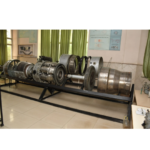
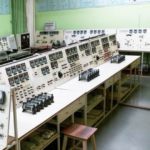
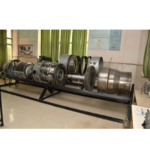
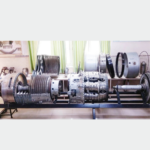
  • Engine Training – Gas turbine and piston engine handling
Phase 3 – On-the-Job Training / OJT (6 to 12 Months)OJT is conducted at partner airlines and MRO facilities under the supervision of licensed Aircraft Maintenance Engineers. This phase is where theory meets real-world aviation operations.Students experience:
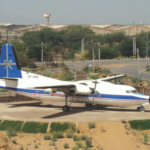
  • Line maintenance operations at airports
  • Heavy maintenance and aircraft checks
  • Certification and documentation procedures
  • Real troubleshooting scenarios
OJT is mandatory and directly contributes to the experience hours required for DGCA AME licence eligibility.

Stream Options

  • Mechanical Stream: Focuses on airframe structures, powerplant (engines), hydraulics, pneumatics, fuel systems, and landing gear.
  • Avionics Stream: Focuses on communication systems, navigation systems, autopilot, radar, and integrated modular avionics.
Most students begin with the Mechanical Stream, which is the most widely accepted stream by airlines and MRO facilities in India.

DGCA Module Examinations

Throughout the course, students appear for DGCA written module examinations:
  • Minimum passing marks: 75% per module
  • Modules can be attempted separately
  • Multiple attempts are allowed
  • All modules must be cleared for licence eligibility

AME Course Fees 2026

Fees are one of the most important factors when planning AME Admission 2026. Understanding the complete cost helps you plan your finances clearly.

Fee Components at the School Of Aeronautics

Fee ComponentDetails
Tuition FeesAnnual or module-wise, as per the schedule
Practical Training FeesWorkshop and hangar training
DGCA Examination FeesPer module examination
Infrastructure and Lab FeesLaboratory, library, digital resources
Development ChargesCampus development and facilities
For exact and updated fee details, visit: soacet.orgContact the admissions office for a detailed fee breakdown, payment schedule, and instalment options.

Payment Options Available

  • One-time full payment (may include a discount)
  • Semester-wise instalment payments
  • Module-wise payment plans
  • Education loan assistance from partner banks

Scholarships and Financial Aid

School of Aeronautics offers multiple financial support options to ensure talented students are never held back by financial constraints:
  • Merit-Based Scholarships: Awarded to students with outstanding performance in SOACET or strong 10+2 marks. Can cover up to 50% of tuition fees.
  • Need-Based Financial Assistance: For students from economically weaker sections. Requires an income certificate and supporting documents.
Government Scholarships:
  • SC/ST scholarships (Central and State Government)
  • OBC scholarship schemes
  • Minority community scholarships
  • State government merit schemes
Education Loans: School Of Aeronautics assists students in applying for education loans from major nationalised and private banks. Features include:
  • Competitive interest rates
  • Moratorium period during the course
  • Repayment begins after employment
  • No collateral required up to ₹7.5 lakhs (as per bank policies)

Return on Investment

When calculating AME course fees, always consider the return on investment:
  • Average starting salary: ₹3.5 to ₹6 lakhs per annum
  • Loan repayment period: Typically 2 to 3 years after employment
  • Mid-career salary: ₹12 to ₹25 lakhs per annum
  • International packages: $40,000 to $90,000 per annum
The AME course offers one of the strongest ROI ratios among aviation professional programs in India.

AME Career Scope in India and Abroad

The career scope for AME graduates in 2026 and beyond is genuinely exceptional. Understanding this is essential for anyone planning AME Admission 2026.

Career Scope in India

Commercial Airlines: India’s aviation sector is the fastest-growing in the world. Leading carriers are actively hiring licensed AMEs for:
  • Line Maintenance: Pre-flight, transit, and post-flight checks at airports
  • Base Maintenance: Heavy maintenance checks (A, B, C, and D checks)
  • Component Shop: Specialised system overhaul and repair
  • Technical Services: Fleet management, reliability engineering, planning
  • Major recruiters: Air India, IndiGo, SpiceJet, Vistara, Air Asia India, Alliance Air
MRO Organizations (Maintenance, Repair, Overhaul): India’s MRO sector is growing rapidly as the government pushes for domestic maintenance capabilities. MRO facilities need:
  • Aircraft certifying staff
  • Engine overhaul specialists
  • NDT technicians
  • Component repair engineers
  • Quality assurance engineers
Major MRO recruiters: Air India Engineering Services (AIESL), GMR Aero Technic, Bird Group, Taj-SIA EngineeringAircraft Manufacturers:
  • Hindustan Aeronautics Limited (HAL)
  • Tata Advanced Systems
  • Mahindra Aerospace
  • Private aerospace manufacturing units
Defence Sector:
  • Indian Air Force (Technical Branch)
  • Indian Navy (Aviation Wing)
  • Indian Coast Guard
  • DRDO technical support roles
Government Regulatory Bodies:
  • DGCA Airworthiness Inspector (after significant experience)
  • Airports Authority of India (AAI) – Technical positions

Career Scope Abroad

A DGCA AME licence opens doors to international opportunities through licence conversion:Gulf Region (High Demand):
  • Emirates Airlines (Dubai)
  • Etihad Airways (Abu Dhabi)
  • Qatar Airways
  • Saudi Arabian Airlines
  • Gulf Air, Oman Air
Asia-Pacific:
  • Singapore Airlines
  • Cathay Pacific Airways
  • Malaysia Airlines
  • Air Asia group
Europe and the Americas:
  • Lufthansa Technik
  • Air France Industries KLM Engineering
  • British Airways Engineering
  • Major US carriers (FAA licence conversion required)
Licence Conversion: Your DGCA licence can be converted to EASA (European), FAA (American), or other authorities through additional examinations. Your foundational training at a DGCA-approved institute significantly accelerates this process.

Emerging Career Opportunities

Drone and UAV Sector: The rapidly expanding drone industry in India needs technicians with AME backgrounds for:
  • UAV airworthiness assessment
  • Drone maintenance and repair
  • Regulatory compliance
Electric Aviation: New electric and hybrid aircraft entering service need engineers who understand both traditional maintenance and new power systems.Space Technology: India’s growing private space sector increasingly requires aeronautical maintenance expertise.

AME Salary After Course Completion

Salary is one of the most searched aspects of AME Admission 2026, and rightly so. Here is a comprehensive, honest overview of what licensed Aircraft Maintenance Engineers earn at various career stages.

Starting Salary (0 to 2 Years Experience)

Employer TypeAnnual Salary (INR)
Domestic Airlines (Line Maintenance)₹3.5 – ₹6 Lakhs
MRO Organizations₹4 – ₹7 Lakhs
Aircraft Manufacturers (HAL, etc.)₹4.5 – ₹7.5 Lakhs
General Aviation / Charter₹3 – ₹5 Lakhs
Defence (IAF Technical Branch)₹5 – ₹8 Lakhs (incl. benefits)
International (Gulf Region)$35,000 – $50,000/year

Mid-Career Salary (5 to 10 Years Experience)

RoleAnnual Salary (INR)
Senior Licensed AME₹10 – ₹18 Lakhs
Base Maintenance Engineer₹12 – ₹20 Lakhs
Quality Assurance Engineer₹12 – ₹22 Lakhs
Fleet Technical Engineer₹15 – ₹25 Lakhs
International (Gulf/Asia-Pacific)$65,000 – $90,000/year

Senior-Level Salary (15+ Years Experience)

PositionAnnual Salary (INR)
Chief Engineer / Engineering Manager₹25 – ₹45 Lakhs
Director of Maintenance₹35 – ₹60 Lakhs
VP Technical Operations₹50 Lakhs+
International Senior Positions$100,000 – $150,000+/year

Salary Enhancement Factors

Your salary as an AME is not fixed it grows significantly based on:
  • Aircraft Type Ratings: Adding type ratings for Boeing 737, Airbus A320, Boeing 777, or Airbus A350 can increase salary by 30 to 50% compared to unlicensed counterparts.
  • Multiple Licences: Holding both Mechanical and Avionics licences opens access to higher-paying specialist roles.
  • Location: Metros like Delhi, Mumbai, Bengaluru, Hyderabad, and Chennai offer higher salaries than tier-2 cities.
  • Additional Qualifications: Pursuing B.Tech Aeronautical or MBA Aviation Management alongside AME experience significantly boosts earning potential and career growth trajectory.
  • International Experience: Gulf region experience typically yields 3 to 5 times the salary compared to equivalent domestic roles.
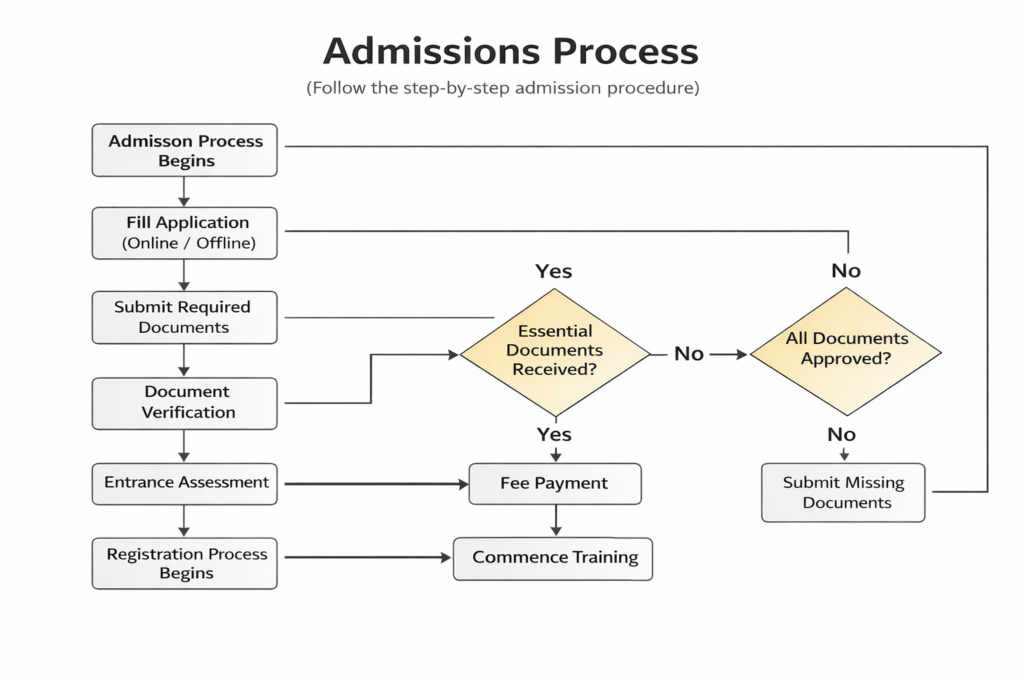
How to Apply for AME Admission 2026Follow these clearly defined steps to complete your AME Admission 2026 through SOACET at the School of Aeronautics:Step 1: Check Eligibility Confirm you meet the 10+2 PCM, B.Sc. PCM, or Engineering Diploma requirements with a minimum 50% marks.Step 2: Visit the Official Website Go to soacet.org the only authentic portal for SOACET registration.Step 3: Register and Fill Application Complete your profile with personal details, educational qualifications, and contact information.Step 4: Upload Documents
  • Recent passport-size photograph
  • Signature on white paper
  • 10th mark sheet and certificate
  • 12th mark sheet (or B.Sc./Diploma certificate)
  • Aadhar card or a valid ID proof
  • Category certificate (if applicable)
Step 5: Pay Application Fee Pay securely online via Credit Card, Debit Card, Net Banking, or UPI.Step 6: Download Confirmation Save and print your application confirmation with your registration number.Step 7: Download Admit Card The admit card is released on soacet.org approximately 2 weeks before the exam.Step 8: Appear for SOACET 2026 Appear at your chosen exam centre with your admit card and photo ID.Step 9: Check the Result and Attend Counselling Results published on soacet.org. Qualify and attend counselling for seat allocation.Step 10: Complete Admission Pay admission fees, submit original documents, complete medical examination, and join orientation.

Important Dates – AME Admission 2026

All dates below are tentative. Visit soacet.org for confirmed official dates.
EventTentative Date
SOACET 2026 NotificationDecember 2025
Online Registration OpensJanuary 2026
Last Date to ApplyMarch 2026
Admit Card DownloadApril 2026
SOACET 2026 ExaminationApril 2026
Answer Key PublicationApril 2026
Result DeclarationMay 2026
Counselling BeginsMay–June 2026
Document VerificationJune 2026
Admission ConfirmationJune 2026
Classes BeginJuly 2026
Important: Seats are limited. Apply as early as possible. Early applicants receive priority processing and better seat options during counselling.

Frequently Asked Questions

1. What is the full form of AME?AME stands for Aircraft Maintenance Engineer. It is a DGCA-approved professional certification that authorises the holder to inspect, maintain, repair, and certify aircraft as airworthy for flight.2. What is the eligibility for AME Admission 2026?The basic eligibility for AME Admission 2026 is passing 10+2 or equivalent with Physics and Mathematics as compulsory subjects and Chemistry or Computer Science as the optional subject, with a minimum of 50% aggregate in PCM. B.Sc. (PCM) graduates and Engineering Diploma holders in Mechanical, Electrical, or Electronics streams are also eligible.3. What is SOACET and why do I need to appear for it?SOACET stands for School Of Aeronautics Common Entrance Exam. It is the entrance examination conducted by School Of Aeronautics for AME Admission 2026. Appearing and qualifying in SOACET is the first step to gaining admission to School Of Aeronautics’ DGCA-approved aviation programs.4. How long is the AME course?The AME course is 2.5 to 3 years in total. It covers three phases theoretical training (12 to 18 months), practical workshop training (6 to 12 months), and on-the-job training at airlines or MRO facilities (6 to 12 months).5. Is there a minimum age limit for AME Admission 2026?Yes. The minimum age for AME Admission 2026 is 16 years. There is generally no strict upper age limit, though most applicants are between 17 and 25 years of age.6. What is the fee for the AME course at School Of Aeronautics?The complete fee structure for AME Admission 2026 is available at soacet.org or by contacting the admissions office directly. Scholarships, instalment plans, and education loan assistance are available for eligible candidates.7. What is the starting salary for an AME?A freshly licensed AME in India can expect a starting salary of ₹3.5 to ₹6 lakhs per annum at domestic airlines or MRO facilities. International positions in the Gulf region offer $35,000 to $50,000 per annum as a starting package.8. Can I work abroad after completing AME from School Of Aeronautics?Yes. After completing AME training and obtaining your DGCA licence, you can convert it to an international licence (EASA or FAA) through additional examinations. Indian DGCA licence holders are actively recruited in the Gulf, Asia-Pacific, and European markets.9. What is the difference between AME Mechanical and AME Avionics?AME Mechanical stream covers aircraft structures, engines, hydraulics, pneumatics, fuel systems, and landing gear. AME Avionics stream covers communication systems, navigation equipment, autopilot, radar, and electronic flight instruments. Both lead to a DGCA AME licence in their respective categories.10. How do I apply for AME Admission 2026 through SOACET?Visit soacet.org, register for SOACET 2026, fill out the application form, upload your documents, pay the application fee, and submit. Download your admit card when released and appear for the examination. After the results, attend counselling for seat allocation and confirm admission.
Facebook
LinkedIn