360° Campus Tour Explore SOACET 360 Degree Campus View

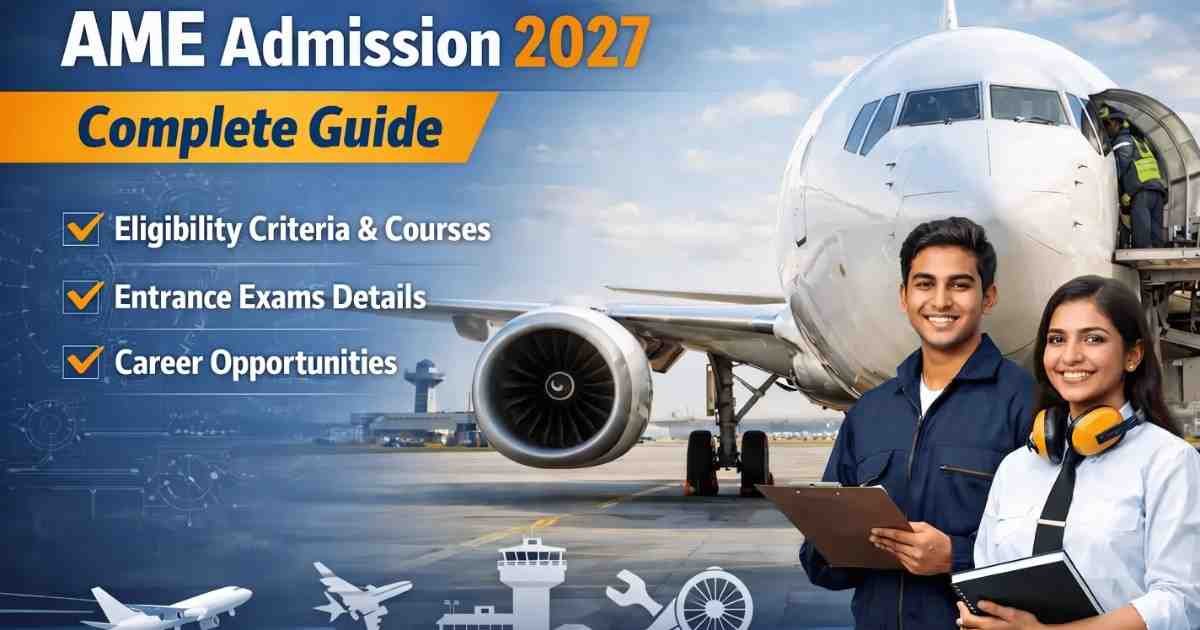
AME Admission 2026: Do You Really Need an Entrance Exam? Eligibility, Process & What to Check First

Students reviewing AME admission 2026 eligibility and process documents

Table of Contents

A note on the title: You’ve probably seen pages claiming AME admission is possible “without any entrance exam.” That’s only partly true, and it’s important to get this right before you apply anywhere, including with us. There is no DGCA-mandated, centralised entrance exam that every AME institute in India must use. But individual institutes set their own admission process, and some, including School of Aeronautics, run their own entrance test as part of how they admit and award scholarships. This article explains exactly where that distinction matters so you don’t make a decision based on a misleading claim.

If you’ve completed or are completing Class 12 with Physics, Chemistry and Mathematics and are considering Aircraft Maintenance Engineering (AME) admission in 2026, the two things worth understanding before you pay any fee are: what eligibility actually requires, and what your chosen institute’s specific admission process looks like because it is not identical everywhere.

Read Before: AME Admission Process in India

AME Admission 2026: Quick Answer

Students who have passed 10+2 with Physics, Chemistry and Mathematics (or hold a relevant 3-year engineering diploma) are eligible to apply for AME admission in 2026. DGCA does not run or require a single, compulsory national entrance exam admission is institute-specific. Some DGCA-approved institutes admit primarily on 10+2 merit, while others, including School of Aeronautics, The national level entrance test use their own entrance test (SOACET) as the main route for admission and scholarship eligibility. Before applying anywhere, confirm the institute’s current DGCA CAR-147 approval, its exact admission process for the 2026 batch, and its complete fee structure in writing.

What Is AME Admission 2026?

Aircraft Maintenance Engineering trains students to inspect, service, repair, and certify aircraft as airworthy. The profession is responsible for the technical safety of every flight before it takes off. AME admission, then, is the process of enrolling in a DGCA-approved training programme that leads toward a DGCA aircraft maintenance licence.

This is a meaningfully different pathway from a conventional engineering degree. A B.Tech admission gets you into a 4-year AICTE-approved academic programme. AME admission gets you into a shorter, more hands-on, regulation-driven training pathway one where completing the course is only the first step toward a licence, not the outcome. Understanding this before you apply shapes how seriously you should treat the admission process itself.

AME Admission 2026 Eligibility

General eligibility (broadly consistent across DGCA-approved institutes):

  • 10+2 pass with Physics, Chemistry and Mathematics (PCM) from a recognised board, or
  • A 3-year AICTE-approved diploma in a relevant engineering stream (mechanical, electrical, electronics) often used as a lateral-entry route
  • Most institutes look for a minimum aggregate mark in PCM, commonly cited around 50%, though this is set by the institute rather than DGCA
  • Basic medical/physical fitness, formally required at the licence-application stage, though many institutes also screen for it at admission

Institute-specific eligibility always confirm separately:

  • Exact minimum percentage cut-offs (these vary by institute and by year)
  • Age requirements, where an institute applies them
  • Category-specific reservation or relaxation policies
  • Whether diploma holders are accepted for the specific category you want (B1.1, B1.3, B2)

Do not assume one institute’s published cut-off or age rule applies universally this is one of the most common sources of confusion among applicants.

Can You Get AME Admission 2026 Without an Entrance Exam?

Direct answer: No single DGCA-mandated entrance exam applies to every AME institute in India. Whether you specifically need to sit an entrance test depends entirely on which institute you’re applying to.

Here’s the fuller picture:

  • DGCA does not conduct or require a centralised entrance examination for AME admission. This part of the “no entrance exam” claim is accurate at the regulatory level.
  • Many DGCA-approved institutes admit primarily on 10+2 (PCM) merit, without a separate written test.
  • Other institutes, including School of Aeronautics, use their own entrance test in our case, the SOACET (School of Aeronautics Common Entrance Test) national level entrance tests as part of the admission and scholarship process. Treat any claim that “SOACET admission has no entrance exam” with caution; that isn’t accurate, and this article won’t tell you otherwise.
  • Scholarship-linked exams (used by several institutes, including ours) are sometimes separate from the core admission decision, meaning a student may occasionally be admitted on merit while still being invited to sit a scholarship exam. This distinction is often where “without entrance exam” claims get oversimplified.

The practical takeaway: always ask your shortlisted institute directly, “Is your 2026 admission decision based purely on 10+2 marks, or is there an entrance test involved, and is it compulsory for admission or only for scholarships?” Get the answer in writing before assuming either way.

Note: Book a FREE counselling session through SOACET to understand the AME admission process clearly.

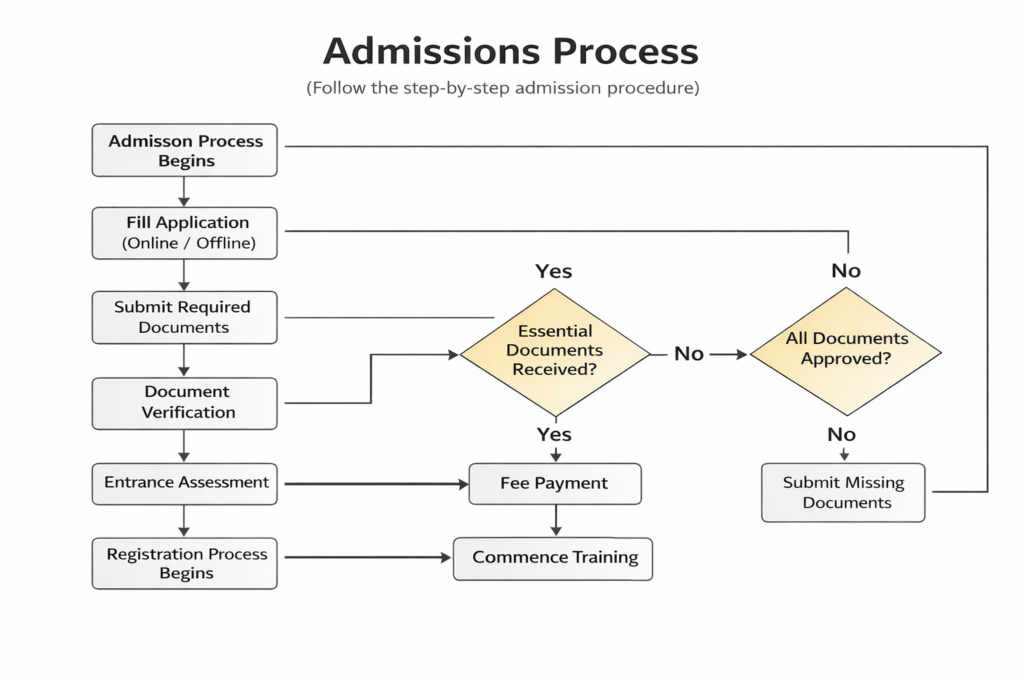
AME Admission Process 2026 Step-by-Step

  1. Check eligibility: confirm your PCM marks or diploma qualify you for the category you want.
  2. Select the AME category/programme: B1.1, B1.3, B2, or a dual pathway, based on genuine interest in mechanical vs avionics work.
  3. Shortlist DGCA-approved institutes: verify current CAR-147 approval directly on the DGCA website before shortlisting further.
  4. Check the institute’s specific admission requirement: merit-based, entrance-test-based, or a combination.
  5. Submit the application: online or offline, as specified by the institute.
  6. Submit required documents: see checklist below.
  7. Complete the entrance test, interview, or counselling step, where applicable to that institute.
  8. Review the offer/admission letter carefully, including fee terms, before paying anything beyond a nominal application fee.
  9. Pay fees according to the disclosed structure: never the full course fee upfront, and never before receiving a written offer.
  10. Complete enrolment formalities and begin training.

Documents Required for AME Admission

Requirements vary somewhat by institute, but commonly include:

  • [ ] Class 10 certificate and mark sheet
  • [ ] Class 12 mark sheet and certificate (PCM marks clearly visible)
  • [ ] Diploma certificate and mark sheets, if applying via the diploma route
  • [ ] Passport-size photographs
  • [ ] Identity proof (e.g., Aadhaar)
  • [ ] Address proof
  • [ ] Transfer/migration certificate, where applicable
  • [ ] Category certificate, where applicable
  • [ ] Medical fitness documentation, if required at the admission stage by that institute

Always ask your shortlisted institute for its exact current document checklist rather than assuming this list is complete for every programme.

AME B1.1 vs B2

FactorB1.1B2
Broad areaMechanicalAvionics
Main systemsAirframe, engine and mechanical systemsElectrical, electronic and avionics systems
Suitable for students interested inMechanical/aircraft systemsElectronics/electrical/avionics
Career directionAircraft maintenance – mechanicalAircraft maintenance – avionics

Choose based on genuine interest, not just perceived salary difference both categories lead to legitimate, in-demand maintenance careers.

AME Course Duration

Training duration is typically structured around 2–3 years of classroom and practical instruction at a CAR-147-approved organisation, followed by DGCA module examinations and a period of supervised aircraft maintenance experience before a licence is issued. Completing the training programme and holding a DGCA licence are not the same milestone the licence follows only after the module exams and required experience are complete. Confirm the exact structure and timeline with your shortlisted institute, since it can vary by category and programme design.

AME Fees 2026

Course fees vary based on the institute, category (B1.1, B2, or dual), facilities, location, and whether hostel or additional training charges apply. Publicly available figures across institutes for the full course commonly range broadly across several lakhs of rupees, but there is no single accurate “average” that applies to every programme treat any number quoted without a source cautiously.

SOACET Fee Structure

For current, accurate SOACET fee details, including any scholarship-linked reductions through the SOACET entrance exam, check the official AME course fees page directly, since fee structures are reviewed and can change between admission cycles.

How to Choose the Right AME Institute

Before paying admission fees, check:

  • [ ] Current DGCA CAR-147 approval status and category coverage
  • [ ] Exact AME programme/category on offer
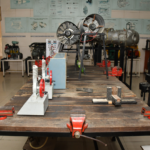
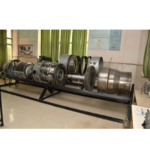
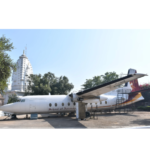
  • [ ] Real aircraft and engine access for practical training
  • [ ] Functional workshops and laboratories
  • [ ] Faculty industry/maintenance experience
  • [ ] Curriculum alignment with CAR-66 module requirements
  • [ ] Examination support and pass-rate transparency
  • [ ] Training location and hostel facilities
  • [ ] Total, itemised fee structure and refund policy
  • [ ] Placement assistance, verified with real alumni outcomes, not guarantees
  • [ ] Official documentation for every claim made verbally

Do not choose an AME institute only because of advertisements or salary promises.

Career Options After AME

AME training is a pathway toward roles at:

  • Commercial airlines (line and base maintenance teams)
  • MRO (Maintenance, Repair & Overhaul) organisations
  • Aircraft maintenance departments of charter and cargo operators
  • Aviation technical support and component-maintenance organisations
  • Government/defence-linked aviation maintenance units, in some cases

Actual outcomes depend on your qualification, licence progress, experience, and the specific employer’s requirements no institute can honestly guarantee a job or an employer.

AME Salary After Training

Compensation depends on several factors together: whether you hold a licence or are still accumulating required experience, your category (B1.1 vs B2), the employer, aircraft type endorsements, and location. Because these variables shift the number so much, avoid trusting any blanket “guaranteed ₹X lakh” figure not tied to a verifiable source ask shortlisted institutes for real, recent alumni placement data instead.

AME vs Aeronautical Engineering

FactorAMEAeronautical Engineering
Main focusAircraft maintenanceAircraft engineering/design
Education pathwayAME training/licensing pathwayEngineering degree
Work focusMaintenance, inspection and technical supportDesign, analysis, manufacturing, engineering
Practical orientationStrong maintenance focusProgramme dependent
LicensingDGCA AME licensing pathwayDifferent professional pathway
Suitable forStudents interested in aircraft maintenanceStudents interested in engineering/design

Neither is universally better the right choice depends on whether you want to keep aircraft flying safely or design and develop them.

7 Mistakes to Avoid When Taking AME Admission in 2026

  1. Choosing an institute purely because of advertising or a persuasive counsellor
  2. Not personally verifying current DGCA CAR-147 approval status
  3. Confusing AME with a conventional B.Tech degree
  4. Not understanding the B1 vs B2 distinction before choosing a category
  5. Comparing institutes on fees alone, ignoring training quality
  6. Believing “100% guaranteed job” or unverifiable salary claims
  7. Paying substantial fees before receiving a written offer and full fee disclosure

AME Admission 2026 at School of Aeronautics

School of Aeronautics (SOA) offers DGCA-approved AME training with admission conducted primarily through the SOACET entrance exam, run annually by the LNVM Society. This test is also used to determine scholarship eligibility for qualifying students. The programme includes access to real aircraft and engines, dedicated workshops and laboratories, and instructors with industry maintenance backgrounds. Students considering SOACET should still independently verify current AME eligibility, the SOACET entrance exam schedule and syllabus, and the current AME course fees directly on the official site, since admission cycles, dates and scholarship terms are reviewed annually.

Frequently Asked Questions

  1. What is the eligibility for AME admission 2026?

10+2 with Physics, Chemistry and Mathematics, or a relevant 3-year engineering diploma. Institute-specific cut-offs and conditions may apply on top of this baseline.

  1. Can I get AME admission without an entrance exam?

DGCA does not mandate a centralised entrance exam, and some institutes admit on 10+2 merit alone. Others, including School of Aeronautics, use their own entrance test as the primary admission and scholarship route always confirm the specific institute’s process.

  1. Is PCM required for AME after 12th?

Yes, PCM is the standard eligibility route; a relevant engineering diploma is generally accepted as an alternative.

  1. What is the AME admission process?

Broadly: confirm eligibility, shortlist DGCA-approved institutes, check their specific admission requirement, apply, submit documents, complete any entrance test or counselling, review the offer, then pay fees and enrol.

  1. What documents are required for AME admission?

Class 10 and 12 certificates, photographs, ID and address proof, and category certificates where applicable. Confirm the exact list with your chosen institute.

  1. How much does AME cost in 2026?

Fees vary significantly by institute, category and facilities. Always request the current, complete fee structure in writing rather than relying on a general figure.

  1. Is DGCA approval important when choosing an AME institute?

Yes, only DGCA CAR-147-approved institutes can deliver training that qualifies you for DGCA licence examinations, and approval status must be current, since it can lapse.

  1. What is the difference between AME B1.1 and B2?

B1.1 covers mechanical systems (engines, structures, airframe); B2 covers avionics (electrical, electronic, instrument and navigation systems).

  1. How long does AME training take?

Typically 2–3 years of structured training, followed by DGCA module exams and supervised maintenance experience before the licence is issued.

  1. What can I do after completing AME?

Pursue roles at airlines, MRO organisations and aircraft maintenance departments, progressing toward certifying-staff positions once licensed; some graduates also pursue further engineering study or category conversions.

  1. Is AME better than Aeronautical Engineering?

Neither is universally better AME suits students drawn to hands-on maintenance work, while aeronautical engineering suits those interested in aircraft design and development.

  1. How should I choose an AME college?

Verify current DGCA approval, real practical training infrastructure, a transparent fee structure, and genuine (not guaranteed) placement support before enrolling.

Conclusion

AME admission 2026 is genuinely open to any PCM student who meets the baseline eligibility, but the “admission process” is not one uniform thing across every institute in India. Some accept students on merit alone; others, including School of Aeronautics, use their own entrance test as the primary route into the programme and its scholarships. The decision that matters most isn’t whether an entrance exam exists it’s whether the institute holds current DGCA approval, offers genuine practical training, and is transparent about its fees and process before you commit.

If you’re ready to take the next step, review the current AME admission requirements, eligibility criteria, and entrance test details for the 2026 batch directly on the official SOACET site before applying anywhere.

Facebook
LinkedIn