The aviation industry is often viewed through the lens of pilots and flight attendants, but the true pulse of safety and technical excellence beats within the hangars. Behind every successful takeoff and every smooth landing is a highly skilled professional: the Aircraft Maintenance Engineer (AME). Choosing an AME course is not just an educational decision; it is a commitment to the safety of thousands of passengers and the integrity of multi-million dollar machines.
As we move into 2026, India is witnessing a historic expansion in its aerospace sector. With massive orders for over 1,500 new aircraft by national carriers and the opening of new international hubs like Jewar and Navi Mumbai, the demand for licensed AMEs is at an all-time high. School of Aeronautics (SOA) is designed to be the ultimate roadmap for students and parents navigating the AME course landscape in 2026.
What is an AME Course?
The AME course (Aircraft Maintenance Engineering) is a specialised technical program that focuses on the inspection, repair, and overhaul of aircraft. Unlike a standard engineering degree (B.Tech), which is mostly theoretical, the AME course is a licensing program governed by the Directorate General of Civil Aviation (DGCA), Government of India.
The course is strictly regulated under CAR 147 (Basic) standards. This means that every hour of your training, every book you read, and every practical task you perform is scrutinised to ensure it meets international safety protocols. In short, an AME course prepares you to be the “Doctor of the Aircraft.” Without an AME’s signature on the Flight Release Certificate, no plane is legally allowed to leave the ground.
Specialisations in the AME Course
When you enrol in an AME course, you don’t just study “planes.” You choose a specialisation that defines your career path. In 2026, the two primary streams are:
1. Category B1.1 (Aeroplanes Turbine – Mechanical)
This is the most popular stream for those who love heavy machinery. It covers:
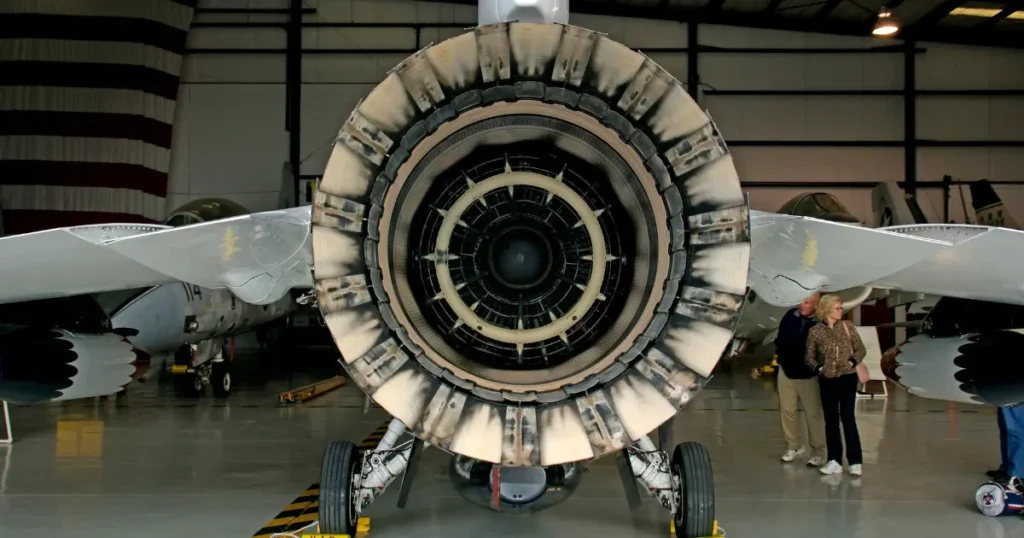
- Jet Engines (Turbines): Understanding combustion, compression, and thrust.
- Airframes: The structural integrity of the wings and fuselage.
- Hydraulics and Pneumatics: The “muscles” that move landing gears and flaps.
2. Category B2 (Avionics)
Avionics is the “brain” of the aircraft. This stream focuses on:
- Navigation & Radar: How planes find their way in zero visibility.
- Flight Computers: Managing the “Fly-by-wire” systems.
- Communication Systems: Radio and satellite links.
Note: With the rise of electric aircraft and digital cockpits in 2026, B2 engineers are seeing the fastest growth in starting salaries.
AME Course Eligibility Criteria (2026 Update)
To secure a seat in a premier institute like SOACET, you must meet specific academic and medical benchmarks.
Academic Requirements
- Education: You must have passed 10+2 with Physics, Chemistry, and Mathematics (PCM).
- Minimum Marks: At least 50% aggregate in PCM is the standard requirement.
- Diploma Holders: If you have a 3-year AICTE-approved diploma in Mechanical, Electrical, Electronics, or Aeronautical engineering, you are eligible for the AME course.
Medical Standards (Crucial)
Aviation is a safety-critical field, so medical fitness is non-negotiable:
- Colour Blindness: Candidates must not have colour blindness. You must be able to distinguish between colored wires and warning lights.
- General Health: You need a medical fitness certificate from a registered MBBS doctor.
- Vision: Corrected vision (wearing glasses) is usually acceptable as long as it meets the 6/6 standard.
The AME Course Roadmap: 3 Years to Success
The AME course is typically a 3-year journey divided into six semesters. Here is how your time at a top college like the School of Aeronautics will be spent:
Year 1: Building the Foundation
You start with the basics. You will learn about “Materials and Hardware,” understanding why aircraft use specific alloys and how a single bolt is engineered to withstand tons of pressure. You also study “Human Factors,” a fascinating subject on how fatigue and stress affect engineering safety.
Note: Book a FREE counselling session through SOACET to understand the AME admission process clearly.
Year 2: Core Technical Mastery
This is when you dive into jet propulsion and aerodynamics. You will spend hours in specialised labs, learning to dismantle and reassemble turbine engines. You will also study “Aviation Legislation,” which is the rulebook of the skies.
Year 3: Practical Training & Internship
The final year is where you bridge the gap between a student and a professional. You will undergo an internship at a DGCA-approved Maintenance, Repair, and Overhaul (MRO) facility. This is “On-the-Job Training” (OJT), where you work on actual commercial aircraft under the supervision of licensed engineers.
AME Course Fee Structure in India (2026)
One of the most frequent questions from parents is about the investment required. While fees vary, a DGCA-approved AME course generally ranges between:
- Tuition Fees: ₹3,00,000 to ₹6,00,000 for the total 3-year duration.
- Practical/Hangar Charges: Some colleges include this, while others charge separately.
- Hostel & Mess: ₹60,000 to ₹1,00,000 per year.
At SOACET, we provide a transparent fee structure that includes access to our “Live Aircraft” hangar and high-tech labs, ensuring you get the best ROI for your aviation career.
Scope and Career Opportunities in 2026
The “scope” of an AME course is wider than ever before. India is becoming a global MRO hub. Previously, Indian planes were sent to Singapore or Dubai for heavy maintenance. Today, thanks to “Make in India,” we are building our own massive maintenance facilities.
Where Can You Work?
- Commercial Airlines: Join giants like Indigo, Air India, SpiceJet, or Akasa Air.
- MRO Organisations: Work at specialised facilities like AIESL, Indamer, or GMR Aero Technic.
- Manufacturing Units: Companies like HAL (Hindustan Aeronautics Limited) and Tata Advanced Systems.
- Government & Defence: Indian Air Force (Technical entry), BSF Air Wing, or ISRO.
- Drone Industry: With the 2026 drone boom, AMEs are being hired to design and maintain heavy-lift cargo drones.
Salary Insights: Life After the AME Course
Aviation salaries are among the highest in the technical sector. Your earning potential increases significantly once you obtain your license.
| Career Level | Experience | Average Monthly Salary (2026) |
| Junior Technician | 0 – 2 Years | ₹35,000 – ₹55,000 |
| Licensed AME (Basic) | 3 – 5 Years | ₹90,000 – ₹1,50,000 |
| Type-Rated Engineer | 5 – 10 Years | ₹2,50,000 – ₹4,50,000 |
| Senior/Lead Engineer | 15+ Years | ₹6,00,000+ |
Note: Type-rated engineers on wide-body aircraft like the Boeing 777 or Airbus A350 are in high demand globally, often earning tax-free salaries in the Middle East.
Why Choose SOACET for Your AME Course?
Choosing where you study your AME course is the most critical decision for your career. The School of Aeronautics (SOACET) has been a pioneer in aviation since 1992.
1. The Neemrana Advantage
Our campus in Neemrana is not just a college; it is an aviation city. We have Live Aircraft on campus, including the Fokker F-27 and Beechcraft. Learning on a real plane is vastly superior to learning on a small engine stand.
2. High Module Success Rate
To get your license, you must clear DGCA Module Exams. SOACET provides specialised “Module Coaching” and has one of the highest clearance rates in India.
3. Integrated Learning
We offer integrated programs where you can pursue your AME course alongside a B.Tech in Aeronautical Engineering or a B.Sc. in Aviation. This gives you a double-edged advantage a university degree and a professional license.
4. Strategic Placements
Our alumni work in every major airline in India and many international carriers like Emirates, Qatar Airways, and Etihad. We don’t just provide an education; we provide a launchpad.
Frequently Asked Questions (FAQs)
Q1. Is the AME course a degree?
Strictly speaking, it is a professional licensing program. However, many institutes (like SOACET) allow you to pursue a degree concurrently, so you have both qualifications.
Q2. How difficult are the DGCA Module Exams?
They are challenging because they require 75% to pass. However, with the structured curriculum and mock tests at a top AME course institute, most dedicated students clear them successfully.
Q3. Can girls join the AME course?
Absolutely! The aviation industry is very inclusive. We have many female alumni who are now leading maintenance teams at top airlines.
Q4. Are bank loans available for this course?
Yes, most nationalised and private banks provide educational loans for the AME course as long as the institute is DGCA-approved.
Conclusion
The AME course is a journey for those who are not satisfied with an ordinary desk job. It is for those who want to work with their hands and their minds to conquer the sky. In 2026, the opportunities in Indian aviation are limitless, but they are reserved for those who have the best training.
If you are ready to become a part of this elite brotherhood of engineers, the School of Aeronautics is ready for you. Don’t just watch the planes fly by, be the reason they fly safely.
Your countdown to a brilliant career starts now.