
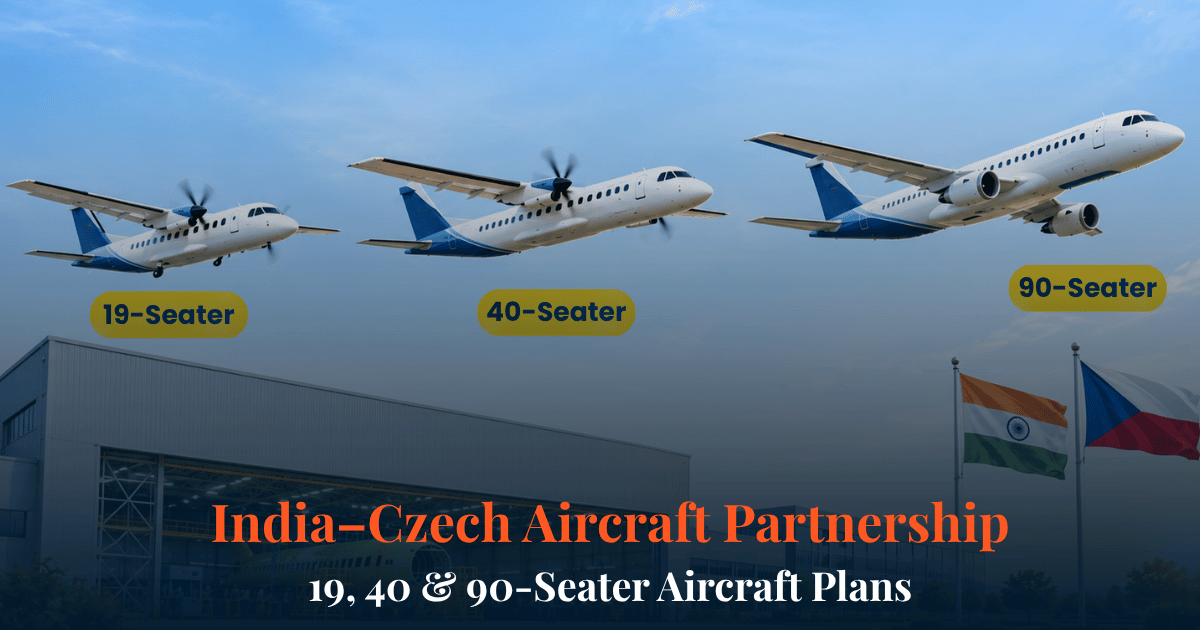
India and the Czech Republic are exploring a potential partnership to manufacture 19-seater, 40-seater and 90-seater aircraft in India. The discussions represent an important development in India’s efforts to strengthen domestic aircraft manufacturing, improve regional air connectivity and support the Make in India initiative.
The proposed collaboration could also create long-term opportunities for India’s aerospace industry, including aircraft design, manufacturing, maintenance and technical training.
However, the project remains under discussion, and commercial production timelines have not yet been announced.
India and Czech Republic Discuss Regional Aircraft Manufacturing
On 12 October 2026, India’s Union Minister of Civil Aviation, Kinjarapu Ram Mohan Naidu, met Czech Deputy Prime Minister Karel Havlíček to discuss potential cooperation in regional aircraft manufacturing.
The discussions focused on combining India’s growing demand for regional aviation with Czech expertise in aircraft development and manufacturing.
The proposed aircraft would support regional air connectivity under the UDAN scheme and could potentially serve international markets.
Key Highlights of the Proposed Partnership
| Particulars | Details |
|---|---|
| Participating countries | India and Czech Republic |
| Proposed aircraft capacities | 19, 40 and 90 passengers |
| Main objective | Regional aircraft development and manufacturing |
| Government initiatives | Make in India and UDAN |
| Potential market | Domestic and international |
| Current status | Exploratory discussions |
| Manufacturing location | Not announced |
| Production start date | Not announced |
Why Does India Need 19, 40 and 90-Seater Aircraft?
Regional aircraft can help improve air connectivity between smaller cities, underserved destinations and major aviation hubs.
Different aircraft capacities can serve different passenger-demand levels.
19-Seater Aircraft
Small regional aircraft may be suitable for routes with relatively limited passenger demand. Their smaller capacity can make them useful for connecting destinations where larger commercial aircraft may not be commercially practical.
40-Seater Aircraft
Medium-capacity regional aircraft can serve routes that require more seats than smaller commuter aircraft but may not support larger narrow-body aircraft.
90-Seater Aircraft
Aircraft with approximately 90 seats could support busier regional routes, depending on airline demand, airport infrastructure and operating economics.
These are potential applications of the proposed aircraft categories, not confirmed deployment plans.
How Could the Partnership Support the UDAN Scheme?
UDAN, or Ude Desh ka Aam Naagrik, is an Indian government initiative designed to improve regional air connectivity and make air travel accessible to more people.
Regional aircraft manufacturing could support this objective by expanding the range of aircraft available for different types of routes.
If the proposed partnership progresses, domestically manufactured regional aircraft could contribute to India’s regional aviation ecosystem.
However, aircraft manufacturing alone does not guarantee new routes. Airline participation, airport readiness, operational costs and regulatory approvals also influence regional connectivity.
Czech Aircraft Technology and the Proposed L 555 Project
The Czech Republic has established expertise in aircraft engineering and manufacturing.
During the October 2026 business delegation to India, Czech aviation company representatives discussed the proposed Aircraft Industries L 555 project with Indian government officials.
The L 555 concept includes configurations for approximately 30 and 40 passengers and is being considered for multiple applications, including regional passenger transport and other specialised operations.
The discussions indicate potential opportunities for joint aircraft development and manufacturing cooperation.
The L 555 discussions should not be interpreted as confirmation that all three proposed aircraft capacities have entered production.
How Could Aircraft Manufacturing in India Benefit the Aviation Industry?
A successful regional aircraft manufacturing programme could strengthen several areas of India’s aviation ecosystem.
1. Domestic Aircraft Manufacturing
Aircraft production in India could encourage investment in manufacturing facilities, components, engineering capabilities and industrial supply chains.
2. Aerospace Technology Development
International collaboration could support technical knowledge exchange in aircraft structures, aerodynamics, propulsion integration, manufacturing processes and testing.
3. Regional Aviation Connectivity
Locally manufactured regional aircraft could potentially support airline operations on smaller routes, subject to commercial feasibility.
4. Aircraft Maintenance and Technical Services
An expanding aircraft fleet may increase long-term demand for aircraft inspection, maintenance, repair and technical support services.
5. Opportunities for Indian Engineering Professionals
A larger aviation manufacturing ecosystem could create opportunities across design, production, quality assurance, certification support and maintenance.
These benefits remain potential outcomes and depend on whether the proposed projects proceed.
What Does This Mean for Aeronautical Engineering Students?
The proposed India–Czech Republic aircraft manufacturing partnership highlights the importance of technical skills in the aviation and aerospace sectors.
AME Exam 2027 Registration Started! Apply now for SOACET 2027 before 31 March 2027. Register Now and take the first step towards your aviation career.
Students pursuing Aeronautical Engineering can explore career pathways in:
- Aircraft design and development
- Aerodynamics and aircraft performance
- Aircraft structures and materials
- Manufacturing and production engineering
- Quality assurance and testing
- Research and development
- Aircraft systems engineering
Students interested in Aircraft Maintenance Engineering (AME) can explore aircraft inspection, maintenance, troubleshooting and continuing airworthiness-related career pathways, subject to the required training, examinations and licensing regulations.
Important: The proposed partnership does not currently guarantee employment opportunities or recruitment for engineering graduates.
Aeronautical Engineering vs Aircraft Maintenance Engineering: Which Career Is Relevant?
| Career Field | Primary Focus |
|---|---|
| Aeronautical Engineering | Aircraft design, development, analysis and engineering |
| Aircraft Maintenance Engineering | Aircraft maintenance, inspection and airworthiness |
| Aerospace Manufacturing | Aircraft components, production and quality processes |
| Aviation Research | New technologies, testing and aircraft performance |
Students interested in aircraft development may explore Aeronautical Engineering programmes, while those interested in aircraft maintenance and airworthiness may consider the AME training pathway.
What Happens Next in the India–Czech Aircraft Partnership?
The proposed collaboration is still at an exploratory stage.
Future developments to watch include:
- Formal project or manufacturing agreements.
- Confirmation of participating aircraft manufacturers.
- Investment and production facility announcements.
- Aircraft development and certification plans.
- Manufacturing schedules and potential airline customers.
Until these details are officially confirmed, it would be premature to describe the proposed aircraft as being manufactured or ready for commercial operations.
Frequently Asked Questions
Is India planning to manufacture 19, 40 and 90-seater aircraft?
India and the Czech Republic have discussed potential cooperation to develop and manufacture aircraft in these capacity categories. The proposals remain under discussion.
What is the role of the Czech Republic in the aircraft project?
The potential collaboration seeks to combine Czech aircraft manufacturing expertise with India’s regional aviation requirements and industrial capabilities.
Will these aircraft be used under the UDAN scheme?
The discussions identify UDAN regional connectivity as a potential application. Specific aircraft deployments and routes have not been announced.
Has aircraft manufacturing started in India under this partnership?
No production commencement has been confirmed in the cited announcements.
Could the partnership create jobs for Aeronautical Engineering graduates?
If manufacturing projects proceed, they could generate demand for engineering, production and technical professionals. No specific employment commitments have been confirmed.
Conclusion
The proposed India–Czech Republic aircraft manufacturing partnership could become an important development for India’s regional aviation and aerospace manufacturing sectors.
By exploring the development of 19-, 40- and 90-seat aircraft, the two countries aim to combine industrial expertise with India’s growing regional air connectivity requirements.
For Aeronautical Engineering and Aircraft Maintenance Engineering students, the discussions highlight the potential long-term importance of aircraft design, manufacturing, maintenance and aviation technology skills.
The actual impact will depend on future agreements, investment decisions, aircraft certification and successful project implementation.
References
- The Economic Times India, Czech Republic explore partnership to build 19, 40 and 90-seater aircraft in India, 13 October 2026.
- Czech Republic Ministry of Industry and Trade Minister Karel Havlíček’s business mission to India brought specific agreements and new projects for Czech companies, 16 October 2026.