
Every time an aircraft gracefully ascends into the clouds, hundreds of eyes watch with wonder. While the pilot is the face of the flight, there is a “guardian of the sky” on the ground who made that takeoff possible. That person is the Aircraft Maintenance Engineer (AME).
Being an AME is not just a job, it is a high-responsibility profession where your signature is the ultimate authority on safety. If you are someone who loves machines, enjoys solving complex puzzles, and wants a career that offers both prestige and a high salary, then this path is for you.
But how do you get there? As we navigate through 2026, the aviation industry in India is experiencing its most significant boom in history. With massive aircraft orders and new international hubs opening, the demand for licensed engineers is at an all-time high. We will walk you through the exact steps on how to become ame, ensuring you have a clear flight path to your dream career.
Read Before: How to Become an Aeronautical Engineer After 12th: A Complete Beginner’s Roadmap
What is an Aircraft Maintenance Engineer?
Before we dive into the “how,” let’s clarify the “what.” Many people confuse Aeronautical Engineering with Aircraft Maintenance Engineering.
- Aeronautical Engineers are primarily involved in the design and manufacturing of aircraft (working at desks or in labs).
- Aircraft Maintenance Engineers are the practical experts who inspect, troubleshoot, repair, and certify the aircraft for flight (working in hangars and on the tarmac).
The AME is the only person legally authorised by the Directorate General of Civil Aviation (DGCA) to sign the “Flight Release Certificate.” Without this certificate, even the world’s best pilot cannot move the plane.
Why Choose a Career in AME in 2026?
The timing has never been better. India is currently the third-largest domestic aviation market globally.
- Fleet Expansion: Indian carriers like Air India and Indigo have placed orders for over 1,500 new aircraft.
- MRO Hubs: India is rapidly becoming a global hub for Maintenance, Repair, and Overhaul (MRO) services, meaning planes from other countries are coming to India for maintenance.
- Global Mobility: An AME license issued in India is based on international standards (CAR 147), making it easier for you to work in the Middle East, Europe, or Southeast Asia.
How to Become an AME
To become a licensed professional, you need to follow a structured roadmap. Here is the step-by-step breakdown.
Step 1: Academic Eligibility (The Foundation)
The first step in how to become ame starts in your classroom.
- Educational Qualification: You must have passed 10+2 with Physics, Chemistry, and Mathematics (PCM).
- Minimum Marks: Most top-tier institutes, such as SOACET, require a minimum of 50% aggregate in PCM.
- Diploma Alternative: If you have completed a 3-year AICTE-approved diploma in Mechanical, Electrical, Electronics, or Aeronautical engineering, you are also eligible for the AME course.
Step 2: Choose a DGCA Approved Institute
This is the most critical step. Unlike a regular degree, AME training must be completed at a CAR 147 (Basic)– approved Maintenance Training Organisation (MTO).
- Why Approval Matters: If your college is not DGCA-approved, the time you spend there will not count toward your license requirements.
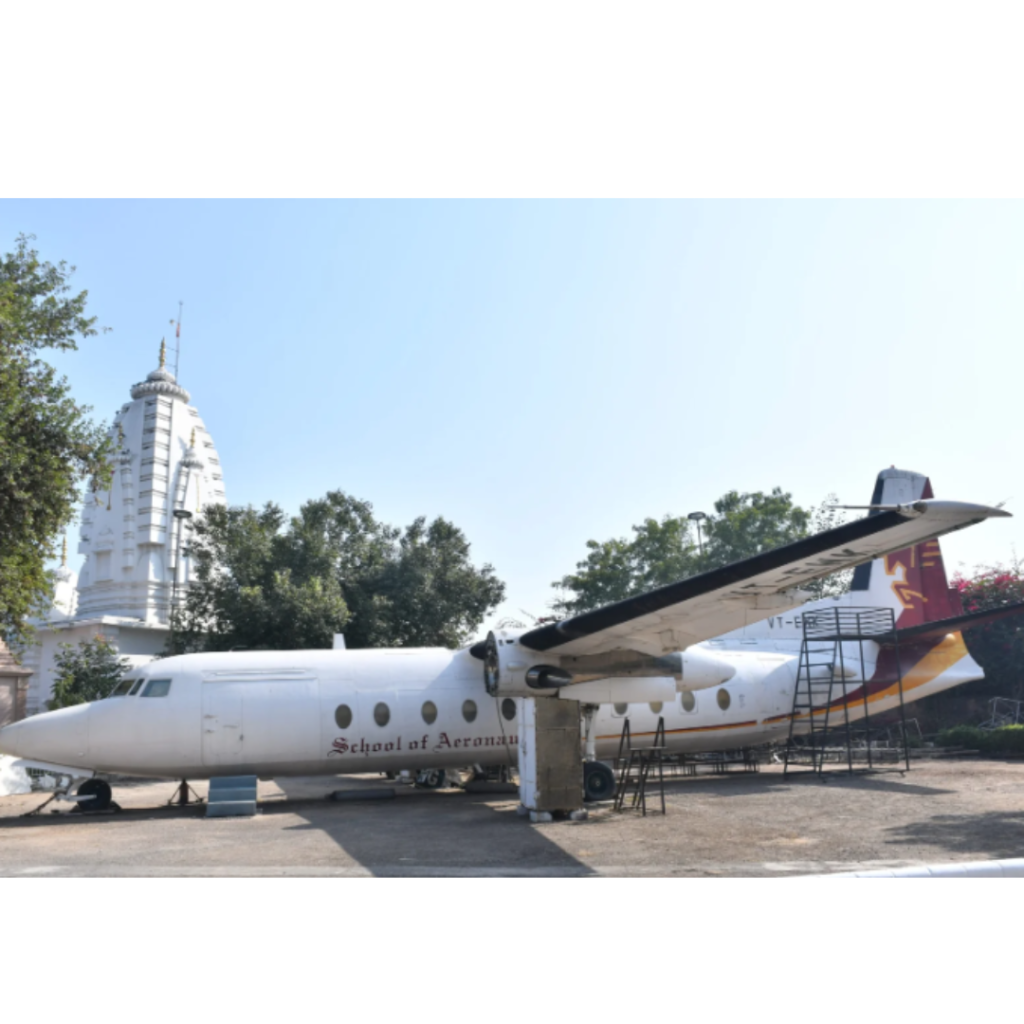
- The SOACET Advantage: The School of Aeronautics (SOACET) Neemrana is a pioneer in this field, providing students with “Live Aircraft” training on real airframes like the Fokker F-27.
Note: Book a FREE counselling session through SOACET to understand the AME admission process clearly.
Step 3: Select Your Specialisation (Stream)
In the AME world, you must choose a “Category.”
- Category B1.1 (Mechanical): Deals with jet engines, airframes, and heavy mechanical systems.
- Category B2 (Avionics): Deals with radar, navigation, flight computers, and communication systems.
2026 Trend: With the rise of “Electric Aircraft” and software-heavy cockpits, Category B2 engineers are seeing a massive surge in demand.
Step 4: Clear the DGCA Module Exams
To get your license, you don’t just pass college exams; you must clear the DGCA-conducted Module Exams.
- There are 11 to 13 modules, depending on your category.
- The passing score is 75%, which reflects the high standards of the industry.
- Subjects include Aviation Legislation, Aerodynamics, Propulsion, and Human Factors.
Step 5: Gain Practical Experience (The Internship)
After 2 years of classroom and workshop training, you must undergo 1 year of practical training at an actual airline hangar or an MRO facility. This is called “On-the-Job Training” (OJT).
Step 6: Obtain the Basic AME License (BAMEL)
Once you have cleared your modules and completed your required experience hours, the DGCA issues you a Basic Aircraft Maintenance Engineer License (BAMEL). You are now officially a junior engineer!
Step 7: Type Rating (Reaching the Peak)
To sign off on a specific aircraft (like a Boeing 787 or Airbus A320), you must undergo “Type Rating” training. Once you are “Type-Rated,” your salary potential skyrockets.
Detailed AME Course Syllabus (What You’ll Study)
When you enrol at a top college like the School of Aeronautics, your syllabus is designed to turn you into a technical expert.
| Semester | Key Subjects |
| Year 1 | Mathematics, Engineering Drawing, Materials & Hardware, Basic Electricity. |
| Year 2 | Aerodynamics, Jet Propulsion, Aircraft Structures, and Digital Techniques. |
| Year 3 | Aviation Legislation, Maintenance Practices, Avionics Systems, OJT. |
The Medical Standards: Are You Fit to Fly?
Because AMEs handle safety-critical tasks, there are strict medical requirements:
- No Colour Blindness: You must be able to distinguish between colour-coded wires and warning lights.
- General Fitness: You need a certificate from a registered medical practitioner.
- Corrected Vision: Wearing glasses is usually allowed as long as your vision is corrected to 6/6.
Career Scope and Salaries in 2026
The question isn’t just how to become ame, but what happens after you do. The financial rewards in this field are among the highest in India.
| Career Stage | Average Monthly Salary (2026) |
| Trainee / Junior Technician | ₹35,000 – ₹55,000 |
| Licensed AME (Basic) | ₹90,000 – ₹1,60,000 |
| Type-Rated Senior Engineer | ₹2,50,000 – ₹4,50,000 |
| Chief Engineer / Manager | ₹6,00,000+ |
Top Recruiters:
- Commercial Airlines: Indigo, Air India, SpiceJet, Akasa Air, Vistara.
- Global MROs: Indamer, AIESL, GMR Aero Technic.
- Manufacturing: HAL, Tata Advanced Systems.
- Government: ISRO, DRDO, BSF Air Wing.
Why Choose SOACET for Your AME Journey?
If you are serious about how to become ame, you need the best foundation. The School of Aeronautics (SOACET) has been the industry leader since 1992.
1. Live Aircraft on Campus
Most colleges use small engine parts. At SOACET Neemrana, we have a Fokker F-27 and a Beechcraft. You learn to troubleshoot on real planes, which is why our students are the first to be hired by airlines.
2. High Module Success Rate
Our curriculum is specifically designed to help students clear the DGCA Module exams. We provide specialised coaching, mock tests, and a library stocked with international aviation manuals.
3. Industry Connections
We have MoUs (Memorandums of Understanding) with leading airlines and MROs, ensuring that our students get the best internships and placement opportunities.
4. Integrated B.Tech Programs
At SOACET, you can choose to pursue a B.Tech in Aeronautical Engineering along with your AME training. This gives you a dual edge a university degree and a professional license.
FAQs: Frequently Asked Questions
Q1. Is AME a degree?
Strictly speaking, it is a professional licensing program. However, you can pursue a B.Sc. or B.Tech degree alongside it to have both academic and technical qualifications.
Q2. Can girls become AMEs?
Absolutely! The aviation industry is very inclusive. We have many female alumni who are now leading maintenance teams at top international airlines.
Q3. Is there an entrance exam?
Yes, the SOACET Entrance Test is the primary way to secure a seat. It tests your basic PCM knowledge and your aptitude for aviation.
Q4. How long does it take to become a licensed AME?
The training is 3 years, followed by 1-2 years of experience to get your basic license. Reaching a senior “Type-Rated” position usually takes 5-7 years in total.
Conclusion
The path to becoming an Aircraft Maintenance Engineer is challenging, but the reward is a life of adventure, prestige, and financial freedom. In an industry where precision is everything, your journey starts with the right education.
India’s skies are waiting for the next generation of engineers. If you have the passion, we have the launchpad. Don’t just watch the planes fly by, be the one who ensures they fly safely.
Your countdown starts today.