

Introduction
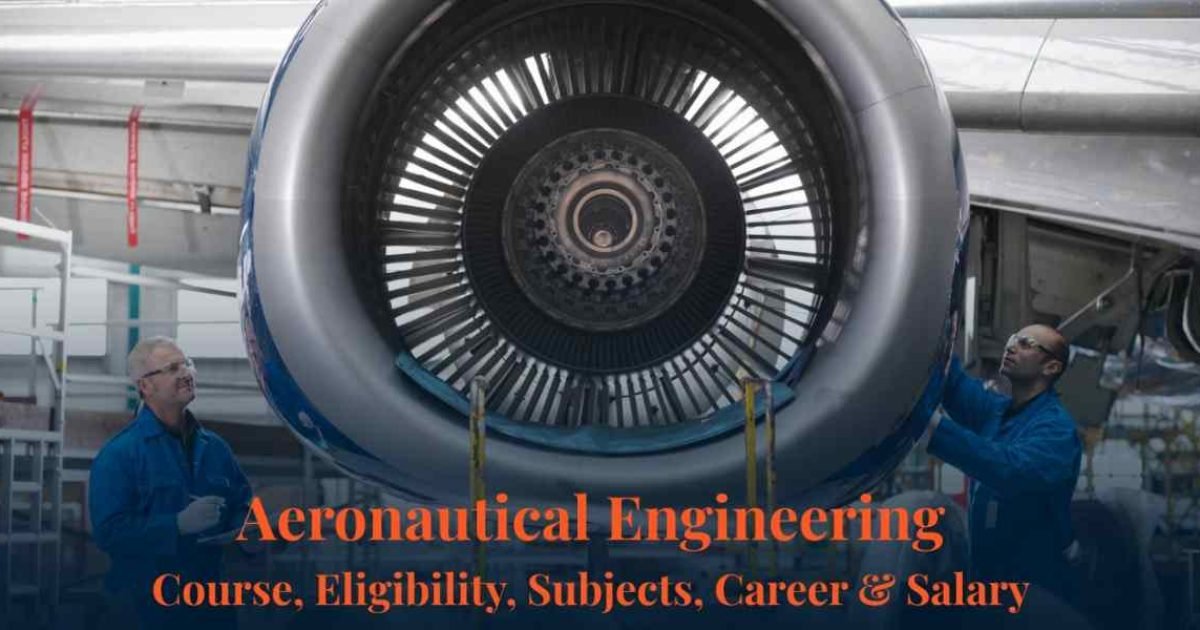
Many Class 10 and 12 students in India dream of working with aircraft, aviation technology, or even space exploration. If you are fascinated by how airplanes fly, how engines generate thrust, or how aerodynamics keeps a jet stable in the sky, you’ve probably searched for aeronautical engineering. This branch of engineering lets you design, test, and improve aircraft and aviation systems. Let’s explore what the course involves, who can apply, and what career opportunities it offers.
What Is Aeronautical Engineering?
Aeronautical engineers work on:
- Aircraft design – creating safe and efficient airplanes.
- Structures – studying materials and strength of aircraft parts.
- Propulsion – understanding engines and thrust systems.
- Aerodynamics – analyzing airflow and flight stability.
- Avionics – basic electrical and control systems.
- Testing & maintenance – ensuring aircraft safety and performance.
In simple words, if you’ve ever asked “what is aeronautical engineering?”, it’s the engineering discipline that makes modern aviation possible.
About Aeronautical Engineering
When students ask “about aeronautical engineering”, they want to know the bigger picture. This field combines physics, mathematics, and engineering principles to solve aviation challenges.
Key aspects include:
- Applying physics and mathematics to flight problems.
- Learning both theoretical concepts and practical applications.
- Using engineering mechanics to design safe structures.
- Developing technical understanding for real-world aviation systems.
What Do You Study in Aeronautical Engineering?
Students cover a wide range of subjects:
- Engineering Mathematics & Physics – foundation for problem-solving.
- Thermodynamics & Fluid Mechanics – understanding heat, energy, and fluid flow.
- Aerodynamics – how air interacts with wings and bodies.
- Aircraft Structures – strength and stability of aircraft frames.
- Propulsion – jet engines, turbines, and fuel systems.
- Flight Mechanics – stability, control, and performance of aircraft.
- Avionics & Systems – basics of electrical and control systems.
- Aircraft Materials – metals, composites, and lightweight materials.
- Maintenance Concepts – ensuring aircraft remain airworthy.
- Manufacturing & Production – how aircraft components are built.
Each subject builds technical knowledge step by step, preparing students for aviation careers.
B.Tech Aeronautical Engineering
The B.Tech Aeronautical Engineering program is the most common undergraduate pathway.
Highlights:
- Duration – typically 4 years (8 semesters).
- Learning style – classroom theory + laboratory practice.
- Projects – design and research projects in later semesters.
- Internships – industrial exposure in aviation or manufacturing companies.
This degree equips students with both academic knowledge and practical skills.
B.Tech Aeronautical Engineering Eligibility
General eligibility in India includes:
- Completion of Class 12 (10+2) with Physics, Mathematics, and Chemistry.
- Minimum marks vary by institution.
- Admission routes: entrance exams (like JEE Main/State exams) or direct admission.
Students must always check the latest official admission rules of the university they apply to.
How Long Is Aeronautical Engineering?
- B.Tech – usually 4 years.
- Diploma – 3 years, with lateral entry options.
- M.Tech/MS – 2 years after graduation.
Duration may vary depending on institution and admission route.
Note: Book a FREE counselling session through SOACET 2027 to understand the AME admission process 2027 clearly.
Skills Required for Aeronautical Engineering
To succeed, students need:
- Mathematics & Physics – for calculations and analysis.
- Problem-solving & analytical thinking – to tackle engineering challenges.
- Computer skills – CAD, simulation, and modeling software.
- Attention to detail – safety and precision are critical.
- Communication & teamwork – engineers work in teams.
- Curiosity & willingness to learn – aviation technology evolves constantly.
Career Opportunities After Aeronautical Engineering
Graduates can pursue roles such as:
- Aeronautical Engineer
- Aircraft Design Engineer
- Aerodynamics Engineer
- Structural Engineer
- Production/Manufacturing Engineer
- Quality & Testing Engineer
- Research & Development roles
- Technical support in aviation industries
Note: A B.Tech degree alone does not qualify for licensed aircraft maintenance roles. Separate certifications are required.
Where Can Aeronautical Engineering Graduates Work?
Broad sectors include:
- Aircraft manufacturing companies
- Aviation and aerospace industries
- Component manufacturing firms
- MRO (Maintenance, Repair & Overhaul) services
- Defence and government organisations (subject to recruitment rules)
- Research organisations
- Engineering and manufacturing firms
Aeronautical Engineering Salary in India
Salary depends on:
- Qualification & specialization
- Skills and experience
- Employer type (private, government, research)
- Location and industry
Indicative ranges:
- Entry-level engineers: ₹3–6 LPA
- Experienced professionals: ₹8–15 LPA or higher
Actual salaries vary widely these are only indicative.
Aeronautical Engineering vs Aerospace Engineering
| Aspect | Aeronautical Engineering | Aerospace Engineering |
|---|---|---|
| Focus | Aircraft within Earth’s atmosphere | Aircraft + spacecraft |
| Scope | Aviation systems | Aviation + space exploration |
| Subjects | Aerodynamics, propulsion, structures | Includes space systems, orbital mechanics |
| Careers | Aviation industry | Aviation + space agencies |
Both fields overlap significantly, but aerospace extends into space technology.
Is Aeronautical Engineering a Good Career Option?
It can be a great choice for students who:
- Enjoy aircraft and aviation technology.
- Have a strong interest in mathematics and physics.
- Like solving technical problems.
- Are ready for rigorous academic and practical training.
Students should carefully assess their interest and commitment before choosing this demanding but rewarding field.
Higher Studies After Aeronautical Engineering
Options include:
- M.Tech/MS – advanced specialization.
- MBA – for management roles in aviation.
- PhD/Research – for academic and R&D careers.
- Specialized programs – aerospace, avionics, or aviation management.
Frequently Asked Questions About Aeronautical Engineering
Q.1 What is aeronautical engineering?
Ans: It is the study of aircraft design, development, and maintenance.
Q.2 What does an aeronautical engineer do?
Ans: They design, test, and improve aircraft systems.
Q.3 What is B.Tech Aeronautical Engineering?
Ans: A 4-year undergraduate degree focusing on aviation engineering.
Q.4 Is Aeronautical Engineering difficult?
Ans: It requires strong mathematics, physics, and technical skills, but is manageable with interest and effort.
Q.5 What subjects are required for Aeronautical Engineering?
Ans: Physics, Mathematics, and Chemistry at Class 12 level.
Q.6 What is the duration of B.Tech Aeronautical Engineering?
Ans: Typically 4 years.
Q.7 What jobs can I get after Aeronautical Engineering?
Ans: Design engineer, aerodynamics engineer, structural engineer, and more.
Q.8 What is the difference between Aeronautical Engineering and Aerospace Engineering?
Ans: Aeronautical focuses on aircraft; aerospace includes spacecraft as well.