
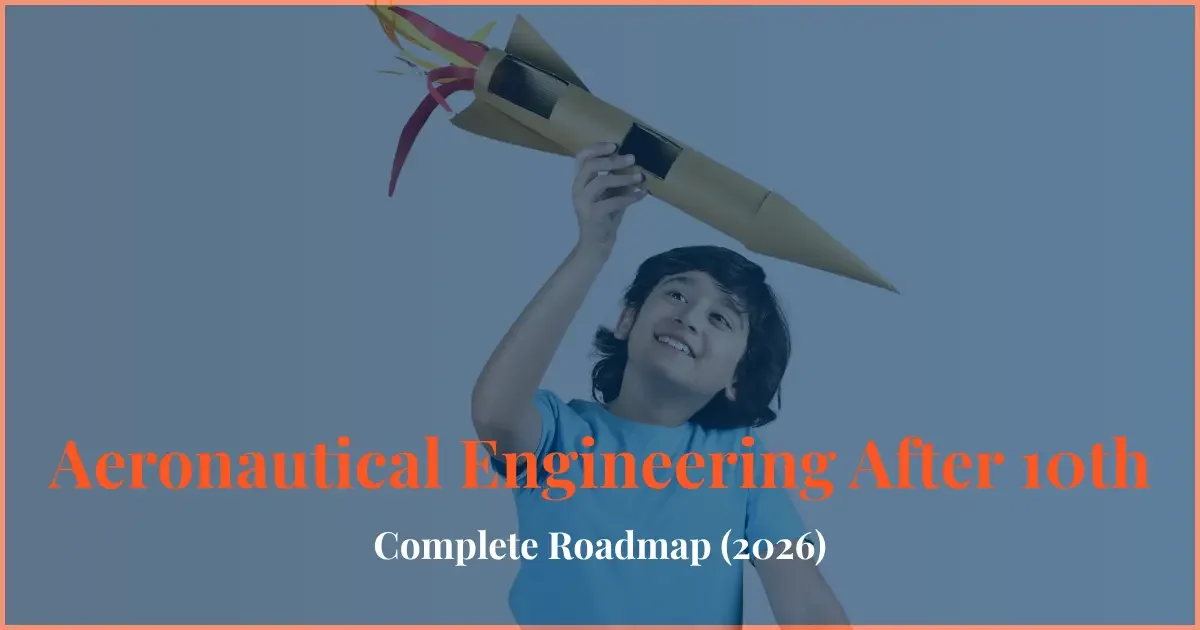
Do you look at the sky every time a plane flies over and wonder about the complex machinery keeping it airborne? If you have a passion for aircraft, speed, and cutting-edge technology, you don’t have to wait until you finish your 12th grade to start your journey.
In 2026, the aviation industry is booming more than ever, with a massive demand for skilled technicians and engineers. This guide provides a 100% human-friendly, comprehensive roadmap on how to pursue aeronautical engineering after 10th, covering everything from the first step to your first high-paying job.
Read Before: Explore the Future of Aeronautical Engineering
What is Aeronautical Engineering?
Aeronautical engineering is a specialised branch of engineering that focuses on the design, construction, and maintenance of aircraft that fly within the Earth’s atmosphere. It involves studying the physics of flight, propulsion systems, aerodynamics, and structural integrity.
While most people think you need a B.Tech degree to enter this field, the truth is that you can get a head start right after your secondary school (Class 10).
Can I Do Aeronautical Engineering After 10th?
The short answer is yes.
While a full-fledged B.Tech in Aeronautical Engineering requires completing 10+2 with Physics, Chemistry, and Mathematics, there is a powerful alternative: the Diploma in Aeronautical Engineering.
This “Polytechnic” route is often preferred by students who want practical, hands-on experience and a faster entry into the workforce.
The 2026 Roadmap at a Glance
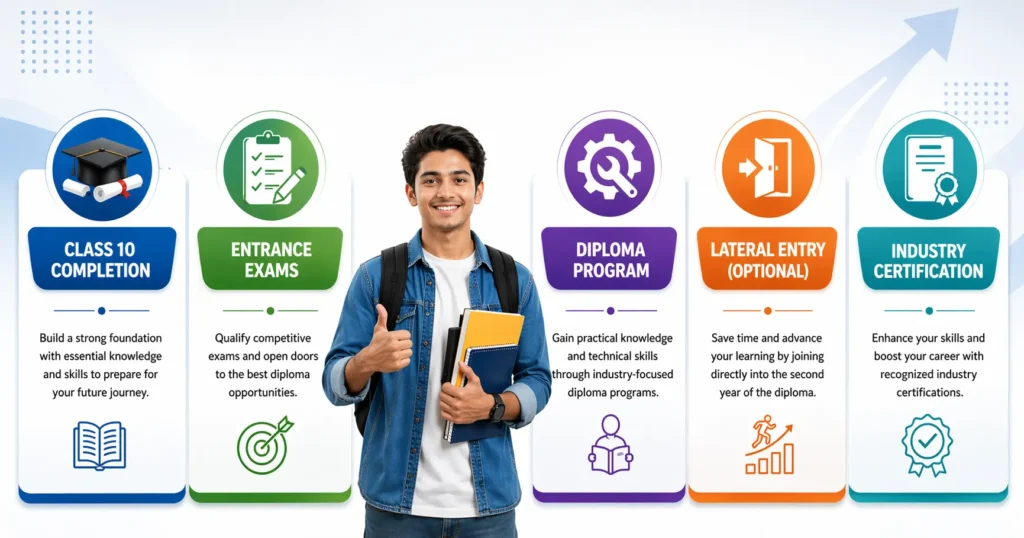
- Class 10 Completion: Ensure you have at least 50-60% marks with a focus on Science and Maths.
- Entrance Exams: Appear for state-level or institute-specific Polytechnic entrance exams.
- Diploma Program: Complete a 3-year Diploma in Aeronautical Engineering.
- Lateral Entry (Optional): Join the 2nd year of B.Tech (Aeronautical) directly via lateral entry.
- Industry Certification: Gain DGCA or EASA certifications for better job prospects.
Why Choose Aeronautical Engineering After 10th?
Choosing a career path early comes with significant advantages. Here is why starting aeronautical engineering after 10th is a smart move in 2026:
1. Early Skill Acquisition
By starting at age 16, you spend three years immersed in the technical aspects of aviation. While your peers are studying general theory in 11th and 12th, you are already learning about jet engines and fuselage design.
2. Cost-Effective Education
Diploma programs are generally much more affordable than private B.Tech degrees. This makes it an accessible route for talented students from all financial backgrounds.
3. Faster Career Entry
With a diploma, you are eligible for junior engineer roles or technician positions by age 19 or 20. This allows you to gain industry experience while others are still in college.
4. The “Lateral Entry” Advantage
If you decide to pursue a degree later, you can enter the second year of a B.Tech program. This means you don’t lose any years and end up with both a Diploma and a Degree, making your resume stand out to employers like ISRO, DRDO, or Boeing.
Note: Book a FREE counselling session through SOACET to understand the AME admission process clearly.
Eligibility Criteria for 2026 Admissions
To secure a seat in a reputable institution like SOACET, you must meet the following criteria:
- Academic Qualification: You must have passed Class 10 (SSC/ICSE/CBSE or equivalent) from a recognised board.
- Subject Focus: You should have strong marks in Mathematics and Science.
- Minimum Marks: Most top-tier colleges require a minimum of 50% to 60% aggregate.
- Age Limit: Generally, students should be between 15 and 18 years of age at the time of admission.
Top Entrance Exams for Aeronautical Diploma
Most states conduct their own entrance exams for polytechnic admissions. Some of the popular ones include:
- JEECUP (Uttar Pradesh)
- POLYCET (Telangana/Andhra Pradesh)
- CET (Delhi)
- DET (Various States)
- Aeronautical Society of India (AeSI) Exams
- School of Aeronautics Common Entrance Test (SOACET)
Keep an eye on the official notifications during the February-May window for 2026 sessions.
Syllabus: What Will You Learn?
The 3-year diploma is divided into six semesters. Here is a glimpse of the subjects you will master:
| Year | Core Subjects |
| Year 1 | Applied Mathematics, Engineering Physics, Basic Workshop Practice, and Engineering Drawing. |
| Year 2 | Fluid Mechanics, Thermodynamics, Aircraft Materials, Aerodynamics I, Aircraft Systems. |
| Year 3 | Jet Propulsion, Aircraft Structures, Maintenance Practices, Avionics, Project Work. |
Career Prospects and Salary in 2026
The aviation sector is projected to grow by 15% annually over the next decade. After completing your aeronautical engineering after 10th grade, you can work in:
1. Maintenance, Repair, and Overhaul (MRO)
MRO hubs are expanding in India. As a diploma holder, you can work as a Junior Technician or Maintenance Assistant.
2. Aircraft Manufacturing
Companies like HAL (Hindustan Aeronautics Limited) and private players like Tata Aerospace often hire diploma holders for assembly line and quality control roles.
3. Government Organisations
Organisations like the Indian Air Force (IAF) and Navy offer technical entry schemes for diploma holders.
4. Expected Salary
- Freshers (Diploma): ₹2.5 LPA to ₹4.5 LPA.
- With 3-5 Years Experience: ₹6 LPA to ₹10 LPA.
- After B.Tech Lateral Entry: ₹8 LPA to ₹20+ LPA depending on the organisation.
Why Study at the School of Aeronautics (SOACET)?
When it comes to aviation education, SOACET stands out as a premier institution. They offer specialised training that bridges the gap between classroom theory and industry reality.
- State-of-the-art Labs: Real engines and aircraft components for hands-on learning.
- Industry Connections: Ties with major airlines and MROs for internships.
- Expert Faculty: Mentorship from industry veterans who have worked in the field for decades.
Frequently Asked Questions (FAQs)
Q1. Is Aeronautical Engineering hard for a 10th-grade student?
It is challenging but rewarding. Since the syllabus starts from the basics, students with a genuine interest in physics and math find it manageable and very engaging.
Q2. Can I go abroad after a Diploma in Aeronautical Engineering?
Yes, but most international roles require a degree or specific certifications like EASA Part 66. It is recommended to complete a B.Tech via lateral entry before moving abroad.
Q3. Which is better: Aeronautical or Aerospace Engineering?
Aeronautical focuses on aircraft within the atmosphere, while Aerospace includes spacecraft. For 10th-pass students, Aeronautical is the most common and practical starting point.
Q4. Are girls eligible for this course?
Absolutely! The aviation industry is actively encouraging gender diversity, and many of the top aeronautical engineers and pilots are women.
Conclusion: Take the First Step Today
The dream of building or maintaining the machines that conquer the sky is closer than you think. Pursuing aeronautical engineering after 10th is a strategic, cost-effective, and highly specialised path that sets you ahead of the competition.
By 2026, the aviation landscape will be dominated by drone technology, electric planes, and sustainable fuels. Starting now gives you the time to master these emerging trends.
Ready to fly? Visit soacet.org to explore the courses and begin your application process today!