
Have you ever stood on a balcony, watched a plane pierce through the clouds, and felt a surge of excitement rather than just curiosity? If your dream is to design the next generation of aircraft, missiles, or satellites, you are likely looking for the right launchpad. Choosing among the many aeronautical engineering colleges in India is perhaps the most significant decision you will make for your professional life.
In 2026, the Indian aviation sector is not just growing, it is exploding. With domestic carriers placing record-breaking orders for thousands of aircraft and the “Make in India” initiative reaching the aerospace manufacturing sector, the demand for skilled engineers has never been higher. However, not every college can provide the specialised environment needed for this high-stakes field.
We will walk you through the essential checklist for selecting the best institution, the technical parameters you must look for, and why the School of Aeronautics (SOACET) continues to be a pioneer in this field.
Read Before: How to Choose the Best DGCA Approved AME College in India (Complete Guide)
1. The Accreditation Audit: AICTE, BTU, and DGCA
The first thing you must check when browsing aeronautical engineering colleges in India is their legal and academic “stamp of approval.” Because this is a technical and safety-critical field, the degrees and licenses must be recognised by the government.
AICTE and BTU Affiliation

For a B.Tech program, the college must be approved by the All India Council for Technical Education (AICTE). Furthermore, the affiliation matters. At SOACET, our programs are affiliated with Bikaner Technical University (BTU). This ensures that your degree is valid for government jobs, higher studies (M.Tech/MS) abroad, and global employment.
The DGCA Factor
If you are leaning toward Aircraft Maintenance Engineering (AME), the college must have CAR 147 (Basic) approval from the Directorate General of Civil Aviation (DGCA). A college without these approvals is simply a building; it cannot give you the professional legitimacy needed to touch a commercial aircraft.
2. Why “Live Aircraft” Training is Non-Negotiable
You cannot learn to design or maintain a jet engine by looking at a PowerPoint presentation. When evaluating aeronautical engineering colleges in India, you must physically or virtually inspect their labs.
The Hangar and Airframes
Does the college have a real aircraft? Most colleges only have “cut-section” models or small parts. At SOACET, we take pride in our Neemrana campus, which features a heavy-weight Fokker F-27 and a Beechcraft. Working on these “Live” aircraft allows students to understand the complex integration of hydraulic, pneumatic, and electrical systems in a way that no textbook can replicate.
Specialized Labs
A top-tier aeronautical college should have:
- Aerodynamics Lab: Featuring wind tunnels to test lift and drag.
- Propulsion Lab: For the study of gas turbines and jet engines.
- Materials Science Lab: To understand the composite materials used in modern planes like the Boeing 787.
- Avionics Lab: Equipped with radar, navigation, and radio benches.
3. Faculty: Learning from Industry Veterans
Aeronautical engineering is a field where “street smarts” are as important as “book smarts.” The best aeronautical engineering colleges in India are those that employ faculty members with actual industry experience.
At SOACET, our instructors are not just academics; they are veteran engineers who have served in the Indian Air Force, HAL, and major commercial airlines. They bring real-world troubleshooting scenarios into the classroom, teaching you what to do when a system fails at 30,000 feet, lessons that aren’t found in standard curriculum books.
4. The “Aerospace vs. Aeronautical” Confusion
A common trap for beginners is not knowing the difference between these two. When searching for aeronautical engineering colleges in India, you will see both terms used.
- Aeronautical Engineering: Specifically deals with flight within the Earth’s atmosphere (Planes, Helicopters, Drones).
- Aerospace Engineering: A broader term that includes aeronautical engineering plus flight outside our atmosphere (Rockets, Satellites).
Why it matters: In India, the immediate job market in commercial aviation and MRO (Maintenance, Repair, and Overhaul) is much larger for Aeronautical specialists. Ensure the college you choose aligns with your specific interest in either “Atmospheric” or “Space” flight.
Note: Book a FREE counselling session through SOACET to understand the AME admission process clearly.
5. Industry Connections and Placement Records
The goal of your education is a successful career. Therefore, a college’s relationship with the aviation industry is a critical metric.
Internship Opportunities
Aviation companies prefer candidates who have already spent time in an industrial environment. The top aeronautical engineering colleges in India have MoUs (Memorandums of Understanding) with major MROs and airlines. SOACET, for instance, facilitates internships at leading facilities, giving students a head start on their resumes.
Placement Success
Don’t just look at the names of companies; look at the roles. Are students getting hired as “Graduate Engineer Trainees” at Indigo, Air India, or Rolls-Royce? A strong alumni network working in global hubs like Dubai, Singapore, and Seattle is a sign of a college that the world trusts.
6. Curriculum for 2026: The “Future-Proof” Factor
Aviation technology is changing rapidly. A college using a 20-year-old syllabus will leave you redundant in the job market. The best aeronautical engineering colleges in India have modernised their curriculum to include:
- Unmanned Aerial Vehicles (UAVs): The drone revolution is here.
- Sustainable Aviation Fuels (SAF): The industry is racing toward “Net Zero.”
- Composite Materials: Learning how to repair carbon-fibre structures.
- Digital Avionics: Understanding the software-heavy “glass cockpits” of modern jets.
7. Eligibility Criteria for Admissions
Before you apply to aeronautical engineering colleges in India, ensure you meet the academic benchmarks.
For B.Tech (4 Years)
- Academic: 10+2 with Physics, Chemistry, and Mathematics (PCM).
- Marks: Generally, a minimum of 45-50% aggregate in PCM.
- Entrance Exams: Most top colleges require scores from JEE Main, SOACET Entrance Test, or state-level CETs.
For Diploma (3 Years)
- Academic: Completion of Class 10 with strong marks in Math and Science.
- Lateral Entry: Diploma holders can jump directly into the 2nd year of a B.Tech program, saving time and money.
8. Location and Campus Environment
Aeronautical engineering requires a professional mindset. Choosing a college in an industrial or aviation-centric hub is beneficial.
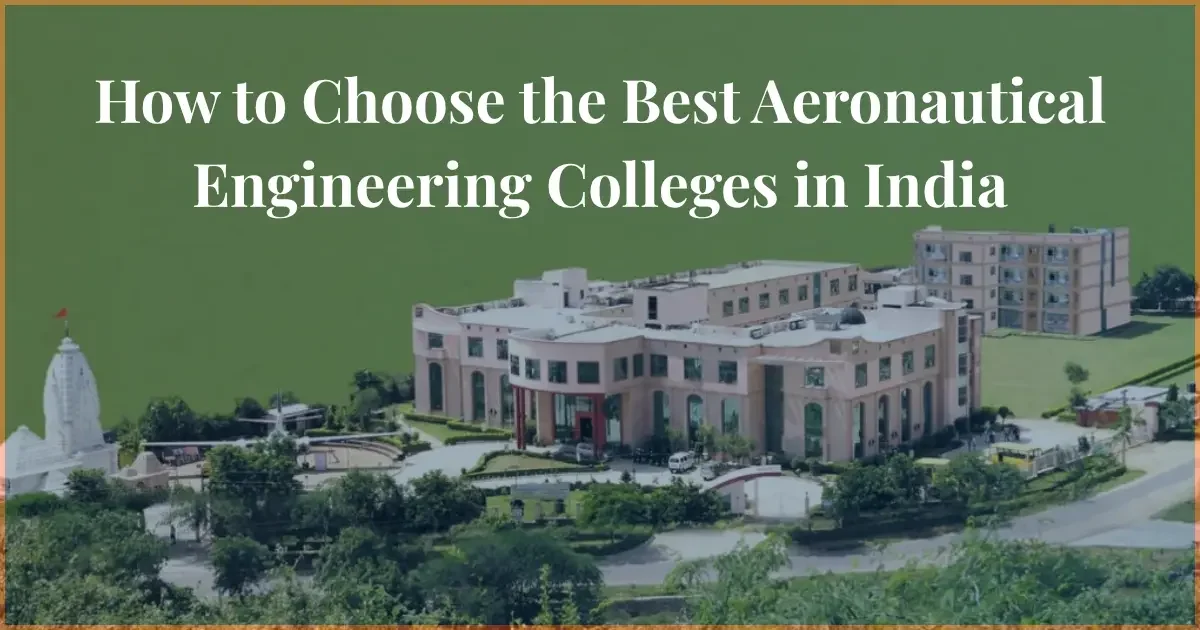
The School of Aeronautics, Neemrana (SOA Neemrana) campus, for example, is strategically located in an industrial zone that fosters a serious, professional atmosphere. Being away from the distractions of a metro city while staying connected to the NCR aviation hub provides the perfect balance for rigorous technical studies.
9. Salary and ROI: What to Expect?
Let’s talk about the Return on Investment (ROI). While the fees for aeronautical engineering colleges in India are higher than for general engineering, the salary potential is equally elevated.
| Role | Estimated Starting Salary (2026) |
| Graduate Engineer Trainee | ₹4.5 LPA – ₹7.5 LPA |
| Assistant Systems Engineer | ₹6.0 LPA – ₹9.0 LPA |
| Design Associate | ₹7.0 LPA – ₹10 LPA |
| Licensed AME (After Training) | ₹1.5 Lakhs – ₹3.5 Lakhs per month |
10. Why School of Aeronautics (SOA) Stands Out
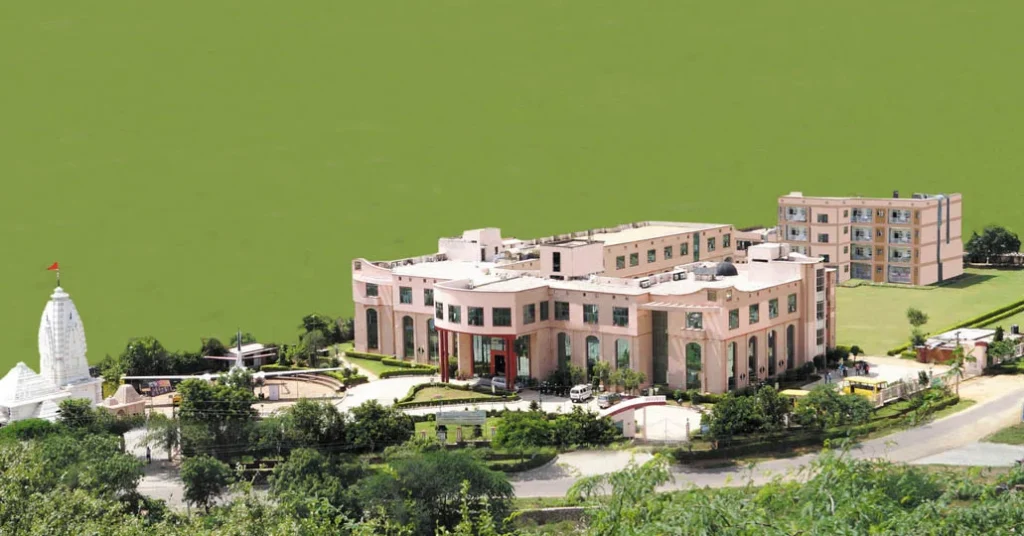
Since 1992, SOACET has been more than just a college it has been a catalyst for change in Indian aviation. When students compare aeronautical engineering colleges in India, they choose us for three primary reasons:
- Experience: Over 30 years of producing engineers who now occupy leadership roles in global airlines.
- Infrastructure: A dedicated hangar with “Live” aircraft that most IITs would envy.
- Holistic Training: We don’t just teach engineering; we teach “Aviation Culture” discipline, safety, and ethics.
Frequently Asked Questions (FAQs)
Q1. Is Aeronautical Engineering harder than Computer Science?
It is more specialised. If you love physics and mechanics, it is incredibly rewarding. It requires precision because, in aviation, there is no “undo” button.
Q2. Can girls join aeronautical engineering colleges in India?
Absolutely! The aviation industry is very inclusive, and many of our top students and successful alumni are women leading technical teams at major airlines.
Q3. Do I need to be a pilot to be an aeronautical engineer?
No. An engineer designs and maintains the machine; a pilot operates it. However, having engineering knowledge is a massive advantage if you ever decide to pursue a Commercial Pilot License (CPL) later.
Q4. Are bank loans available for this course?
Yes. Since SOACET is a recognised and affiliated institute, all major nationalised and private banks provide educational loans for our programs.
Conclusion: Ready for Takeoff?
Choosing from the many aeronautical engineering colleges in India is about finding the right balance between theory, practice, and prestige. It is about choosing an institution that will not just give you a degree but will give you a career that you can be proud of.
The aviation industry is built on trust and technical excellence. Your journey starts with the foundation you build during your four years of engineering. Make sure that the foundation is strong, specialised, and supported by a legacy of excellence.
Your future in the skies is waiting. Are you ready to start your journey?