

India’s aviation sector is growing fast new airports, expanding airline fleets, and a rapidly scaling drone industry are all creating demand for skilled professionals across dozens of specialized roles. But a degree alone often isn’t enough anymore. Increasingly, students and career-changers are turning to professional aviation courses to build the specific, industry-recognized skills that employers actually screen for at hiring time.
Whether you’re weighing options straight after Class 12, considering a switch after a B.Tech, or exploring aviation as a second career, understanding which professional aviation courses actually align with your interests and target roles matters more than picking the most popular option. This guide breaks down five of the strongest paths into aviation careers today what each involves, who they’re suited for, and what realistic career and salary outcomes look like.
Read Before: Aeronautical Engineering After 10th – Complete Roadmap (2026)
What Are Professional Aviation Courses?
Professional aviation courses are structured training programs ranging from short-term certifications to multi-year licensed programs designed to build specific, job-ready skills for aviation industry roles. They significantly differ from general academic degrees: a degree program (like a B.Tech) typically builds broad theoretical and design knowledge over four years, while professional courses are usually narrower, more hands-on, and directly tied to a specific job function or regulatory license.
Some, like Aircraft Maintenance Engineering, require formal government licensing (through the DGCA) before you can legally practice. Others, like cabin crew training or aviation safety certifications, build practical, role-specific competence that employers value even without a separate government license attached. What ties them together is a shared emphasis on continuous, practical skill development aviation is a field where staying current with regulations, technology, and safety standards isn’t optional, it’s part of the job.
Why Professional Aviation Courses Matter
- Industry-recognized skills: courses built around DGCA, IATA, or other recognized frameworks signal that your training meets an established standard, not just an institute’s own curriculum
- Better employability: candidates with specific, verifiable certifications alongside their degree often stand out more than those with academic qualifications alone
- Career advancement: many aviation roles have clear certification-linked progression, where additional type ratings or specialized modules directly unlock higher-paying roles
- Practical exposure: professional courses tend to be more hands-on by design, giving direct exposure to real equipment and operational scenarios
- Alignment with industry standards: courses tied to regulatory bodies (DGCA) or international standards (IATA) stay current with what the industry actually requires
Top 5 Professional Aviation Courses
1. Aircraft Maintenance Engineering (AME)
AME is a DGCA-licensed technical career focused on inspecting, maintaining, and certifying aircraft as airworthy. No DGCA-registered aircraft can legally fly without sign-off from a licensed AME.
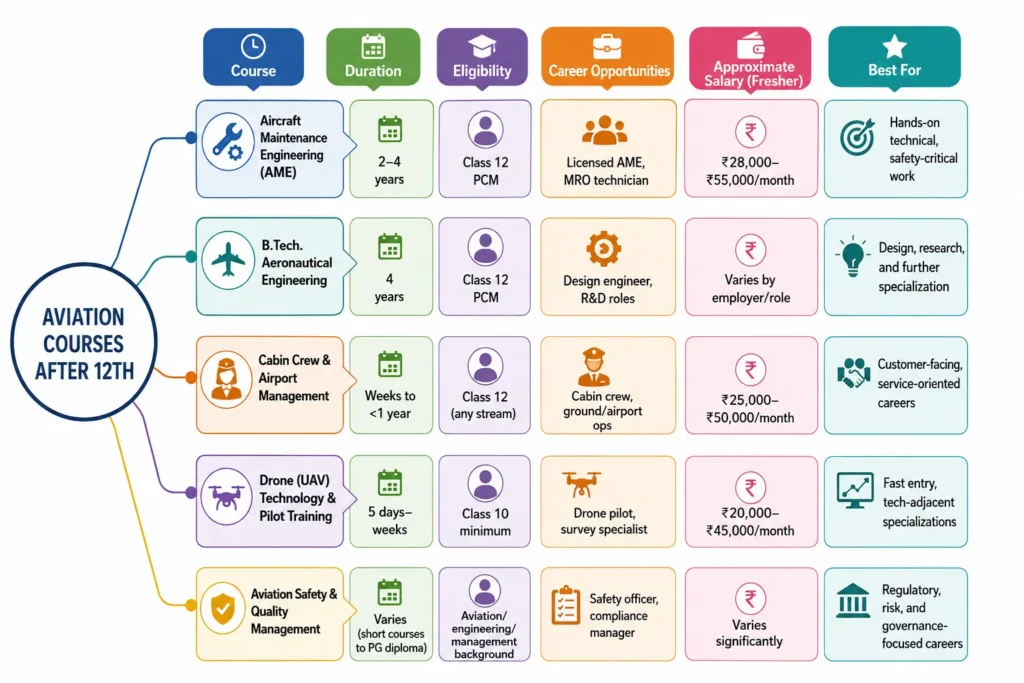
- Eligibility: Class 12 with PCM, per DGCA’s CAR-66 regulations
- Duration: 2–4 years, depending on institute and license category (mechanical-focused B1 or avionics-focused B2)
- Skills Gained: Aircraft systems knowledge, troubleshooting, regulatory documentation, safety-critical decision-making
- Career Opportunities: Licensed AME, type-rated specialist, maintenance shift lead
- Industries Hiring: Airlines, MRO companies, aircraft OEMs
- Approximate Salary: Freshers without a type endorsement typically start around ₹28,000–₹55,000/month; with experience and endorsements, ₹90,000–₹1,50,000+/month, varying by employer and city
- Best For: Students with strong PCM fundamentals seeking a hands-on, safety-critical career with a clear, licensed progression path
To Know More visit Our website: www.ameadmission.org
2. B.Tech. Aeronautical Engineering
A four-year AICTE-approved academic degree focused on the design, structure, and systems that make aircraft function covering aerodynamics, manufacturing, propulsion, and structural analysis.
- Eligibility: Class 12 with PCM, via engineering entrance exams or state-level admission
- Duration: 4 years
- Skills Gained: Aircraft design principles, aerodynamics, structural analysis, CAD/CAE proficiency, research methodology
- Career Opportunities: Design engineer, R&D roles, aerospace manufacturing engineer; further specialization via M.Tech./MS
- Industries Hiring: Aerospace manufacturers, DRDO, ISRO, private aerospace and R&D organizations
- Approximate Salary: Varies considerably by employer and role, generally in line with other core engineering disciplines at entry level, with stronger long-term growth in design/R&D roles as experience deepens check current placement data for realistic figures
- Best For: Students drawn to design and research rather than hands-on maintenance, open to further studies for specialized R&D roles
3. Cabin Crew & Airport Management
Training programs focused on passenger-facing aviation roles cabin crew service and safety responsibilities, and broader airport/ground operations management.
- Eligibility: Class 12 pass (any stream), plus airline-specific requirements around age, height, medical fitness, and communication for cabin crew roles
- Duration: Short-term, usually a few weeks to under a year
- Skills Gained: In-flight safety procedures, passenger handling, customer service, ground operations knowledge
- Career Opportunities: Cabin crew, ground staff, airport operations executive; progression toward cabin supervisor or in-flight manager
- Industries Hiring: Domestic and international airlines, airport operators, ground handling companies
- Approximate Salary: Domestic cabin crew freshers typically start around ₹25,000–₹50,000/month including allowances, with senior crew and pursers earning ₹90,000–₹2,50,000+/month; Gulf-based international carriers often pay considerably higher starting packages
- Best For: Students with strong communication and interpersonal skills drawn to customer-facing, travel-oriented work
Note: Book a FREE counselling session through SOACET to understand the AME admission process clearly.
4. Drone (UAV) Technology & Pilot Training
A fast-growing certification path covering licensed drone operation and the systems knowledge behind commercial UAV applications one of the newest, most rapidly expanding segments of Indian aviation.
- Eligibility: Generally Class 10 pass minimum, DGCA minimum age requirements, basic medical fitness check
- Duration: Short-term DGCA Remote Pilot Certificate training runs roughly 5 days (small drones) to 15+ days (medium/large categories)
- Skills Gained: Drone flight operation, DGCA drone regulations, mapping/surveying techniques, data capture and analysis
- Career Opportunities: Licensed drone pilot, RPTO instructor, survey/mapping specialist, agricultural drone operator
- Industries Hiring: Agriculture, infrastructure and construction, defence, real estate and media, logistics
- Approximate Salary: Entry-level certified pilots typically start around ₹20,000–₹45,000/month; specialized skills (mapping, thermal imaging, data analytics) and senior roles command significantly higher pay, particularly in metro markets
- Best For: Students wanting a faster, lower-cost entry into a licensed aviation-adjacent career, especially in agri-tech, surveying, or infrastructure
5. Aviation Safety & Quality Management
A specialized track focused on Safety Management Systems (SMS), regulatory compliance, quality assurance, and risk management increasingly important as airlines, airports, and MROs formalize safety governance.
- Eligibility: Typically pursued with a relevant aviation, engineering, or management background, often as a postgraduate certification
- Duration: Varies from short executive certifications to longer postgraduate diploma formats
- Skills Gained: SMS implementation, regulatory compliance auditing, risk assessment, quality assurance processes
- Career Opportunities: Safety officer, quality assurance auditor, compliance manager, SMS coordinator
- Industries Hiring: Airlines, airports, MRO organizations, aviation regulatory and consulting bodies
- Approximate Salary: Varies widely by role, seniority, and organization, generally trending toward mid-to-senior-level pay given the specialized nature of the work; reliable India-specific benchmarking wasn’t readily available, so research current openings directly
- Best For: Professionals or graduates with some aviation/engineering/management background drawn to regulatory and governance work
Comparison Table
Essential Skills Required in Aviation
- Technical knowledge: role-specific systems, equipment, or regulatory understanding
- Safety awareness: a non-negotiable mindset across every aviation role, technical or otherwise
- Analytical thinking: troubleshooting, risk assessment, and data interpretation
- Communication: clear, precise communication matters whether you’re documenting maintenance work or briefing passengers
- Teamwork: aviation operations are rarely solo efforts
- Problem-solving: the ability to think clearly under time pressure and operational constraints
- Computer skills: increasingly relevant across nearly every aviation role, from CAD software to drone data analysis
- Leadership: valuable for career progression into supervisory and management roles
- Adaptability: aviation regulations, technology, and operational demands shift regularly
Career Opportunities After Professional Aviation Courses
- Airlines: technical, cabin crew, and operations roles
- Aircraft Manufacturers: design, production, and quality roles
- Maintenance, Repair & Overhaul (MRO): a major and growing employer category in India
- Airports: ground operations, safety, and passenger services
- Ground Handling Companies: logistics and operational support roles
- Drone Industry: one of the fastest-growing employment categories in Indian aviation
- Defence: technical and operational roles supporting military aviation
- ISRO: for candidates drawn toward space systems and research
- DRDO: defence-focused research and engineering roles
- Private Aerospace Companies: an expanding sector as India’s private aerospace industry grows
- International Aviation Organizations: global opportunities for candidates with strong licensing and certifications
Future Scope of Aviation Careers in India
India’s aviation industry continues to expand on multiple fronts: airlines have placed large aircraft orders to grow their fleets over the coming decade, new airports are under development across the country, and existing airports are being modernized to handle rising passenger volumes. This expansion translates directly into sustained demand for licensed technicians, cabin crew, ground staff, and specialized professionals across safety, quality, and compliance functions.
At the same time, emerging technologies are reshaping what “aviation career” even means. The drone industry has grown from a niche hobby space into a licensed, structured career path in just a few years. Sustainable aviation initiatives, electric aircraft research, and AI-driven maintenance and operations tools are opening entirely new specializations that didn’t meaningfully exist a decade ago. For students entering aviation training today, this means genuinely broader long-term career options than earlier generations had provided they choose training that keeps pace with where the industry is actually heading, not just where it’s been.
Tips for Choosing the Right Aviation Course
- Clarify your career goals first: hands-on technical, design/research, customer-facing, and regulatory paths require very different training, so start there
- Verify accreditation: confirm DGCA approval (AME, drone training) or AICTE approval (degree programs) directly, since status can change
- Review the curriculum: check it’s genuinely current with industry practice
- Prioritize practical training access: ask what hands-on equipment, labs, or live aircraft/drone access students actually get
- Check placement support and track record: ask for specifics (companies, roles, placement percentage) rather than vague claims
- Consider faculty expertise and industry partnerships: instructors with real industry background, and active MRO/airline/manufacturer partnerships, often mean stronger internship and placement pipelines
Q1. Which professional aviation course is best?
There’s no single “best” course it depends on your interests and strengths. AME suits hands-on, technically inclined students; B.Tech. Aeronautical Engineering suits those drawn to design and research; cabin crew suits strong communicators; drone technology offers a faster, lower-cost technical entry point; and aviation safety management suits those interested in regulatory and governance work.
Q2. Are aviation certification courses worth it?
Generally yes, particularly when they’re tied to recognized regulatory or industry standards (like DGCA approval), since they build specific, verifiable, job-ready skills that complement broader academic qualifications.
Q3. What are the best aviation courses after 12th?
AME (for PCM students), B.Tech. Aeronautical Engineering (for PCM students pursuing a full degree), and cabin crew training (open to students from any stream) are among the most accessible and in-demand options directly after Class 12.
Q4. Which aviation course offers the highest salary?
It varies by role, experience, and employer rather than being fixed by course alone. Licensed AMEs with strong type endorsements, senior cabin crew on international routes, and specialized drone professionals with technical data skills can all reach strong compensation levels with experience, but starting salaries and growth trajectories differ meaningfully by path.
Q5. Is DGCA approval important?
Yes, especially for AME and drone pilot training. DGCA approval is what makes your certification or license legally valid for professional practice in India, and training from a non-approved institute typically doesn’t lead to a recognized license.
Q6. Can engineering graduates pursue aviation certifications?
Yes. Engineering graduates often pursue additional aviation-specific certifications such as drone technology training or aviation safety management courses to specialize further or pivot into aviation-focused roles.
Q7. Which aviation skills are most in demand?
Technical systems knowledge (aircraft or drone-specific), safety and compliance awareness, and increasingly, data analysis skills relevant to newer technology-driven roles are all in strong demand across the sector.
Q8. What is the future of aviation careers in India?
Strong and expanding, driven by fleet growth, new airport development, and emerging technology areas like drones, sustainable aviation, and AI-driven operations though outcomes for individual candidates still depend on choosing quality training and staying current with industry developments.
Q9. Which course is best for airline jobs?
Depends on the specific airline role: AME for technical/maintenance positions, cabin crew training for in-flight roles, and B.Tech. Aeronautical Engineering (often combined with further specialization) for engineering and technical support roles within airlines.
Q10. How do I choose the right aviation training program?
Start with your career goal, then verify the institute’s accreditation, review the curriculum for practical training depth, and ask specifically about placement support and industry partnerships before enrolling the tips section above covers this in more detail.
Conclusion
Professional aviation courses open doors across a genuinely wide range of careers from hands-on aircraft maintenance to design engineering, customer-facing cabin crew roles, fast-growing drone technology work, and specialized safety and compliance functions. None of these paths is universally “better” than the others; the right choice depends on your own interests, strengths, and the kind of work environment you’re drawn to.
What matters most is choosing a course with genuine industry recognition, practical training depth, and a track record of real placement outcomes not just a compelling brochure. As India’s aviation industry continues expanding, students who invest in the right training now, aligned with both their interests and where the industry is genuinely headed, will be well positioned for a rewarding, long-term aviation career.